
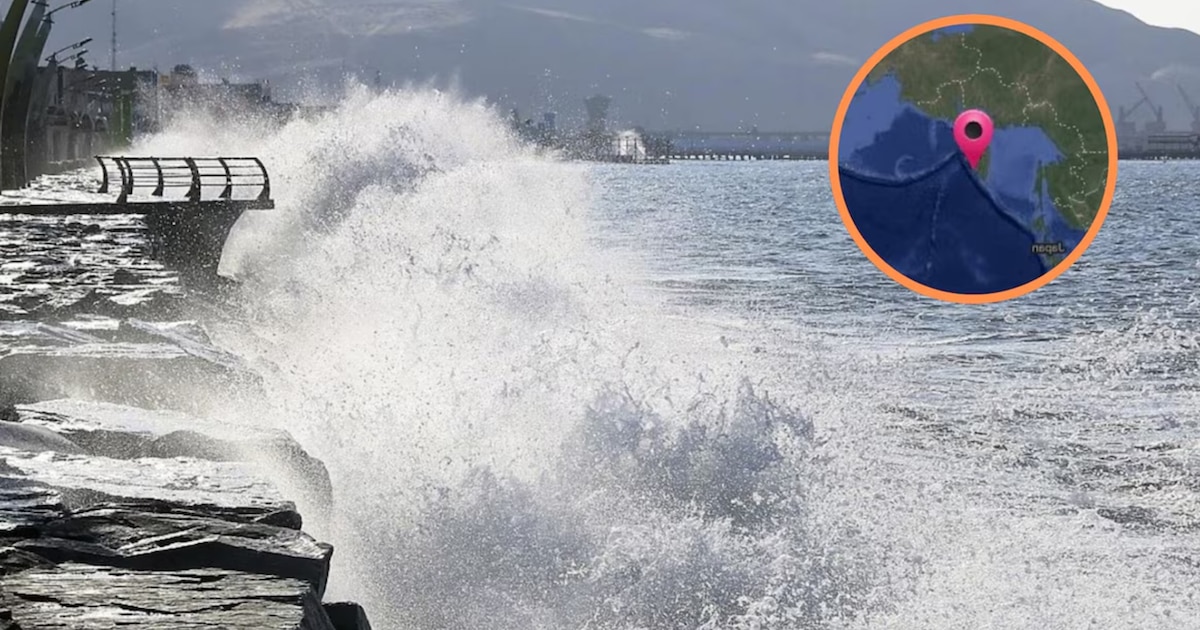
A powerful earthquake struck off the northeastern coast of Japan on Tuesday, triggering tsunami warnings across the Pacific and prompting emergency responses from coastal communities as far away as Peru. The Japan Meteorological Agency confirmed the quake registered a preliminary magnitude of 7.4, with its epicenter located beneath the Pacific Ocean near the Fukushima prefecture. The tremor was widely felt across eastern Japan, including in Tokyo, where buildings swayed and train services were temporarily suspended as a precaution. Within minutes of the quake, tsunami advisories were issued for Japan’s Pacific coastline, with wave heights expected to reach up to one meter in some areas. Authorities urged residents in low-lying coastal zones to evacuate immediately, particularly in Iwate, Miyagi, and Fukushima prefectures — regions still sensitive to seismic risks following the 2011 disaster. Although initial tsunami waves were relatively minor, officials later warned of the potential for a larger, more destructive wave — termed a “megatsunami” in some local reports — prompting a second, heightened alert. However, after monitoring sea level data and undersea sensors, the Japan Meteorological Agency concluded that the tsunami threat had diminished and formally canceled the warnings several hours after the quake. Despite the cancellation in Japan, the Pacific Tsunami Warning Center noted that the seismic event generated detectable oceanic fluctuations across the region. In Peru, naval authorities monitored sea level changes along the coast but reported no significant wave activity or damage. The country’s Hydrography and Navigation Directorate confirmed that while minor sea level variations were observed, they posed no threat to coastal populations. The earthquake serves as a stark reminder of the ongoing seismic volatility in the Pacific Ring of Fire, where tectonic plate interactions frequently produce powerful quakes and tsunami hazards. Japan’s advanced early warning systems and public preparedness protocols were again credited with enabling a swift and coordinated response, minimizing risk despite the earthquake’s strength. No casualties or major structural damage have been reported from the quake itself, though inspections of infrastructure and nuclear facilities — including the Fukushima Daiichi site — are underway as standard procedure. Officials emphasized that all safety systems remained functional and there were no abnormalities detected at nuclear installations. As seismic activity continues to be monitored, authorities urged the public to remain vigilant and follow official updates, noting that aftershocks are likely in the coming days. The event underscores the importance of regional cooperation in disaster preparedness, particularly for nations across the Pacific vulnerable to tsunami propagation.
Magnitude 7.4 Earthquake Hits Japan: Tsunami Alert Issued
13

previous post