
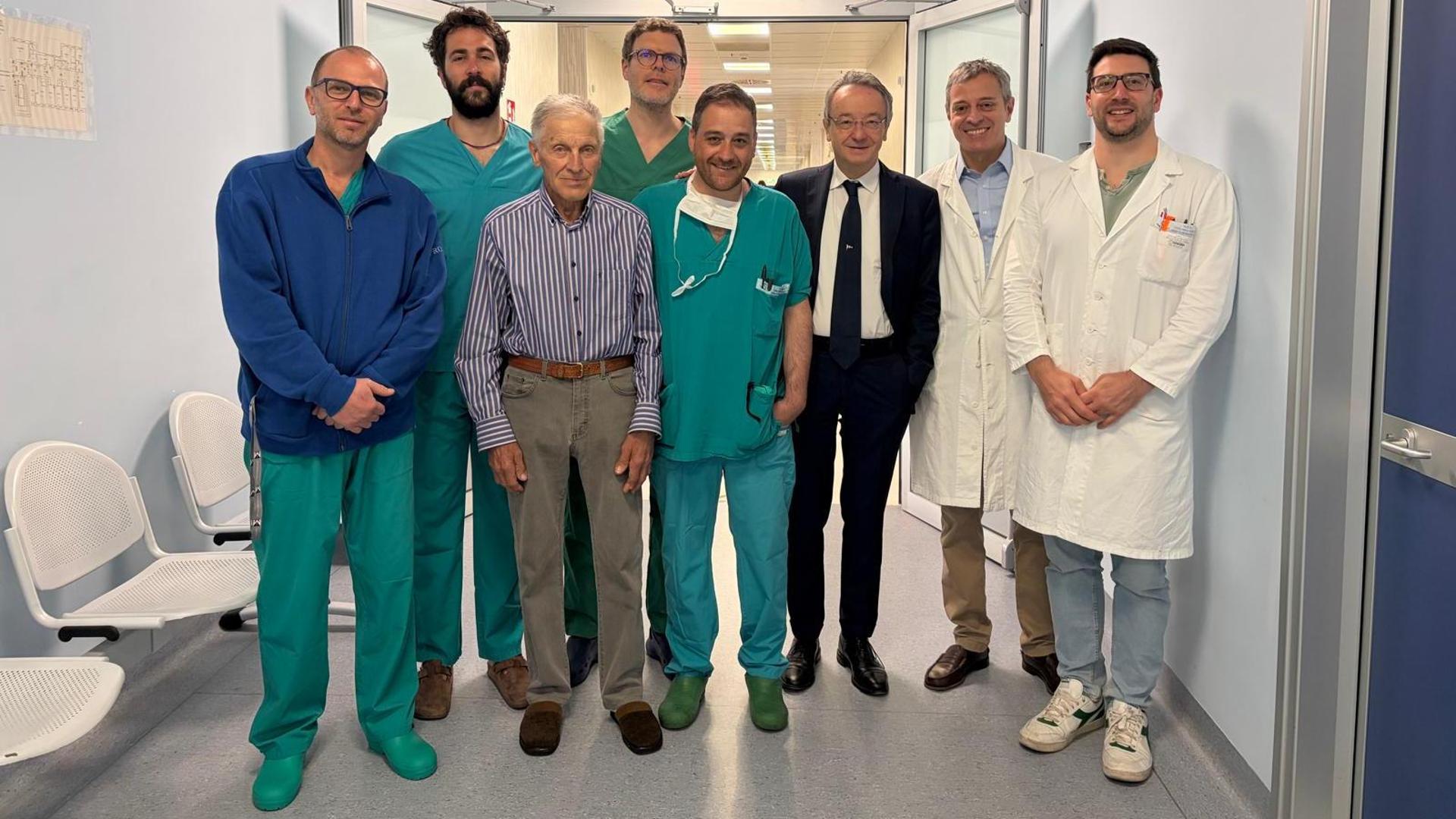
In a first-of-its-kind procedure performed on April 26, 2026, doctors at the Ospedale Molinette in Turin successfully treated two heart valves in an 82-year-old patient without stopping the heart or using a heart-lung machine.
The patient, identified as Giuseppe, a resident of Turin province, had severe aortic stenosis and significant mitral regurgitation, compounded by prior coronary bypass surgery and vascular disease, making him too high-risk for conventional open-heart surgery.
Instead, the cardiac team accessed the heart through a single 4- to 6-centimeter incision on the left side of the chest, using the left ventricle as a pathway to reach both valves while the heart continued to beat.
First, they implanted a bioprosthetic aortic valve using the transcatheter aortic valve implantation (TAVI) technique. Then, through the same access point and guided by echocardiography, they repaired the mitral valve using the Neochord method, which involves placing artificial Gore-Tex chords to replace damaged ones and restore proper valve function.
The surgery took place in a hybrid operating room, enabling real-time collaboration among specialists. Since the procedure avoided cardiopulmonary bypass and minimized trauma, Giuseppe was awakened just hours after the operation and discharged within days.
The team was led by Professor Stefano Salizzoni, with Dr. Alessandro Vairo, Dr. Matteo Marro, and Dr. Federico Conrotto performing the valve interventions, supported by anesthesiologist Samuele Lombi and specialized nursing staff.
This milestone marks the first time both aortic and mitral valve interventions have been combined through a single access point on a beating heart, offering a new option for frail, high-risk patients who cannot undergo traditional surgery.
The advancement underscores progress in minimally invasive cardiac care, potentially reducing recovery times and expanding treatment access for elderly or medically complex individuals.
