

Saudi Aramco has unveiled a next-generation internal combustion engine designed exclusively for hybrid vehicles, signaling a strategic push to extend the relevance of fossil-fuel-powered drivetrains amid the global shift toward electrification.
The company’s new Dedicated Hybrid Engine (DHE)—a ground-up redesign rather than a modification of existing technology—promises to deliver 41-42% thermal efficiency, a benchmark that could redefine cost and performance standards in the hybrid market. Industry analysts note the development reflects Aramco’s broader effort to future-proof its core business as automakers accelerate their transition to electric vehicles.
Engineered for Efficiency, Built for Affordability
The DHE system centers on a 1.6-liter, three-cylinder naturally aspirated engine, optimized for seamless integration with electric powertrains. Unlike conventional hybrid setups, which often rely on repurposed combustion engines, Aramco’s design prioritizes simplicity and cost reduction from the outset.

Key innovations include:
- A single-piece engine block and cylinder head, eliminating the demand for separate components and reducing manufacturing complexity.
- A fixed-valve timing system, eschewing variable valve control in favor of streamlined operation.
- A direct connection to generator units, bypassing traditional transmissions to cut weight and production costs.
The result, according to the company, is a powertrain comprising just 175 parts—a 25% reduction compared to conventional hybrid systems. Aramco estimates the DHE could slash manufacturing expenses by up to 20% while delivering 35% better fuel economy in mid-sized vehicles.
Hybrid Lifeline or Strategic Hedge?
The DHE arrives as global automakers face mounting pressure to phase out internal combustion engines, with the European Union’s 2035 ban on new gasoline and diesel vehicles looming and similar policies gaining traction in other markets. For Aramco, the world’s largest oil producer, the technology represents a calculated bet on hybrids as a transitional bridge—one that could sustain demand for petroleum-based fuels even as electric adoption grows.

“This isn’t about chasing peak performance,” an Aramco spokesperson told industry outlet MotorTrend. “It’s about consistent, efficient operation that complements electric drivetrains.” The company’s roadmap includes scaling the DHE across multiple configurations, from two-cylinder variants to V6 options, with plans to explore hydrogen compatibility in future iterations.
Market Impact and Industry Partnerships
Aramco has yet to announce manufacturing partners, but the company is actively courting automakers to license the DHE for mass production. The system’s cost advantage—positioned as a more affordable alternative to established hybrid architectures like Toyota’s Hybrid Synergy Drive—could appeal to manufacturers seeking to meet emissions targets without fully abandoning combustion technology.
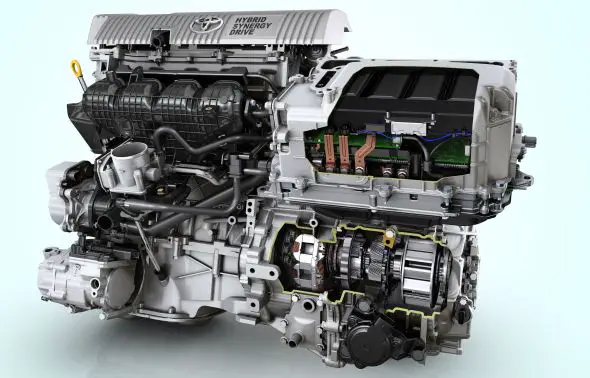
The timing aligns with a broader industry recalibration. While electric vehicle sales continue to rise, hybrids have surged in popularity, particularly in markets where charging infrastructure remains underdeveloped. Data from recent quarters suggests hybrids now account for nearly 20% of global light-vehicle sales, a trend Aramco’s DHE could further accelerate if adopted at scale.
Still, challenges remain. The DHE’s reliance on a simplified, low-friction design may limit its adaptability to high-performance applications, and its long-term viability hinges on automakers’ willingness to invest in yet another hybrid platform. For now, Aramco’s gambit underscores a critical tension in the energy transition: even as the world pivots toward electrification, the internal combustion engine refuses to fade quietly.
For more details on the DHE’s technical specifications, read the full breakdown here.
