

NASA’s first in-space refueling demonstration, scheduled for late 2026, will test a robotic arm transferring propellant between spacecraft in low Earth orbit—a critical step toward sustainable lunar missions and deep-space travel.
Breaking the Single-Use Fuel Model for Deep-Space Missions
For decades, spacecraft have relied on disposable fuel tanks or single-use propulsion systems. That model is breaking down as NASA and commercial partners plan to establish a permanent human presence on the Moon and eventually send crewed missions to Mars. The upcoming NASA In-Space Propellant Transfer Demonstration—part of the agency’s broader Artemis program—aims to prove that robotic refueling in orbit is feasible, reducing costs and extending mission lifespans.
Unlike past experiments with limited propellant transfers, this test will use a robotic arm to move liquid hydrogen and oxygen between two spacecraft in low Earth orbit. Success could unlock a new era of space depots, where vehicles dock, refuel, and depart without returning to Earth—a necessity for Mars missions, where launch windows occur every 26 months and fuel is too heavy to carry in one trip.
Yet the stakes go beyond Artemis. Private companies like SpaceX (Starship) and Blue Origin (Blue Moon lander) are developing their own refueling strategies, and the U.S. Space Force has flagged in-space logistics as a national security priority. The demonstration’s results will influence whether these systems become standard or remain experimental.
How the 2026 Test Will Push Cryogenic Propellant Transfer to New Limits
The Technology: How Robotic Refueling Works
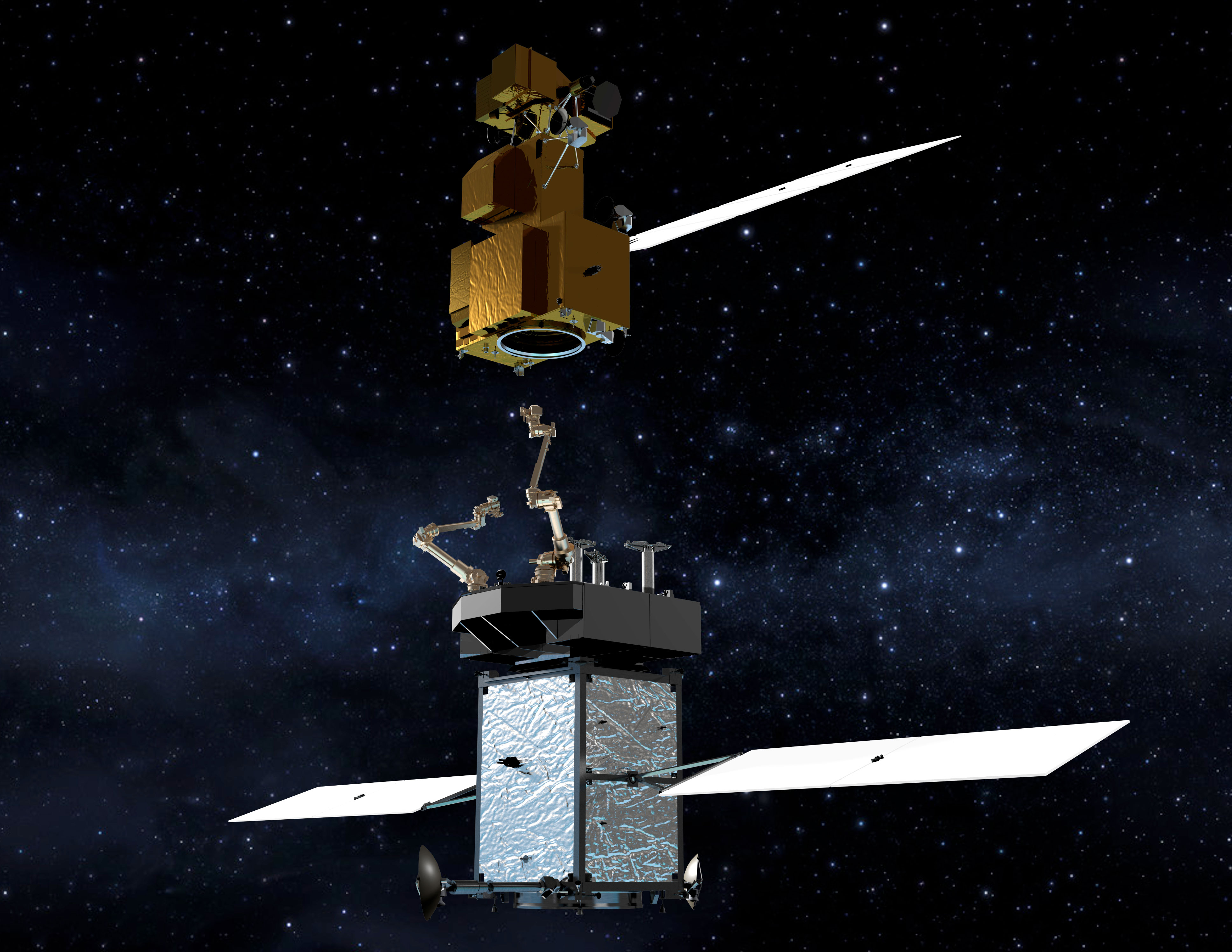
The test will involve two spacecraft: a refueling servicer (built by Maxar Technologies) and a client vehicle (a modified Northrop Grumman Cygnus cargo module).

- Dock autonomously with the client vehicle.
- Transfer hundreds of pounds of liquid propellant using precision valves and cryogenic fluid management.
- Verify leak integrity and system stability over multiple transfers.
This builds on NASA’s 2024 Robotic Refueling Mission 3 (RRM3), which demonstrated basic propellant transfer in microgravity but lacked the complexity of full cryogenic fuel handling. The 2026 test will push the limits with liquid hydrogen (LH2) and liquid oxygen (LOX)—fuels that boil at ultra-low temperatures and require advanced insulation to prevent evaporation.
Key challenge: Cryogenic propellants like LH2 must be transferred within minutes of opening the tank to avoid boil-off. The robotic arm’s movements must be submillimeter precise, while sensors monitor pressure, temperature, and fluid sloshing in zero gravity.
Lunar Gateway and the Race to Establish Orbital Fueling Infrastructure
The Artemis Connection: Moon Bases and Beyond
NASA’s long-term vision hinges on in-situ resource utilization (ISRU)—using water ice from the Moon’s poles to produce fuel. But even with ISRU, missions will need orbital depots to stage supplies.
- The 2028 Artemis 4 mission, which will deliver the first Lunar Gateway module (a small space station orbiting the Moon).
- Plans for a sustained lunar base by the 2030s, requiring regular resupply trips.
- Potential commercial partnerships under NASA’s CLPS (Commercial Lunar Payload Services) program, where private firms could operate refueling stations.
Without this capability, NASA’s Mars ambitions could face delays. A 2026 Space Journal analysis noted that even with advanced propulsion, a Mars mission would need multiple in-orbit refueling stops to carry enough fuel—currently impossible with today’s technology.
Geopolitical and Commercial Stakes in the Orbital Refueling Race
Industry and Security Implications
The demonstration isn’t just about science—it’s about geopolitical competition. China’s Queqiao-2 lunar relay satellite and its planned International Lunar Research Station (ILRS) include refueling experiments, signaling Beijing’s push for self-sufficiency in cislunar space. Meanwhile, the U.S. Space Force’s Space Development Agency (SDA) has funded similar research to ensure military satellites can be serviced in orbit.
Commercially, companies like SpaceX and Lockheed Martin are eyeing refueling as a revenue stream. SpaceX’s Starship, designed for Mars, would require orbital depots to reduce launch mass. Lockheed’s Lunar Gateway habitat could double as a fueling hub if the technology proves reliable.
Yet risks remain. A failed transfer could damage spacecraft or create debris. The 2023 failure of a Russian refueling test (where a Progress cargo ship collided with a module) highlighted the dangers. NASA’s test will operate in low Earth orbit, a safer environment than lunar distance, but even small leaks could disrupt future missions.
What Comes Next: Timeline and Uncertainties
NASA’s In-Space Propellant Transfer Demonstration is slated for late 2026, with results expected by early 2027.
- Expand tests to lunar orbit by 2028, using the Gateway station as a testbed.
- Partner with industry to develop commercial depots by 2030.
- Integrate refueling into Artemis 5 and beyond, targeting crewed Mars missions in the 2030s.
- Budget constraints: Congress has yet to fully fund NASA’s $1.6 billion request for lunar logistics.
- Technical hurdles: Cryogenic fluid management in microgravity remains unproven at scale.
- International cooperation: Whether China’s ILRS will adopt compatible standards or develop its own.
One thing is clear: Without breakthroughs in refueling, humanity’s first crewed Mars mission could remain grounded—literally.
The Bigger Picture: A New Space Economy
This test isn’t just about reaching Mars. It’s about redefining space as an operational domain—one where vehicles don’t just launch and land, but refuel, upgrade, and persist.
- Lower launch costs: Fewer launches needed if spacecraft can top up fuel in orbit.
- New business models: Companies could charge for refueling, debris removal, or satellite servicing.
- Military applications: The U.S. and allies could extend satellite lifespans, reducing reliance on ground-based replacements.
For now, the focus is on proving the science. But if the 2026 test succeeds, it could mark the start of an orbital infrastructure revolution—one that will determine who leads in the next era of space exploration.
—
Sources: NASA Artemis program updates (2026), Space Journal analysis (March 2026), Maxar Technologies refueling demo specifications, U.S. Space Force SDA reports (2025–2026).
