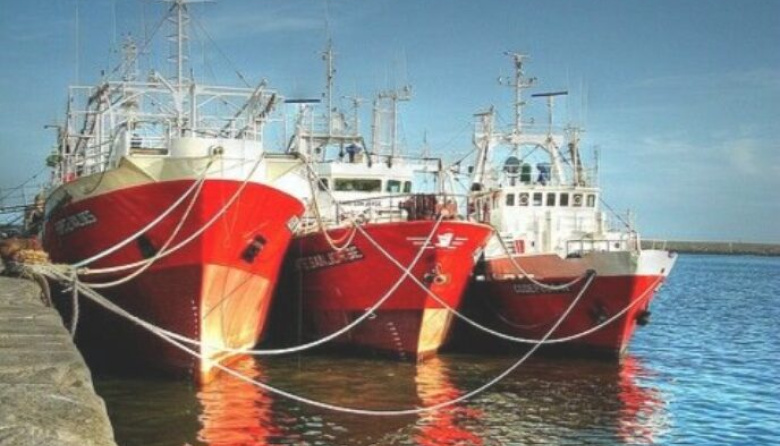
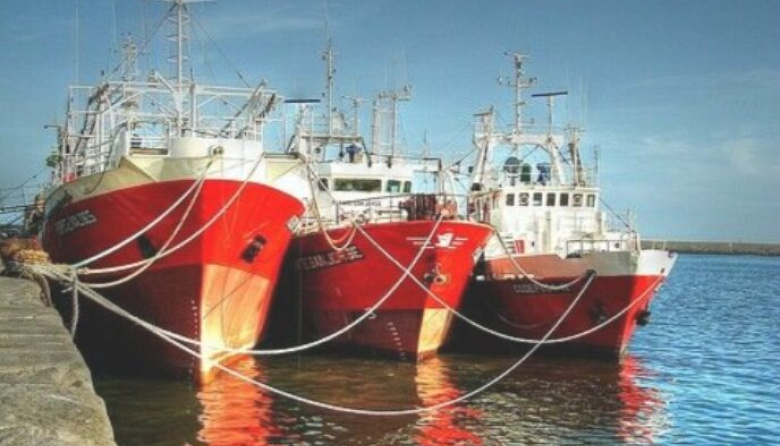
Argentina’s fishing sector reported a 32% growth in export value to $867 million during the first four months of 2026, according to the Secretariat of Agriculture, Livestock and Fisheries. While the government cites this as evidence of industry competitiveness, fishing companies argue the figures mask a deeper structural crisis and profitability decline.
Export Gains and the “Calamar” Factor
cluster (priority): Data Portuaria
The latest data from the Secretariat of Agriculture, Livestock and Fisheries paints a picture of a sector currently experiencing a significant surge in international trade. Between January and April 2026, the country’s fishing exports reached $867 million, a 32% increase in value compared to the same period in 2025. This growth was accompanied by a 28% rise in total volume, with 249,412 tons of product shipped to global markets.
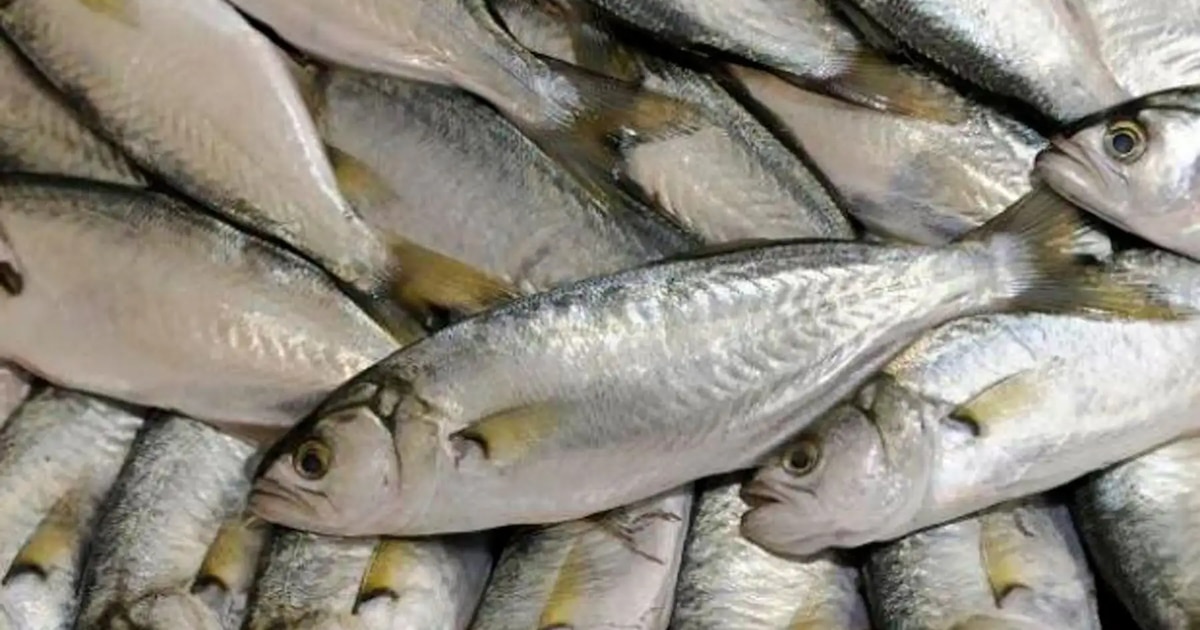
Official reports identify key drivers behind these numbers: frozen mollusks saw a 43% increase in volume, while fresh or refrigerated fish surged by 45%. Crustaceans and preserved fish preparations also posted gains of 20% and 27%, respectively. These products continue to find their primary destinations in the United States, China, Spain, and Brazil, cementing their status as core pillars of the national export strategy.
However, industry leaders urge caution when interpreting these topline statistics. Eduardo Boiero, president of the Chamber of Armadores of Fishing and Freezers of Argentina (Capeca), suggests the growth is largely a byproduct of environmental fortune rather than sustainable policy success.
“The government uses it as positive news, and I think that’s fine. The reality is that, in the case of the fishing industry, the growth is relative because what happened was that more squid was caught in less time during the first few months and the catch stopped earlier. It is not a matter of growth of the sector, but of a greater availability of a natural resource in the first months that depends on environmental factors.”Eduardo Boiero, president of the Chamber of Armadores of Fishing and Freezers of Argentina (Capeca), via La Nación
Data processed by Capeca, based on statistics from the National Institute of Statistics and Censuses (INDEC), puts the total value slightly higher at $905.7 million for the first four months of the year. Within that total, the Illex squid alone accounted for $405 million, representing nearly 45% of the sector’s external sales.
Profitability Crisis Beneath the Surface
cluster (priority): Infobae
Despite the strong export values reported by Infobae, the industry remains locked in a battle over operational viability. According to La Nación, business owners emphasize that the primary issue is not demand or volume, but a crushing cost structure. Rising fuel prices, specifically for gasoil, combined with recurring labor disputes and the continued application of export duties—which range between 3% and 9%—have made several segments of the fleet, particularly the Mar del Plata fresh-fish fleet, increasingly unprofitable.
The industry’s sentiment remains stark. When confronted with the government’s positive outlook, representatives were blunt in their assessment:
“Los números no dan.”Industry representatives, via La Nación
This phrase highlights the disconnect between the government’s focus on aggregate export value and the microeconomic reality faced by shipowners. While the “crecimiento del 32%” serves as a headline figure, the industry maintains that it does not reflect a healthy, stable economic landscape for those capturing and processing the resources.
Monthly Volatility and Accumulation Trends
India’s Fisheries Boom: Output, Exports Surge | Global Seafood Powerhouse Rising
The broader data for 2026 reveals a more complex narrative of volatility. A report from Data Portuaria indicates that while the year-to-date trend remains positive, April saw a sharp contraction. Total landings for April 2026 hit 54,361 tons, a 32.7% drop compared to April 2025.
Specific species faced steep declines in April:
Merluza de cola: down 84.3%
Cazón: down 67%
Merluza hubbsi (Area N41 CTMFM): down 67.9%
Pescadilla: down 67.2%
Conversely, some segments showed resilience. Langostino landings grew by 84.4% in April, reaching 1,753 tons, and the Merluza hubbsi from the ZEEA zone saw a 108.3% increase. Despite the monthly fluctuations, the cumulative volume from January to April stands at 356,937 tons, marking a 14.3% increase over the same period in 2025.
The success of the “poteros” (jigging vessels) has been a significant factor in this year-to-date performance. These vessels led the industry with 155,695 tons landed through April, a 29.5% increase compared to the previous year. This performance stands in contrast to the fresqueros, which landed 78,164 tons, and the trawler freezer fleet, which accounted for 53,734 tons.
Future Outlook for the Fishing Sector
cluster (priority): news.google.com
As the industry moves toward the second half of 2026, the friction between government data and private sector grievances is unlikely to dissipate. The government continues to highlight the sector as a vital contributor to regional economies and national foreign exchange reserves. However, the industry’s demand for the elimination of export duties remains a central point of contention.
Whether the current export volume can be sustained without structural changes to the cost of production remains the core uncertainty. With the reliance on volatile resources like the Illex squid, the sector remains vulnerable to environmental shifts, which could exacerbate the existing profitability crisis if cost structures are not addressed. The coming months will likely see continued negotiations between industry chambers and the government as both sides attempt to reconcile these conflicting visions of the industry’s health.
ail: emily.johnson@headlinez.news
Bio:
Emily Johnson serves as News Editor at Headlinez.News, overseeing the publication’s coverage of national and breaking stories. She has worked in journalism for more than 12 years, building a reputation for precision, credibility, and rapid-response reporting. Emily’s editorial philosophy focuses on clear, fact-based writing that helps readers understand the full context behind the day’s most important events. Her expertise bridges traditional reporting and modern digital news strategies.
Expertise: Breaking news, political reporting, fact-checking, newsroom coordination, public affairs.
Location: Washington, D.C., USA