

Astronomers have detected the first confirmed evidence of a pair-instability supernova—an explosion so violent it erased a star hundreds of times more massive than the Sun, leaving no black hole or neutron star behind. The blast, designated SN 2023vbw, was first spotted in October 2023 in a metal-poor dwarf galaxy 1.3 billion light-years away, and its unusual light curve—peaking after 190 days before vanishing—confirms a theory about the most extreme stellar deaths in the universe.
What Makes SN 2023vbw Different From Other Supernovae
Most supernovae leave remnants: a dense core, a black hole, or even a neutron star. But SN 2023vbw defies this rule. According to Futurism, the star—estimated at 170 to 350 times the Sun’s mass—underwent a pair-instability supernova, a rare phenomenon where gamma rays in the star’s core trigger a runaway thermonuclear reaction that obliterates the star entirely. The explosion’s energy output was 10 times greater than a typical Type II supernova, and its light curve behaved unlike any previously observed event.
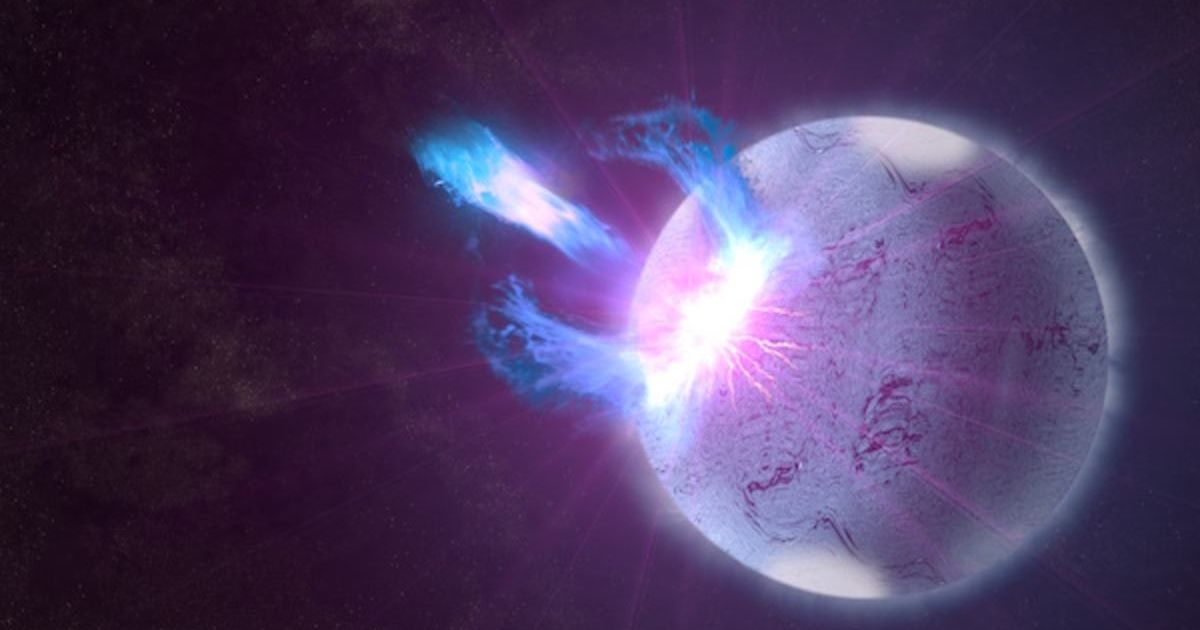
The star’s unusual behavior—brightening over 190 days before fading—suggests it was a blue supergiant, a class of stars so massive their cores generate electron-positron pairs that destabilize the star’s structure. As Universe Space Tech reports, this matches theoretical models predicting such stars would vanish without a trace, leaving behind only the ejected material and no compact remnant.
A Star That Shouldn’t Exist—And Then Didn’t
The progenitor star’s mass—between 170 and 350 solar masses—is staggering. For context, the most massive known stars today barely exceed 200 solar masses, and even those typically leave behind black holes or neutron stars. The fact that SN 2023vbw’s star vanished completely aligns with predictions that stars in this mass range would undergo pair-instability collapse, a process where gamma rays strip away the radiation pressure holding the star together, leading to a catastrophic explosion.
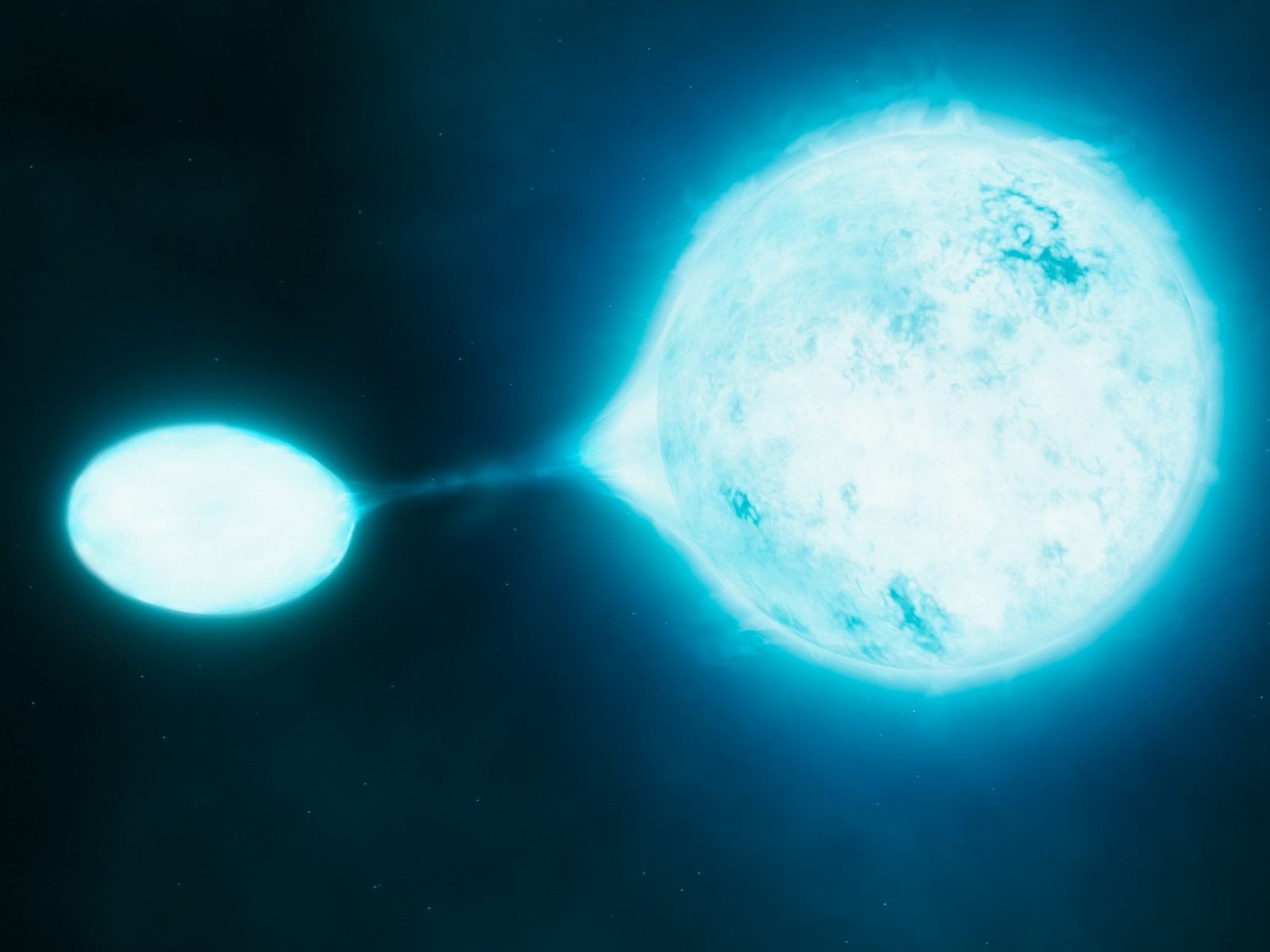
One hypothesis, supported by Starlust, is that the star may have formed from the merger of two massive stars in a binary system. This could explain the dense, disk-like shell of material around the star, which the explosion’s ejecta later collided with, producing the complex light curve observed.
Why This Discovery Matters for Astrophysics
SN 2023vbw isn’t just a curiosity—it’s a missing link in our understanding of stellar evolution. As Notebookcheck notes, pair-instability supernovae were long thought to be theoretical until now. Their discovery helps explain why astronomers rarely find black holes above a certain mass—the stars that would form them may have been completely destroyed in these explosions.
The event also sheds light on the upper mass gap in black holes—a range of masses (roughly 50 to 130 solar masses) where few black holes are observed. If pair-instability supernovae are common in metal-poor galaxies (like the one hosting SN 2023vbw), they could explain why no black holes exist in this gap: the stars massive enough to form them were obliterated before they could collapse.
What Happens Next: Hunting for More “Vanishing Stars”
The discovery of SN 2023vbw is just the beginning. Astronomers now have a clear signature to search for similar events. Upcoming surveys, including those by the Vera Rubin Observatory and the Nancy Grace Roman Space Telescope, are expected to uncover dozens or even hundreds of these rare explosions in the coming years.

For now, SN 2023vbw remains the brightest and most energetic pair-instability supernova ever observed. Its light curve—peaking at 190 days and fading rapidly—provides a template for future discoveries. The next step is to analyze its spectral data to confirm the presence of heavy elements produced in such explosions, which could reveal clues about the star’s composition before it vanished.
Key Questions That Remain Unanswered
Despite the breakthrough, critical questions linger. How common are these explosions? Are they more frequent in metal-poor galaxies (where heavy elements are scarce)? And could they play a role in enriching the universe with heavy elements? The answers may lie in deeper observations of SN 2023vbw—and in the dozens of similar events astronomers hope to find in the next decade.
One thing is certain: SN 2023vbw has rewritten the rules of stellar death. For the first time, astronomers have witnessed a star not just explode—but disappear entirely, leaving behind only the echoes of its final, cataclysmic scream.
