
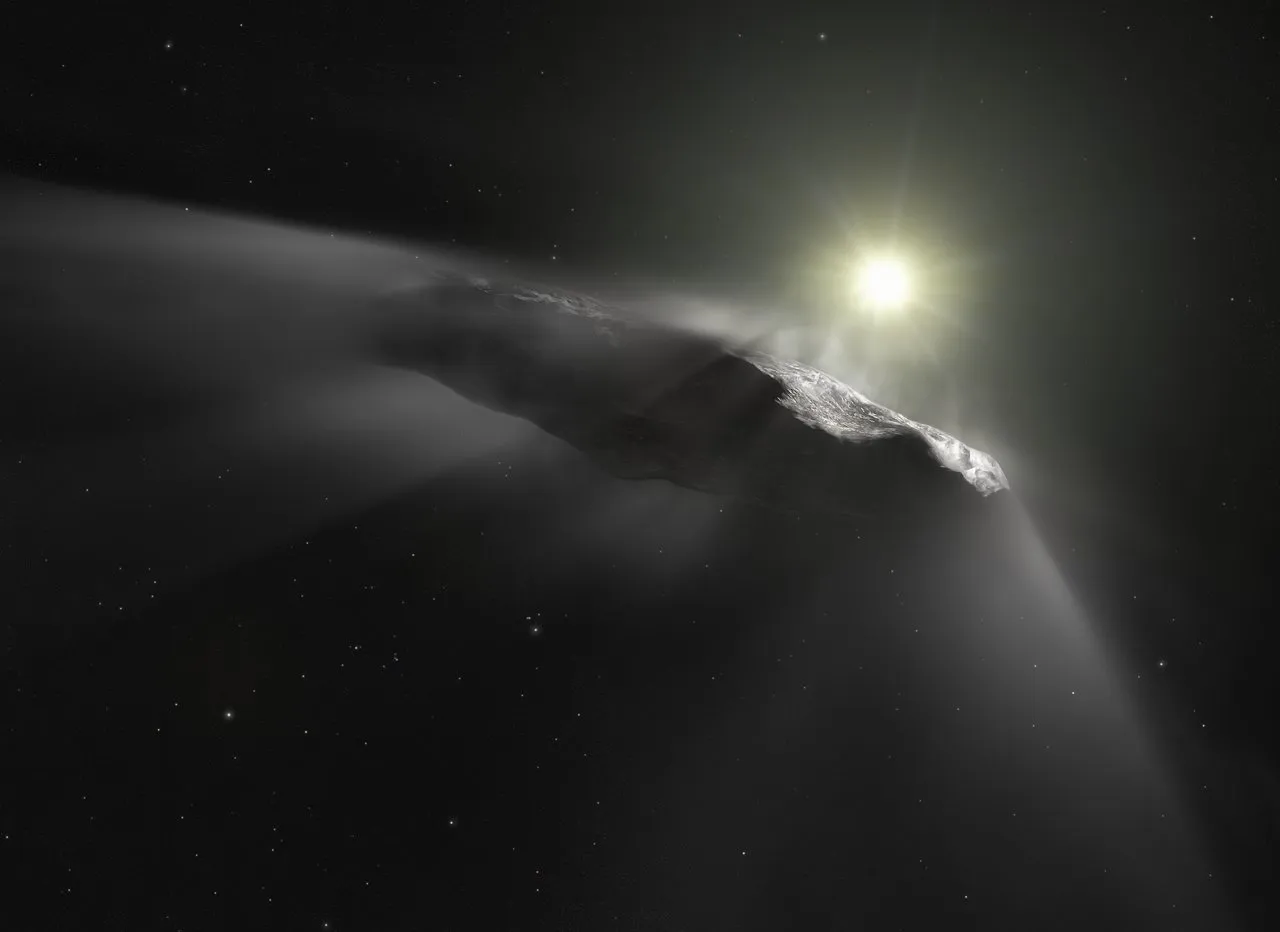
The Hunt for Technosignatures on 3I/ATLAS
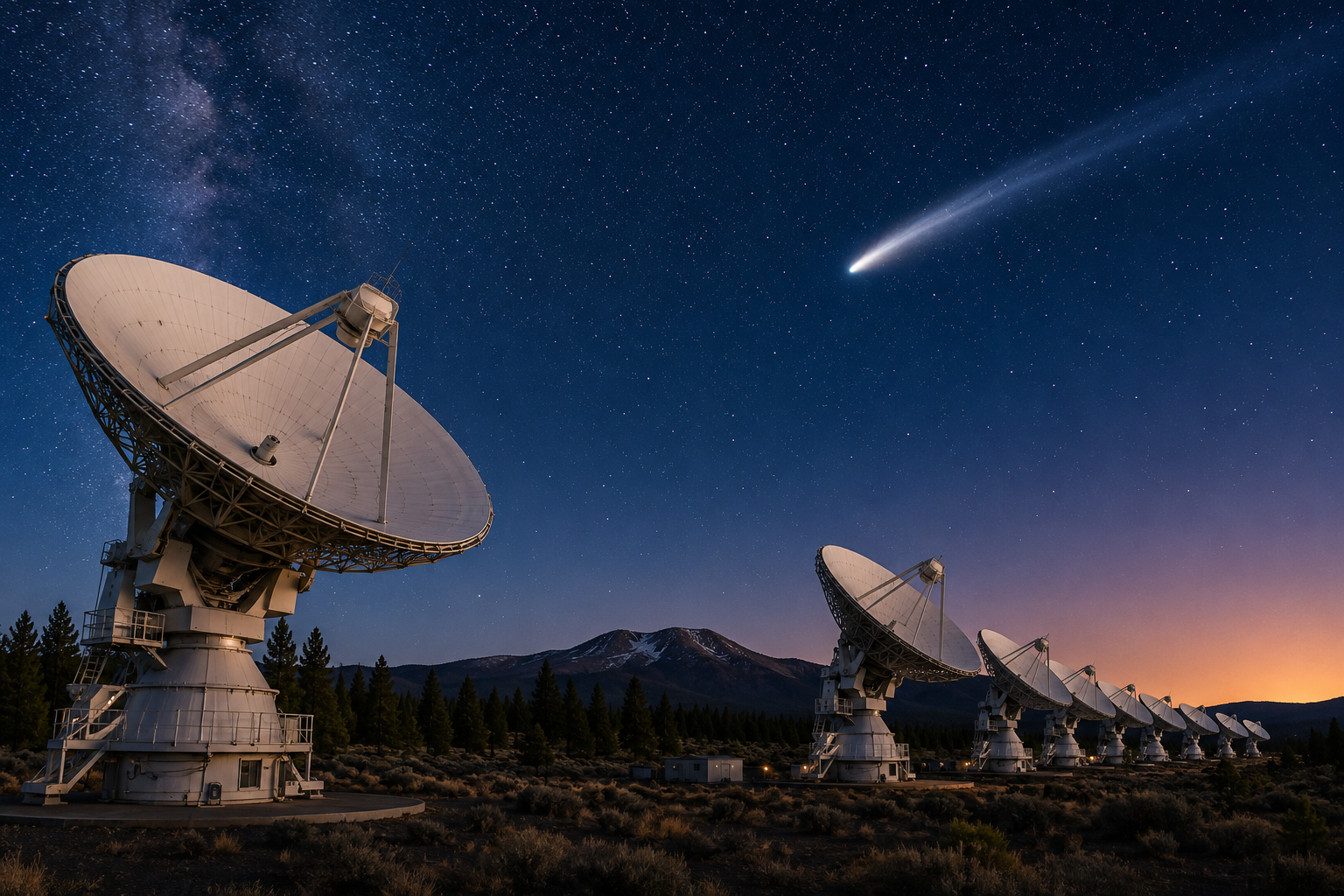
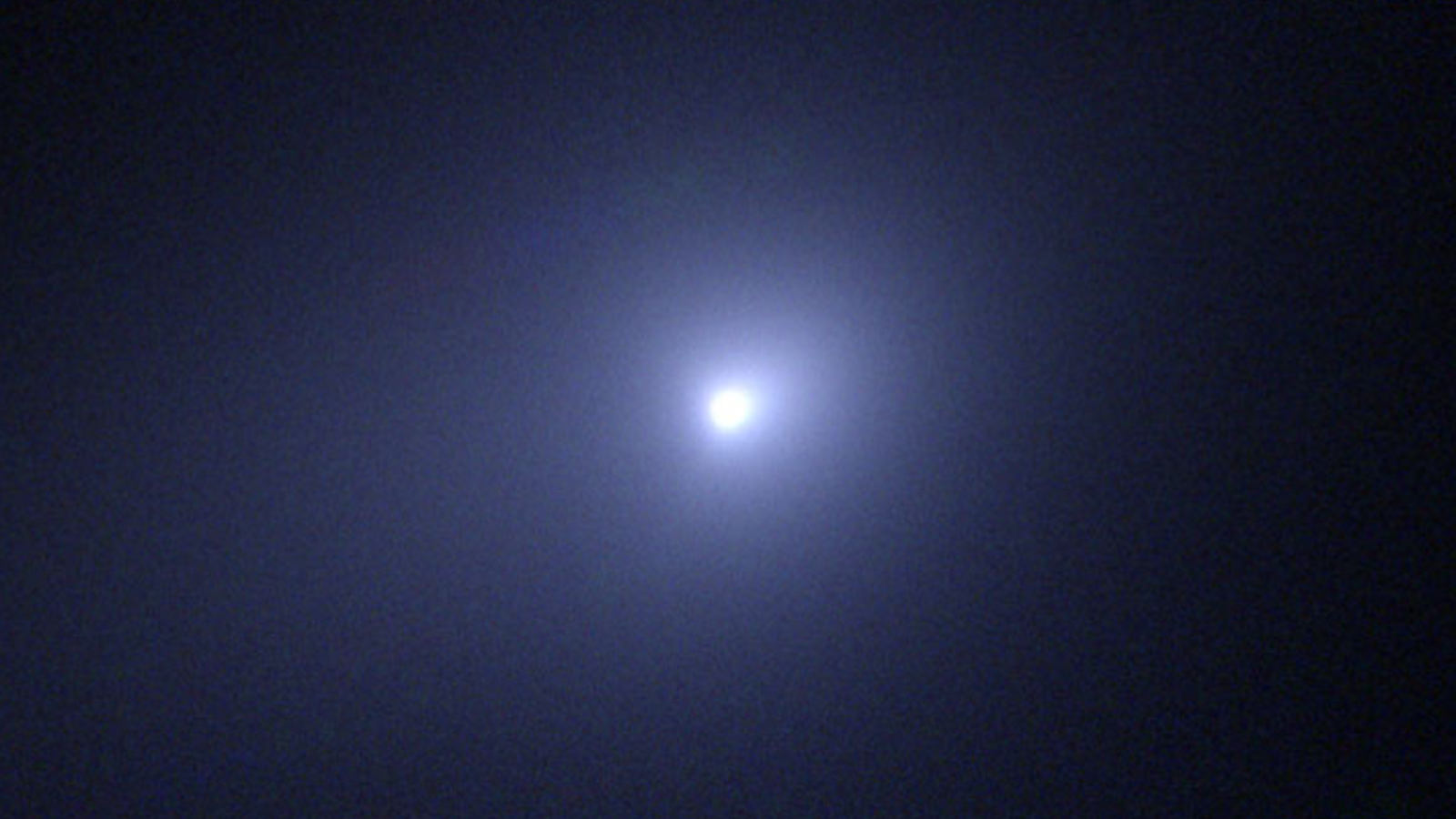
When 3I/ATLAS was first identified by the Asteroid Terrestrial-impact Last Alert System (ATLAS) project in Chile, it quickly drew global attention as the third interstellar object ever confirmed in our solar system. While its trajectory and behavior—including the venting of gas and dust—strongly suggested a natural origin, the scientific community maintained a rigorous standard of verification. Researchers from the SETI Institute, along with partners from Breakthrough Listen and various academic institutions, initiated a targeted search for technosignatures, a term used to describe evidence of extraterrestrial technology.
The team utilized the Allen Telescope Array (ATA) at the Hat Creek Radio Observatory in Northern California to monitor the object. Over five separate sessions totaling 7.25 hours, the array scanned a broad radio spectrum ranging from 1 to 9 gigahertz. This specific frequency range was chosen to identify narrowband signals, which are highly focused bursts of energy that are not typically produced by natural astrophysical phenomena like stars or gas clouds.
Filtering 74 Million Signals from Earthly Interference
The search produced a massive volume of raw data. According to StudyFinds, the team’s software identified nearly 74 million potential signal detections. However, the vast majority of these hits were promptly dismissed as radio-frequency interference (RFI) generated by human activity, such as GPS satellites, cellular networks, and commercial satellite downlinks.
To refine the data, the researchers employed a series of filters. Approximately 16 percent of the scanned frequency range was discarded entirely due to heavy pollution from human-made noise. After further processing, the pool of candidates was narrowed to 211 signals, which underwent visual inspection in the time-frequency domain. Ultimately, all candidates were traced back to Earth-based technology or orbiting satellites. As reported by Space, the search “did not find any signals worthy of additional follow-up.”
Setting Constraints for Future Interstellar Visitors
Despite the lack of an artificial signal, the study provides significant value for future interstellar research. By establishing the sensitivity limits of the ATA, the team has defined the maximum power a transmitter could have possessed while remaining undetected. The observations successfully ruled out any radio signals stronger than approximately 10-110 watts over the monitored frequencies—roughly the power output of a standard household appliance.
“The results from 3I/ATLAS show how realistic it is to detect a signal with the technology we have today. That is why it is important to keep searching for technosignatures, even from objects we might not expect to have signals.”Valeria Garcia Lopez, Furman University, via Space
This methodical approach is increasingly critical as the frequency of interstellar object detections rises. With 1I/’Oumuamua identified in 2017 and 2I/Borisov in 2019, 3I/ATLAS represents a growing dataset that allows astronomers to refine their search parameters. As The Brighter Side of News notes, the team was able to pivot quickly, beginning their observations just 23 hours after the initial discovery, demonstrating an improved capacity for rapid-response science.
Why Studying Natural Objects Matters for SETI

The effort to scan 3I/ATLAS is grounded in a forward-looking perspective on human space exploration. As humanity continues to launch probes into deep space, such as the Voyager missions, our own technology will one day become the “interstellar objects” of other star systems. Scientists argue that by understanding the baseline distribution and behavior of natural interstellar visitors, they can better distinguish between a comet and a potential artificial artifact.
“Eventually, our own Voyager spacecraft will be extraterrestrial artifacts in other stellar systems. Given that, it is important that we understand the natural distribution of interstellar objects so that we will be able to identify any anomalies that could one day be signs of an artificial interstellar object.”Dr. Sofia Sheikh, lead author and SETI Institute researcher, via Los Angeles Times
The findings, published in The Astronomical Journal, reinforce that 3I/ATLAS is a natural object. As the Los Angeles Times reports, this study serves as a template for future missions, ensuring that when a truly anomalous object is eventually detected, the scientific community will have the technical constraints and observational experience necessary to investigate it with confidence.
