
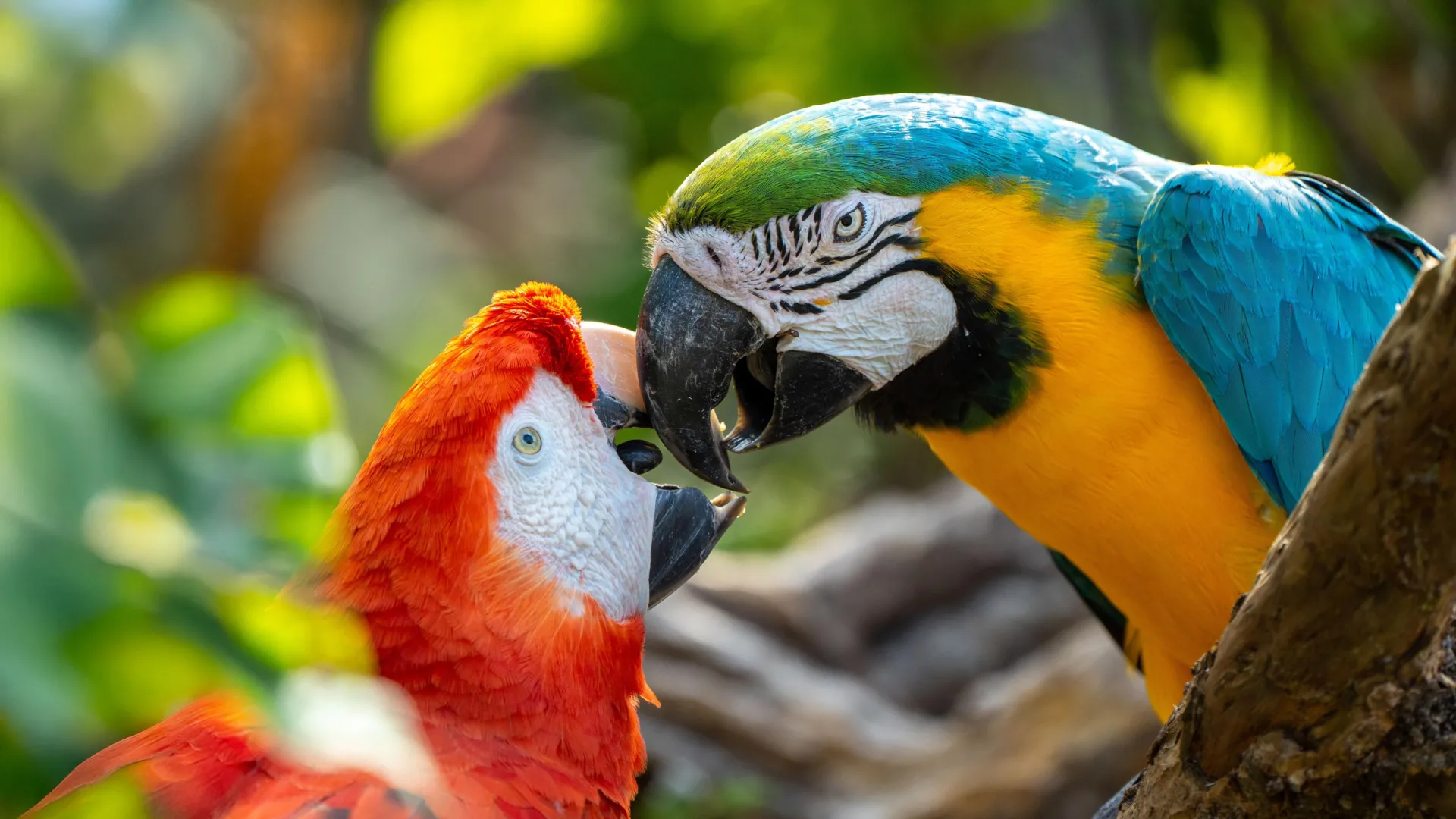
Scientists have found evidence that parrots may use names in ways resembling human social communication, according to a study published in PLOS ONE. Researchers analyzed vocal recordings from over 880 captive parrots and observed instances where birds appeared to associate specific names with individuals, challenging previous assumptions about animal communication.
Parrots’ Social Communication Patterns
The study, led by Lauryn Benedict of the University of Northern Colorado and Christine Dahlin of the University of Pittsburgh at Johnstown, examined data from the ManyParrots project, which collects surveys and audio recordings of parrot behavior. Researchers found that nearly half of the participants reported examples of parrots using names, with 88 instances suggesting birds linked specific names to individuals rather than general categories like “people.”

“We cannot conclude that they are analogous to human names both because animals signals are often so different and because we don’t understand the full intent behind the signals,” Dahlin noted, emphasizing the need for caution in direct comparisons to human naming systems.
Key Findings and Implications
The research revealed that parrots sometimes repeated their own names to attract attention, indicating a flexible use of vocalizations for social purposes. This behavior suggests parrots may adapt names for different contexts, such as addressing specific individuals or referring to someone absent.

Despite these insights, the study highlights significant gaps in understanding. Variations between species and individual birds raise questions about the conditions under which animals use vocal signals to identify others. The work was funded by the Vienna Science and Technology Fund (WWTF) project ANIML, though the funders had no role in the study’s design or publication.
Context and Broader Scientific Relevance
The findings contribute to ongoing debates about animal cognition and communication. While the study focuses on captive parrots, it opens new avenues for exploring how non-human species process and use social information. Researchers stress that further investigation is needed to determine the cognitive mechanisms underlying these behaviors.
Experts caution against overinterpreting the results, as the study does not confirm that parrots use names in the same way humans do. However, the patterns observed challenge traditional views of animal communication and underscore the complexity of social interactions in non-human species.
Find more reporting in our Tech section.
