
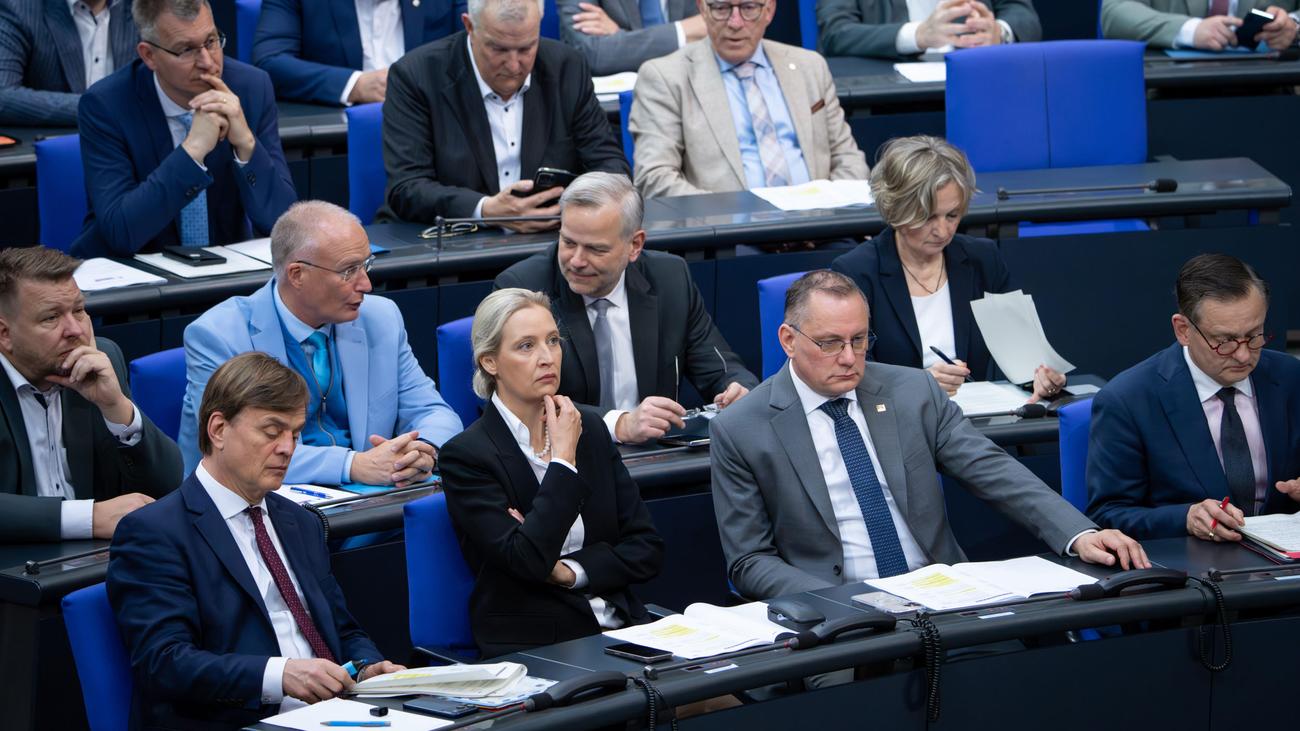
AfD Surges Ahead of Germany’s Union Party in Latest Polling, Marking Historic Shift
For the first time in decades, Germany’s far-right Alternative for Germany (AfD) party has overtaken the traditional center-right Christian Democratic Union (CDU/CSU) in national polling, according to the latest ARD DeutschlandTrend survey released Thursday, May 7, 2026.
The poll, conducted by Germany’s public broadcaster ARD, shows AfD leading the CDU/CSU by a significant margin in the so-called “Sunday question” — a hypothetical vote count if elections were held the next day. The results underscore a dramatic realignment in German politics, as the AfD consolidates its position as the country’s most popular party ahead of federal elections.
This development comes as a stark rebuke to Chancellor Olaf Scholz’s center-left coalition government, which has faced growing dissatisfaction among voters. The AfD’s rise reflects broader concerns over immigration, economic policy and national identity, issues that have dominated the political debate in recent years.
Analysts note that the AfD’s ascendance could reshape Germany’s political landscape, potentially forcing a shift away from the long-standing dominance of the CDU/CSU and the Social Democrats (SPD). The party’s success in recent regional elections and its ability to tap into voter frustration have positioned it as a formidable force in the upcoming federal vote.
The CDU/CSU, traditionally the backbone of Germany’s conservative establishment, has struggled to regain its footing after years of internal turmoil and policy disagreements. The AfD’s polling lead highlights the challenges facing the ruling coalition as it seeks to address economic stagnation and public security concerns.
While the AfD’s victory in the poll is a milestone, the party still faces significant hurdles, including internal divisions and questions about its ability to govern effectively. Nonetheless, the results signal a seismic shift in German politics, with far-reaching implications for the country’s future direction.
The AfD’s rise is not just a reflection of voter sentiment but also a symptom of deeper political discontent. As Germany grapples with economic uncertainty and social change, the party’s message has resonated with those seeking alternatives to the established parties.
For now, the AfD’s polling lead serves as a powerful reminder of how quickly political fortunes can change in Germany, where public opinion can shift dramatically between elections. The coming months will be critical as parties scramble to respond to the new reality on the ground.
