
Global Uncertainty Surges to Record High, IMF Warns of Mounting Debt Risks
Global economic uncertainty has reached unprecedented levels, surpassing those seen during the COVID-19 pandemic and the 2008 financial crisis, according to the International Monetary Fund, raising concerns about the stability of the world economy and particularly impacting developing nations.
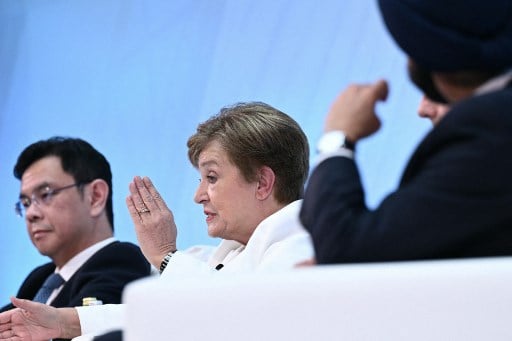
IMF Managing Director Kristalina Georgieva highlighted that the World Uncertainty Index is now almost ten times higher than it was during the 2008 Global Financial Crisis. While the global economy is “better than feared, but worse than we need,” external debt service has more than doubled in the last decade, reaching 2% of GDP in 2024, and is projected to hit 100% of GDP by 2029. Sub-Saharan Africa is facing a particularly acute crisis, with the number of countries in or at high risk of debt distress nearly tripling from eight in 2014 to twenty-three projected for 2025 – almost half the region. This escalating debt burden threatens to derail economic progress and exacerbate poverty across the continent.
Compounding these challenges, cuts to Official Development Assistance are expected to total US$31.1 billion in 2025, disproportionately affecting Africa’s low-income countries. The expiration of the US African Growth and Opportunity Act (AGOA) this month, a 25-year trade pact offering duty-free access to the US market, further complicates the economic outlook for several African nations. Europe also faces significant headwinds, including declining competitiveness, the war in Ukraine, and rising populism, impacting long-term economic stability. For context, approximately sixty million Europeans currently live in regions that are poorer now than they were at the start of the millennium, according to World Bank data.
However, opportunities for collaboration exist, particularly between Europe and Africa. Initiatives like Mission300, aiming to connect 300 million people to affordable power by 2030 with a pledged $35 billion investment, offer a pathway to sustainable development. Georgieva emphasized the potential of underutilized instruments like the European Investment Bank, which has €180–190 billion in unused lending capacity, to support energy transition and address Africa’s energy access challenges. Further, supporting South Africa’s G20 plans to address sovereign borrowing costs could unlock vital fiscal space for African nations, as detailed in a recent IMF report.
Officials are calling for a recommitment to joint action between Europe and Africa, with the upcoming EU–Africa Summit in Angola on November 24–25, 2025, seen as a crucial opportunity to forge new partnerships and address shared challenges.
