
The anxieties surrounding automation have shifted dramatically in recent years. While previous waves of technological change primarily impacted manual labor, 2026 marks a turning point: algorithms are now poised to disrupt white-collar professions and redefine the very nature of work. From AI-driven management to the merging of humans and robotics in warehouses, this report details the key trends poised to reshape our professional and personal lives – and the surprising backlash already begining to brew against a hyper-connected world.
Remember when the biggest fear was robots taking manual labor jobs? That scenario now appears not just inaccurate, but remarkably naive.
While we envisioned metallic figures on construction sites, algorithms have quietly infiltrated offices, dominated management meetings, and are now encroaching on what was once considered untouchable – our right to be inefficient. We’re entering an era where your refrigerator could be smarter than your boss, and the ultimate luxury isn’t a new iPhone, but an old Nokia with a flashlight.
Just as the battlefield shifted from trenches to drones, our daily lives in 2026 will be an arena of conflict between hyper-intelligent machines and the human desire for simply being left alone.
Below, we’ll track the key trends that won’t just be read about in the news, but felt in our wallets and nerves.
The Demise of Middle Management
If, until recently, artificial intelligence was viewed as an assistant capable of writing emails or generating images, 2026 marks the end of that “playground” phase. So-called autonomous AI agents are taking center stage.
These aren’t simply chatbots; they are systems that plan tasks, integrate with various tools, and learn from their mistakes. For businesses, this translates to deep automation, with entire “teams” of specialized agents being created for logistics, human resources, or finance.
This brings unwelcome news for those in suits who enjoy meetings. This represents a fundamental shift in corporate hierarchy. While factory workers were largely replaced decades ago, now it’s the turn of those who coordinate them.
- The New Proletariat: These are the former team leaders who will need to quickly reskill from managing people to managing algorithms.
- Preparedness: According to IBM, nearly half (48%) of employees are already mentally prepared to be managed by AI agents.
The Cyborg in the Warehouse
While offices are becoming virtual and unsettling, warehouses and factories are becoming sweaty and…cybernetic. Industry 5.0 isn’t about replacing humans with robots, but merging them.
Warehouse automation is now a necessity for efficiency, but the focus is shifting to collaborative robots (Cobots) and wearable technology. Imagine a warehouse worker with smart gloves and AR glasses that tell them which package to pick and where to place it.
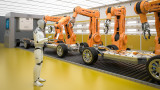
Instead of being laid off, the warehouse worker becomes a cyborg operator – a person whose glove is directly connected to the system. This is a story of the fusion of man and machine in the most practical environment. This trend is expected to drive significant investment in robotics and automation technologies.
Rosie from “The Jetsons” is Finally Here
For years, we’ve been promised domestic robots, and instead received vacuum cleaners that bump into table legs. However, starting in 2025, robots like Roomba (rest in peace!) have evolved into multifunctional machines that not only clean but also cook.
These home helpers are expected to become “mainstream” for busy households in the coming years, saving owners between 5 and 10 hours of tedious work per week. For businesses, this represents a goldmine – the AI hardware market is projected to grow by $50 billion.
The Quantum Apocalypse of Passwords
If the above trends sound exciting, this one should make you think about your bank account. The fintech sector is focused on quantum computing, but not just with hope, but with dread.
The problem is simple: while quantum computers promise unimaginable power, they also have the potential to break all modern cryptographic standards. All of our digital communication – banking, security, state secrets – could become vulnerable in seconds. There are also significant concerns about the future of cryptocurrencies, including Bitcoin.
- The Race: IBM, Google, and Chinese tech giants are already making significant progress.
- The Solution: The focus in 2026 will be on “post-quantum cryptography” – the attempt to lock the door with a new key before “quantum hackers” figure out how to walk through walls.
Digital Detox as Rebellion
And now – the paradox. In a world where AI knows you better than your mother, and your refrigerator orders milk, the most modern thing will be…pulling the plug.
Hyper-personalization, where brands create ads in real-time specifically for you, leads to an “information echo chamber” – you only see what the algorithm has decided you want to see.
The reaction is swift. “Digital detox” is becoming a major cultural trend and even a political act of freedom.
- The Return of the “Brick”: There’s a resurgence of so-called “dumb phones” – phones without AI, without social media, just with “Snake” and SMS.
- Who’s Checking Out?: 44% of Generation Z are already seeking detox options to preserve their mental health.
The irony is complete: while the tech industry searches for the next billion-dollar hardware, the biggest hit of 2026 may simply be turning off the power.
