
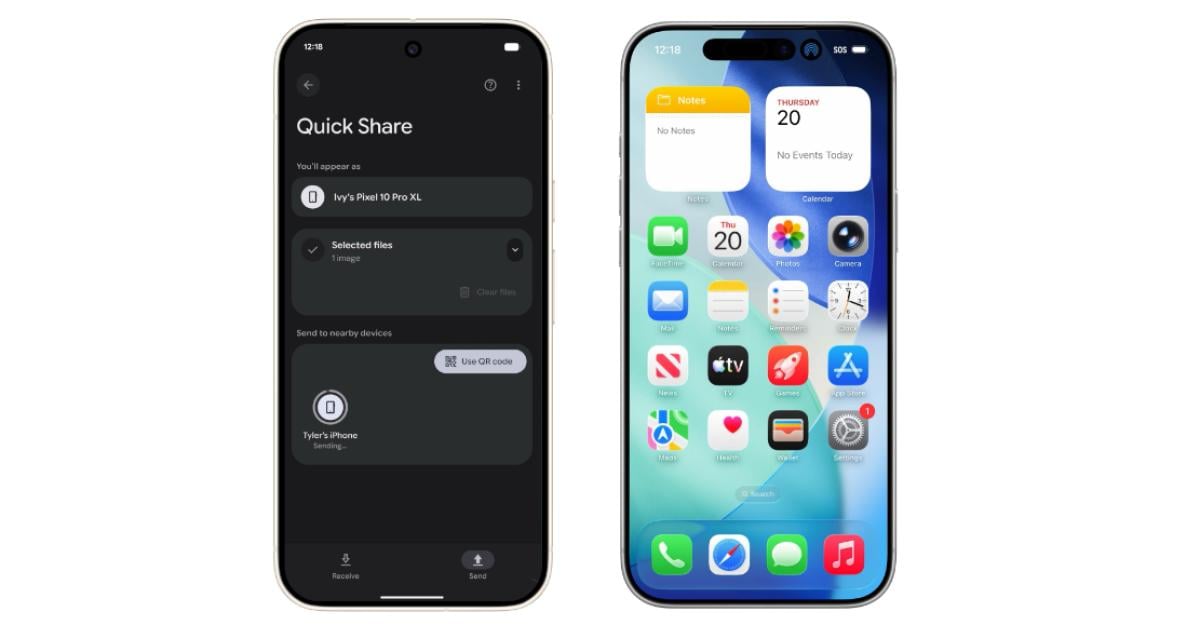
In a surprising move toward greater interoperability, Google has enabled Android devices to directly share files with iPhones via a newly implemented compatibility with Apple’s AirDrop. Initially rolling out with the Pixel 10 family, the feature bypasses the need for third-party apps and aims to streamline cross-platform file transfers-a long-requested capability for users of both operating systems [[1]], [[2]], and [[3]].
Thomas Prenner
The age-old question, “Can I AirDrop this to you?” – followed by the apologetic “Sorry, I have an Android” – may soon be a thing of the past. Google has unexpectedly added compatibility with Apple’s AirDrop to Android, allowing devices from both ecosystems to share files directly, without relying on third-party applications. This bidirectional transfer capability aims to streamline file sharing between the two dominant mobile platforms.
Currently, the feature is exclusively available on Google’s Pixel 10. However, Google plans a gradual rollout to other Android devices. In a post on X, Google emphasized its commitment to “cross-platform compatibility” as a way to bridge the gap between different mobile ecosystems.
➤ More reading: Google unveils improved Nano Banana Pro: What it can do
To enable file transfers, the receiving device must be set to be visible to all nearby phones for a period of 10 minutes. Once activated, the sending device should then detect the Android phone or iPhone. This move represents a significant step towards interoperability in a market often characterized by walled gardens.
➤ More reading: Pixel 10 Pro XL review: Finally, something new is happening in the mobile world
The functionality is now being rolled out for the Pixel 10, Pixel 10 Pro, and Pixel 10 Pro Fold, with plans for wider availability on other Android devices in the future. Users can check for availability by selecting a file to share and looking for available Apple devices in the Quick Share menu.
A test by futurezone on Friday morning, however, found the feature was not yet active on a Pixel 10 Pro. Google’s announcement did not specify any geographical restrictions, offering hope for a swift rollout.
➤ More reading: Google introduces Gemini 3
Developed Without Apple’s Involvement
According to the company, the feature was developed entirely without Apple’s participation. Google confirmed to Android Authority that the implementation was completed independently and has undergone vulnerability testing by both internal teams and the independent security firm NetSPI.
In a blog post, Google described the current implementation as a first step and expressed openness to collaborating with Apple. The company would like to also support the “Contacts Only” mode, which is typically the default setting for iPhone users and offers enhanced privacy. Apple has yet to issue a statement regarding this possibility.
EU Pushed for Openness
The exclusivity of AirDrop to Apple devices has previously drawn scrutiny from the EU. Apple reportedly considered removing the AirDrop function for iPhone and iPad users in the European Union as part of an appeal against the Digital Markets Act of the EU.
