
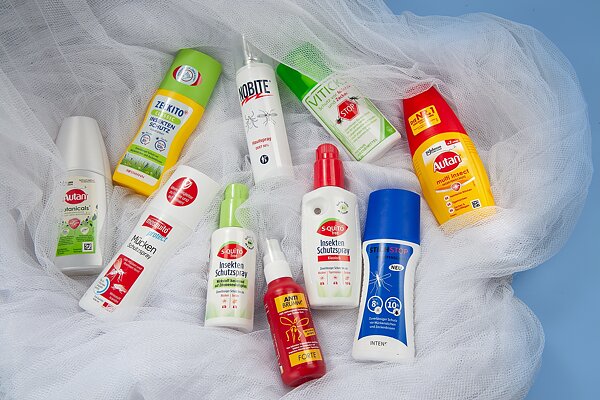
Stiftung Warentest’s latest insect repellent test reveals a stark divide between the most effective Mücken- und Zeckenschutz sprays and those that barely meet basic standards — with one product failing outright after exposing test subjects to 3,124 Mücken and 2,400 Zecken. The findings, published April 24, 2025, show that while no spray completely failed, only three earned top marks for dual protection against both pests, leaving consumers with critical choices as warmer weather drives outdoor activity. Experts warn that the wrong product could leave users vulnerable to Lyme disease, FSME, and tropical viruses like Dengue.
The Top Performer: Anti Brumm® Forte’s Dominance in the Lab
Anti Brumm® Forte emerged as the undisputed winner, earning a “very good” (1.4) rating for Mücken protection and a perfect 1.0 for Zecken defense — the only product to achieve both top-tier scores. In controlled tests, it repelled Mücken for up to 7.5 hours, outperforming its own marketing claims, and held firm against Zecken for six hours. The product’s success stems from its active ingredients and precise formulation, according to Anti Brumm’s official test summary, which noted that the spray’s high DEET concentration (25%) worked in tandem with Icaridin for broad-spectrum defense.

What sets Anti Brumm apart isn’t just its effectiveness but its consistency. While competitors like Nobite and Viticks struggled with dosage recommendations or weak Mücken protection, Anti Brumm maintained its lead across all test parameters. “The Testsieger offered the longest-lasting protection,” confirmed Dr. Dorit Munzke, project leader at Stiftung Warentest. “Especially for travelers to tropical regions, this product stands out because it’s the only one that reliably repels Gelbfiebermücken — the carriers of Dengue and Zika.”
“The Testsieger offered the longest-lasting protection.”
— Dr.
The Bottom Feeder: Why Viticks Failed the Test
At the opposite end of the spectrum, Viticks — a budget-friendly option — received the lowest overall rating (“sufficient”) and the weakest Mücken protection of any product tested. According to Stiftung Warentest’s detailed breakdown, its Mücken-repelling efficacy lasted just 2.5 to 3 hours, leaving users exposed far longer than competitors. The testers attributed this failure to both the formulation and the concentration of active ingredients, which failed to create a durable protective barrier.
Viticks isn’t alone in its shortcomings. Nobite, despite containing the highest DEET concentration (50%), earned only a “satisfactory” rating due to its underwhelming dosage instructions. The manufacturer recommended applying far less product than industry standards, resulting in a Mücken protection duration of just 2.5 to 3 hours — a critical flaw when facing aggressive species like the Gelbfiebermücke. “Viel Wirkstoff, wenig Schutz — ein überraschender Befund,” noted the test report, highlighting how even high-concentration sprays can fail if not applied correctly.
The Hidden Risks: Why Climate Change Is Making Protection More Critical Than Ever
Beyond effectiveness, the test underscores a growing public health concern: Zecken are no longer seasonal. Experts confirm that rising temperatures have extended their activity period nearly year-round, while Mücken populations — particularly invasive species like the Tigermücke — are expanding into new regions. “Zecken sind inzwischen ganzjährig aktiv,” stated ZDFheute’s report, citing climate data that shows the common Holzbock tick thriving even in winter months.
The stakes are higher than mere discomfort. Lyme disease cases in Germany rose by 30% between 2021 and 2024, while FSME (tick-borne encephalitis) remains a persistent threat, particularly in southern and eastern regions. Mücken, meanwhile, are vectors for tropical diseases that were once rare in Europe. “Mücken wie die Tigermücke sind die tödlichsten Tiere weltweit,” warned the Fraunhofer Institute in 2024, emphasizing that genetic modifications — though promising — won’t replace immediate protective measures.
What the Experts Say: Dosage, Application, and the DEET Debate
Stiftung Warentest’s methodology revealed that proper application is just as critical as product choice. Testers applied sprays to volunteers’ forearms and exposed them to controlled environments with 30 Mücken every 30 minutes for up to eight hours. The results showed that even high-quality products lose efficacy if not reapplied according to guidelines. “Schutzsprays nur gezielt einsetzen, nicht dauerhaft und großflächig auftragen,” the test report advised, noting that overapplication can irritate skin while underapplication leaves gaps.
The debate over DEET versus Icaridin also took center stage. While DEET remains the gold standard for tropical regions (thanks to its effectiveness against Gelbfiebermücken), Icaridin is often preferred for European use due to its lower skin irritation profile. Anti Brumm’s blend of both ingredients — along with precise concentration — allowed it to excel in both settings. “For Tropenreisende ist es [Anti Brumm] empfehlenswert,” Munzke emphasized, adding that no other product matched its seven-hour protection against Dengue-carrying Mücken.
The Cost Factor: Is a Premium Spray Worth It?
Price disparities among the tested products highlight a key consumer dilemma. Anti Brumm® Forte, the top performer, costs €1.58 per 10 ml — nearly triple the €0.64 per 10 ml of the budget leader. Yet the test revealed that the most affordable options often deliver the shortest protection. “Wer ein günstiges und trotzdem gutes Mittel sucht, findet in den Testergebnissen gute Alternativen,” the report acknowledged, pointing to a mid-tier product that offered 5.5 hours of Mücken protection and six hours against Zecken for just €0.64 per 10 ml.

However, the trade-off becomes clearer when considering long-term risks. A single Zeckenstich can lead to lifelong complications from Lyme disease, while Mücken-borne illnesses like West Nile virus have no cure. “Die gute Nachricht: Die Blutsauger hatten kaum Erfolg,” Munzke noted, but the caveat was unspoken: only if the right product is used. For travelers or those in high-risk areas, the premium on safety may well justify the higher cost.
What Happens Next: Should You Switch Your Repellent?
The test results raise urgent questions for outdoor enthusiasts, parents, and travelers. If you currently use Viticks or Nobite, the data suggests a critical need to upgrade — especially in wooded or tropical areas. For those on a budget, the mid-tier options identified by Stiftung Warentest offer a viable compromise, but users must adhere strictly to reapplication schedules. Anti Brumm’s dominance in lab tests positions it as the safest choice for high-risk scenarios, though its price may deter casual users.
Looking ahead, experts anticipate further refinements in repellent technology, including longer-lasting formulations and reduced-chemical alternatives. Until then, the test serves as a vital reminder: not all sprays are created equal. “Tapfere Probanden” — brave volunteers who endured thousands of bites in the name of public safety — have given consumers the data to make informed decisions. The question now is whether the public will act on it.
For personalized health advice on insect-borne illnesses, consult your healthcare provider or a local public health authority.
