
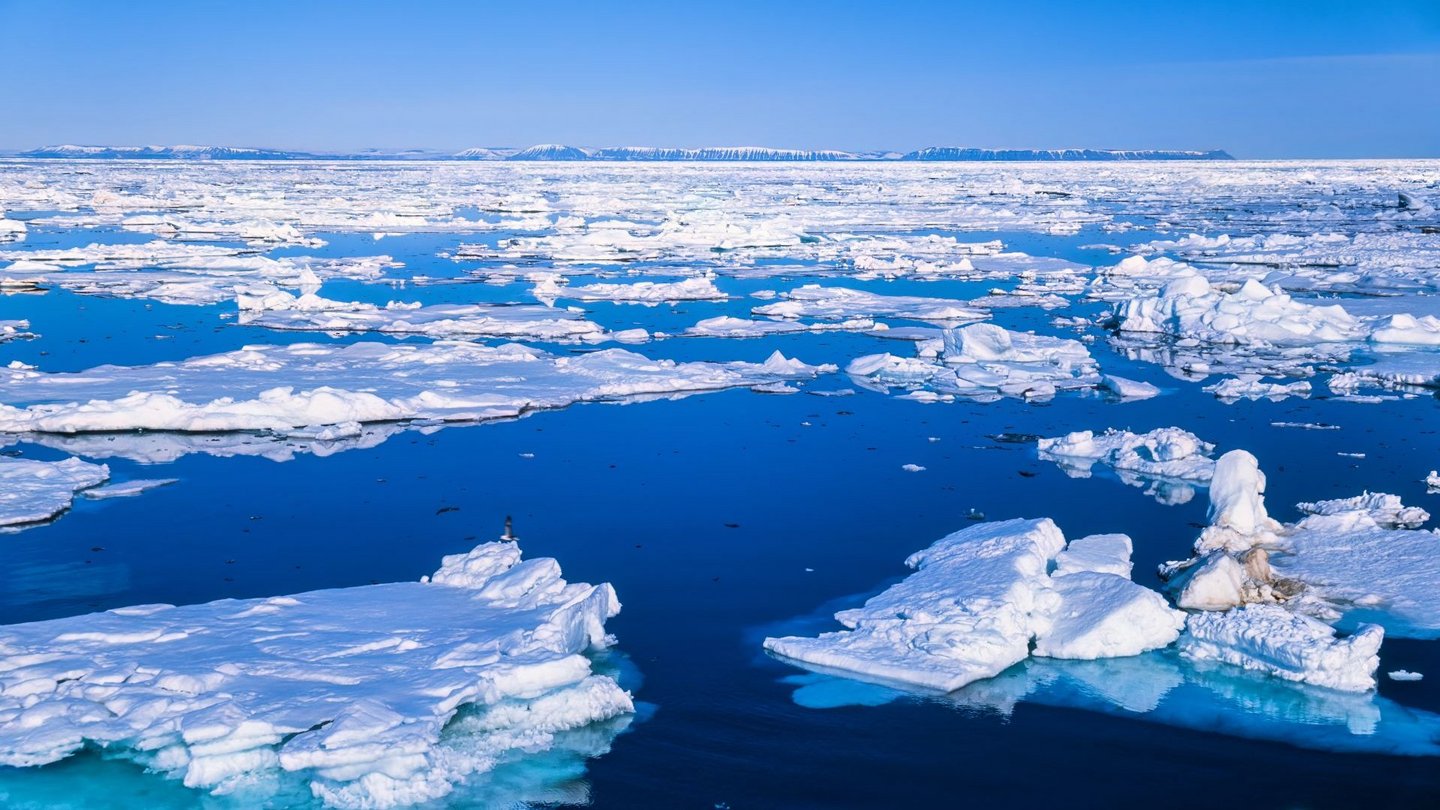
A new study in Science Advances reveals an alarming acceleration in the warming of the Arctic Ocean‘s deep waters, driven by shifting currents from the North Atlantic. This influx of warmer water-occurring at depths of nearly two miles-is disrupting established temperature patterns and raising critical questions about the future stability of the fragile Arctic ecosystem,a region warming nearly four times faster than the global average. Researchers warn that these changes could trigger irreversible shifts in ice melt and ocean circulation, with potential ripple effects felt worldwide.
The Arctic’s deep ocean waters are warming at an accelerating rate, driven by currents originating in the North Atlantic, according to a new study published in the journal Science Advances. This influx of warmer water is disrupting long-established temperature patterns in the region and raising concerns about the stability of the Arctic ecosystem.
Researchers analyzed extensive datasets of water temperatures from the surface to depths of nearly two miles around the North Pole. The team, led by Ruizhe Song of the Ocean University of China in Qingdao, then developed models to explain the observed changes. The findings reveal a significant shift in the thermal balance of the Arctic Ocean, with implications for sea ice melt and ocean circulation.
Atlantic Currents Fuel Deep-Sea Warming
Since the 1990s, the temperature of the deep waters in the Eurasian Basin – north of Greenland, Svalbard, and Siberia – has been increasing by an average of 0.02 degrees Celsius per decade. While geothermal activity contributes to warming in the deep ocean, the observed increase is substantially higher than expected from that source alone.
The study points to inflows of deep water from the Greenland Basin as the primary driver of this accelerated warming. Historically, these currents brought colder water to the Arctic, helping to regulate its temperature. However, as the Earth warms, the waters in the Greenland Basin have also become significantly warmer, reversing this cooling effect. The Amerasian Basin, located between the North Pole and the Canadian Arctic coastline, is warming at a slower rate of 0.003 degrees Celsius per decade, due to the presence of the Lomonosov Ridge, an underwater mountain range that blocks the flow of warmer Atlantic deep water.
Potential for Arctic Ecosystem Shift
The diminishing cooling influence of the Greenland Basin could destabilize processes within the Arctic ecosystem, potentially triggering a tipping point leading to irreversible changes. This could accelerate ice melt and alter ocean current patterns. The Arctic is increasingly recognized as a region particularly vulnerable to climate change, and these findings underscore the urgency of understanding these complex dynamics.
The research highlights how changes in one part of the global ocean system can have cascading effects in remote regions like the Arctic. Further monitoring and modeling are crucial to predict the long-term consequences of these warming trends and inform mitigation strategies.
