

Beijing’s steady accumulation of gold reserves is raising eyebrows in global financial markets, as analysts question whether official figures accurately reflect the scale of China’s holdings [[3]]. The People’s Bank of China has been consistently adding to its reserves for the past year, a move widely interpreted as a strategic diversification away from the U.S. dollar and a potential challenge to the dollar’s dominance [[1]]. This report examines the discrepancies between reported purchases and market estimates, and the implications for the global economy.
China is quietly and consistently building its gold reserves, a move widely interpreted as a diversification away from the U.S. dollar. This has sparked investor speculation about the true extent of Beijing’s holdings, raising questions about whether the officially reported figures accurately reflect the country’s total gold stock.
Official Estimates
According to the World Gold Council, China’s gold reserves increased by 0.9 tons in October, marking the twelfth consecutive month of purchases by the People’s Bank of China. Total holdings now stand at 2,304.5 tons, a rise of 24 tons compared to the end of 2024.
Reported Purchases Appear Modest
The People’s Bank of China’s reported gold purchases have been relatively small this year, with additions of 1.9 tons in August, 1.9 tons in July, and 2.2 tons in June. This has led analysts to question the accuracy of the publicly available data.
Unofficial Estimates Suggest Larger Buys
Analysts at Societe Generale estimate, based on trade data, that the People’s Bank of China may have purchased as much as 250 tons of gold this year – more than a third of total global demand from central banks.

Approximately 15 Tons Per Month
While China reported gold purchases of only 1.24 tons in September, Goldman Sachs believes the country actually added approximately 15 tons to its gold reserves during the same month.
Substantial Reserve Holdings
Bruce Ikemizu, director of the Japan Bullion Market Association, estimates that China’s gold reserves actually exceed 5,000 tons – double the reported level. ANZ Bank estimates current reserves at 5,500 tons.
Second Largest Holder
China is currently the seventh-largest gold-holding country globally. However, if ANZ’s estimates are accurate, Beijing would be the second-largest holder, surpassing Germany’s 3,350.3 tons.
A Key Driver of Price Increases
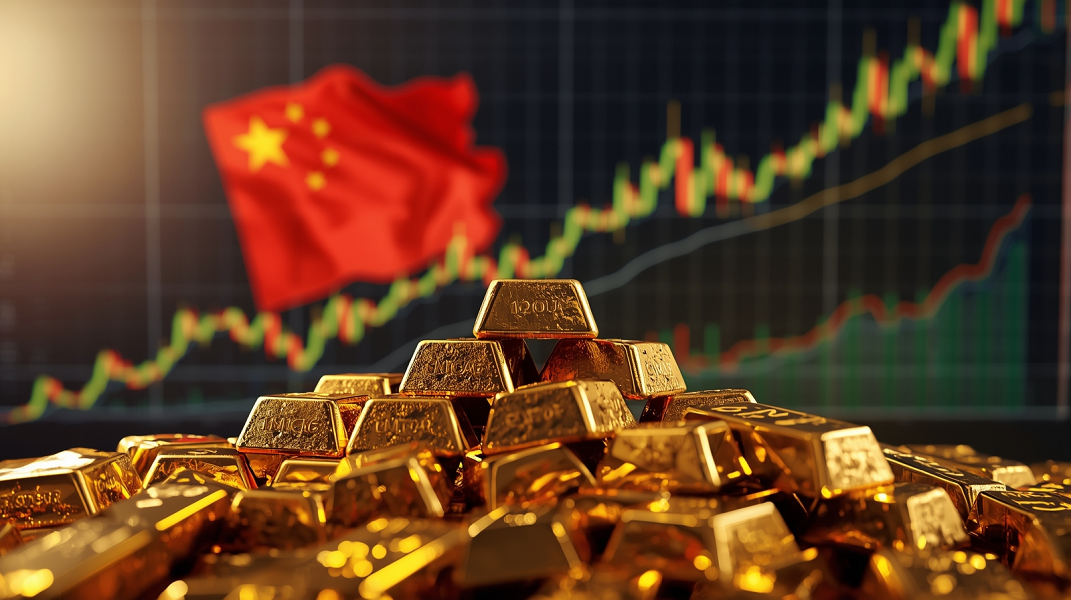
Analysts believe that China’s reported and unreported purchases have been a primary driver behind the rise in gold prices over the past three years, including a 54% increase since the beginning of the year.
Tracking Challenges
Jeff Currie, an analyst at Carlyle, attributes the discrepancies in estimates to the difficulty of tracking gold imports, unlike oil shipments which can be tracked relatively easily via satellite.
Why the Purchases?
– Currie believes China is buying gold aggressively as part of a strategy to reduce reliance on the U.S. dollar. Niki Shiels, an analyst at MKS PAMP, suggests China may be reporting minimal purchases out of fear of further deteriorating relations with the U.S., while others believe it may be preparing for a large-scale confrontation with the West.
A Cornerstone of Financial Strategy
Amidst the uncertainty surrounding the People’s Bank’s actual gold purchases, the precious metal remains a cornerstone of China’s financial strategy to diversify assets. The true size of the reserves, however, remains a mystery confounding global markets. Is China preparing for something?
Sources: Argaam – Financial Times – Forbes – World Gold Council – Bloomberg
