
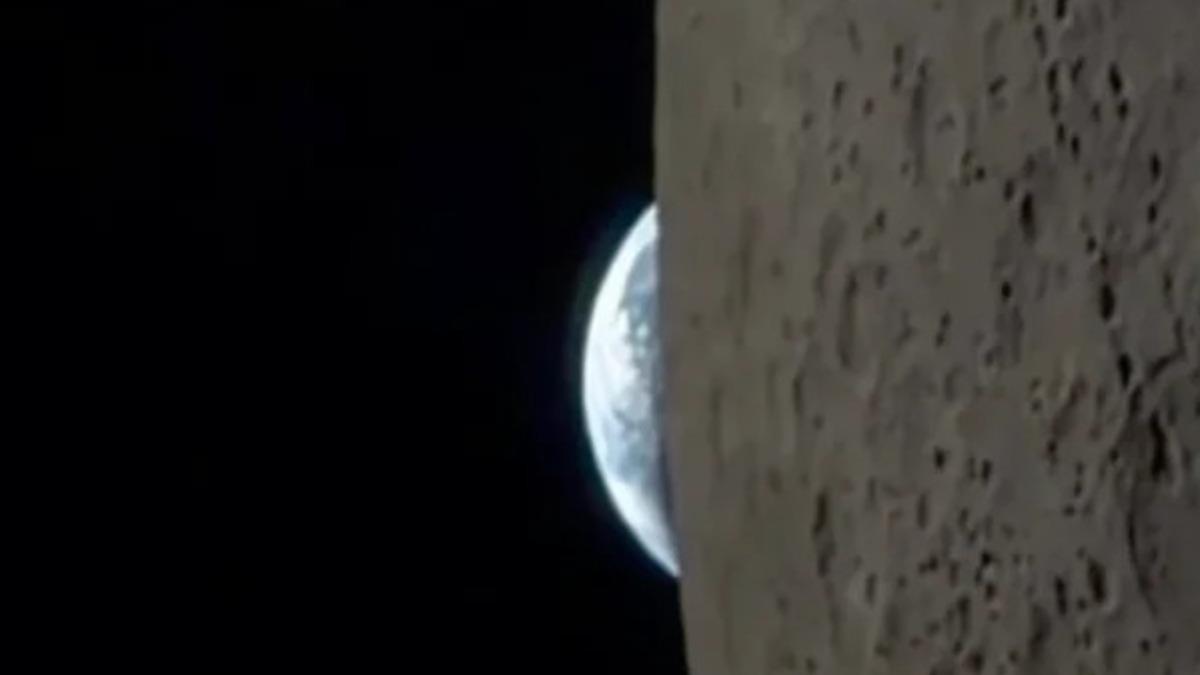
Artemis II Captures Stunning Earthset from Lunar Orbit NASA’s Artemis II mission has delivered breathtaking modern footage of Earth disappearing below the lunar horizon, offering a profound visual reminder of humanity’s place in the cosmos. Captured by astronauts aboard the Orion spacecraft, the video shows Earth gradually vanishing behind the Moon’s edge—a phenomenon known as an Earthset—recorded during the spacecraft’s journey around the lunar far side. The imagery, shared widely across global news platforms, highlights the mission’s success in testing deep space communication and navigation systems ahead of future crewed landings. Unlike the Apollo-era images of Earthrise, this perspective emphasizes the isolation and fragility of our planet as seen from deep space, reinforcing the psychological and scientific value of long-duration human spaceflight. The Artemis II crew, consisting of NASA astronauts Reid Wiseman, Victor Glover, Christina Koch, and Canadian Space Agency astronaut Jeremy Hansen, became the first humans to travel near the Moon since 1972. Their 10-day mission, which launched on November 16, 2024, from Kennedy Space Center in Florida, served as a critical test flight for the Space Launch System rocket and Orion spacecraft—key components of NASA’s Artemis program aimed at establishing a sustainable presence on the Moon. During the mission, astronauts used modified iPhone cameras to capture high-resolution video and stills of the lunar surface and Earth, demonstrating the viability of commercial off-the-shelf technology in deep space environments. The Earthset footage, in particular, has drawn attention for its emotional resonance and clarity, offering a modern counterpart to the iconic “Blue Marble” images from the Apollo era. Beyond public engagement, the mission included rigorous scientific objectives. Researchers monitored the crew’s physiological responses to deep space radiation, microgravity, and isolation, gathering data essential for preparing future missions to Mars. Radiation sensors embedded in the Orion spacecraft and wearable dosimeters worn by astronauts collected real-time measurements, contributing to NASA’s ongoing efforts to mitigate health risks associated with long-duration space travel. The Artemis II mission also underscored international collaboration, with the European Space Agency providing the Orion service module and Canada contributing advanced robotics and astronaut training support. These partnerships reflect the broader strategy of leveraging global expertise to reduce costs and accelerate innovation in space exploration. As NASA prepares for Artemis III—planned for a crewed lunar landing no earlier than 2026—the data and imagery from Artemis II are being analyzed to refine landing procedures, improve life support systems, and enhance astronaut safety. The mission’s success has been widely cited as a milestone in revitalizing human deep space exploration after more than five decades. The Earthset video, now circulating across news and social media platforms, serves not only as a technical achievement but also as a cultural moment—reinforcing public interest in space exploration and inspiring the next generation of scientists, engineers, and explorers. Its release comes at a time when private companies and international agencies are increasingly investing in lunar infrastructure, signaling a new era of sustained activity beyond Earth’s orbit.
Artemis II: Breathtaking Views of Earth from the Moon
11
