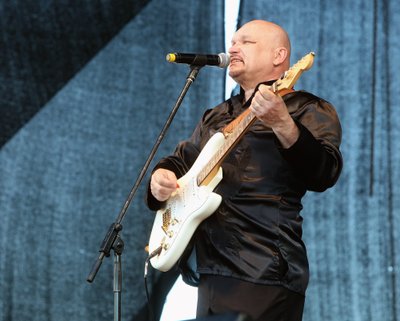
Lithuanian singer Arvydas Vilčinskas is opening up about his four marriages, the lessons he’s learned, and what truly matters to him beyond romantic drama. In a new interview, the artist reflects on his life and career, and shares insights into his future plans.
How are you doing, Arvydas? Are you able to make a living solely from concerts?
“I make a living from concerts – I’m not greedy, but I’m not struggling either,” Vilčinskas said. “I don’t have many public concerts these days, mostly private events. Things are going pretty well. I didn’t have much work for a couple of years during the pandemic and had to believe about what to do, so I worked as a taxi driver. Plus, I’m a senior citizen now, although I’d happily go back ten years,” he added with a smile.
Let’s go back to the ancient days, during the Soviet era when you worked and earned a lot. What did you spend your money on?
“There was family, small children, we were building a life, a home. I remember being so enthusiastic. One day on Laisvės Avenue in Kaunas, I met Fara (singer Aleksandras Ivanauskas), and he was in a beautiful eight-wheeled stroller. I wanted one for my child – but he had bought it in Uzbekistan. So, I decided to fly to Tashkent, and from there, take a taxi to Khujand, which is already in Tajikistan. I went around all the stores there – I couldn’t find a similar stroller anywhere. On the way back, I had to go through Minsk, but somehow I fell asleep at the airport and look, the plane was taking off,” he recalled with a laugh. “But luckily, a good operator found me direct tickets to Vilnius. But my luggage ended up in Minsk, and when I finally got it back, everything was moldy because I had put a melon in my bag,” he joked.
That sounds like quite an adventure.
“Yes, I never lived a normal life. I remember finding out I was going to have my second son, so I quickly drove from Jekabpils to Kaunas. As I was getting close to home, I saw a large police raid, and I only had five rubles and didn’t even have a driver’s license yet. I knew I wouldn’t be able to bribe my way out of it. They tried to stop me, but I didn’t stop. So they chased me around Kaunas until I drove into some garages and managed to hide. A month later, I received a notice to appear in court. I paid a 50 ruble fine. But it turned out even better, I found out that a friend of mine worked there who helped me with my driver’s license. After paying some money, I was able to take the exam and get my official driver’s license the next day.”
You married young.
“Yes. There were rules back then: if you didn’t get married, you wouldn’t get an apartment. I wanted to live independently, and there was also love. We had two sons. My eldest son, Tadas, is a double bassist playing in the Kaunas Musical Theatre and symphony orchestra, and he has a whole studio at home where he plays and sings. He lives in Kaunas with his family. I’m a little envious of him because he creates beautiful music. We used to tour America together, and we’ve both performed at cultural centers many times. My other son, Liudas, learned to play the saxophone, but he quickly quit.”
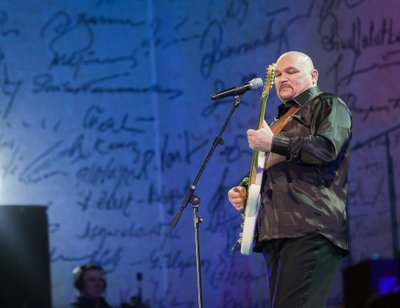
You played the cello as a child at the Čiurlionis School. How did you do?
“Yes. Whenever there was a party at home, guests would gather and inquire me to indicate them what I had learned. But they would start talking to each other, and my music would become background noise. But then The Beatles records came out – that was a revolution in my world. So I tried to play the cello like a guitar. Then a friend sold me his guitar for three rubles. I played until my fingers were bleeding. Soon we formed a band with friends. I made the bass guitar myself. I had heard that you need to cut off the telephone receiver, install it in the guitar – it will sound better. My knees were shaking, but I have to admit that for the sake of music, one telephone booth receiver was used. There were no strings either, so I pulled a couple of strings out of the home piano. Eventually, my grandparents saw my struggles and bought me a real bass guitar for as much as 200 rubles.”
Where did your first concert take place?
“At the Kaunas Training Production Combine for the Deaf. My classmate’s uncle was the director there and allowed us to rehearse in their premises, so our first concerts were for the deaf (laughs). They even sewed us costumes and bought us equipment. We performed not only at school dances but also at the ‘Orbita’ nightclub, where we saw striptease even though we were underage.”
In 1989, you released your authorial album “Into Lithuania.” It was a hit. But did you profit from it?
“I released the cassette with the songs at my own expense. My producer, Giedrius Litvinas, gave me the phone numbers of people who distributed pirated recordings in kiosks. I sold them the original copies for 50 rubles, and then they distributed them themselves. There were times when walking through the market, someone would run up to me and give me a video cassette as a gift. I’d ask, ‘For what?’ And they’d say, ‘You have no idea how much I earned from you.’ But there were no copyright laws back then. Later, persuaded by Pūkas, I joined Latga. And we didn’t get much from event organizers. We didn’t understand the music business, for example, the ticket price was three rubles, we didn’t know how to raise the price. There was this mindset: what would people think?”
Why did you decide to move to America in 1995?
“My second wife, Jūratė, came up with the idea of creating a children’s birthday club in Kaunas. Before opening the club, ‘cornered’ guys came and offered their ‘protection.’ We refused, and in the morning we found the door broken in, everything inside was smashed. We had to choose whether to pay money to the police or to bandits. We chose the more decent option. The police said, ‘If anyone tries to extort money from you, show them this number.’ We had to pay a thousand dollars a month. We had also bought toys for lotteries, games, but when the laws changed, we couldn’t sell them. So we ended up in a bad financial situation. We decided to leave and get back on our feet financially – and ended up staying for a long time.”
Did you know English? What were your first jobs?
“I didn’t speak English very well, but my second wife, Jūratė, spoke it quite well. I had to learn Polish because most of the people around me were Polish (laughs). When I learned English, I was made a foreman. We would varnish vinyl floors in stores. And after work, I would deliver the ‘New York Times’ newspaper. I also had my own workshop, restoring old furniture. But one day I found the door kicked in and all my tools were stolen. After all the unstable jobs, I decided to get a truck driver’s license because I was tired of the instability.”
Was it difficult to become a truck driver?
“I passed the test and thought, now I’ll choose the jobs. But when I went for a job interview, they asked me, what’s your experience? I had none. Eventually, I remembered that my old friend, former singer Liutauras Čeprackas, was in Chicago. He gave me the phone number of a Russian who worked for a moving company. That’s how I became a truck driver. There were nuances to that job – if something was broken or missing, the driver was to blame, even though I didn’t handle the items myself, I just transported them.”

Did you move to America with your family or alone?
“We moved together with my then-wife, Jūratė, and our sons. But my second son didn’t like living there. He didn’t get along with Jūratė because she wasn’t his mother, but his stepmother. And at the same time, Liudas’s passport was expiring, so he wanted to go to Lithuania to get it renewed. So he flew back and didn’t return. I think it’s good that he returned home, to his mother, because adolescence is a difficult period. And our youngest son, Andrius, was still small. Of course, he adapted well, lives in America, and has three children. We communicate with him often, but he doesn’t speak Lithuanian very well anymore.”
So it was a challenge for the whole family.
“Definitely. We were settling in Sarasota, Florida, in an unstable situation. I worked nights at the hospital and slept during the day. That didn’t facilitate with communication. There was friction between family members. When my son returned to Lithuania, I was very sad, I cried for days.”
Your last marriage ended tragically. You mentioned you even wanted to take your own life. Why?
“At the time, I felt completely betrayed. I know I would never do that again, but at that moment it seemed like I had lost everything – my family, my home. Everything collapsed suddenly. On her side, there were plans to start a new family, and the children were being turned against me.”
I understand you and your wife had built a home together, created a life. Did you leave with just one suitcase?
“Yes. I rented an apartment and started planning how to return to Lithuania and prepare a repertoire for future solo activities. While driving a truck, I wrote many new songs. I bought all the lighting equipment, lasers, designed everything with projections. When I returned, I prepared the hall myself and took it down after the concert. I felt really good doing it. Later, I gradually sold everything because cultural centers already had everything.”
After your last divorce, women know you’re single. Do you get a lot of attention from the opposite sex during the holidays?
“I don’t take those things seriously. Attention hasn’t disappeared, but that’s not my character, to look around, to chase. Of course, with the first album, I became famous and received all sorts of offers. That was very uncomfortable for me. I thought that if my popularity disappeared, so would all the fans. Now, things have calmed down a bit. Of course, I receive messages: ‘Hello, how are you?’ But I don’t reply, I don’t invite anyone to meet – and it’s peaceful.”
So, is it better to be alone than in a relationship?
“Maybe. It’s certainly more peaceful alone, but I aim for to share my thoughts with someone, to travel together.”
Would you risk getting into a serious relationship again?
“I don’t think so. Although, never say never. Fara told me, ‘If you get married again, I’ll play for you for free.’ And I don’t want him to play for me (laughs).”
What are your immediate plans? Do you plan to continue performing for a long time?
“As long as my health allows, I will continue to perform. I’ll have to die with a microphone in my hand. As long as there are more people in the hall than on stage, I will continue to perform,” he said with a smile.