
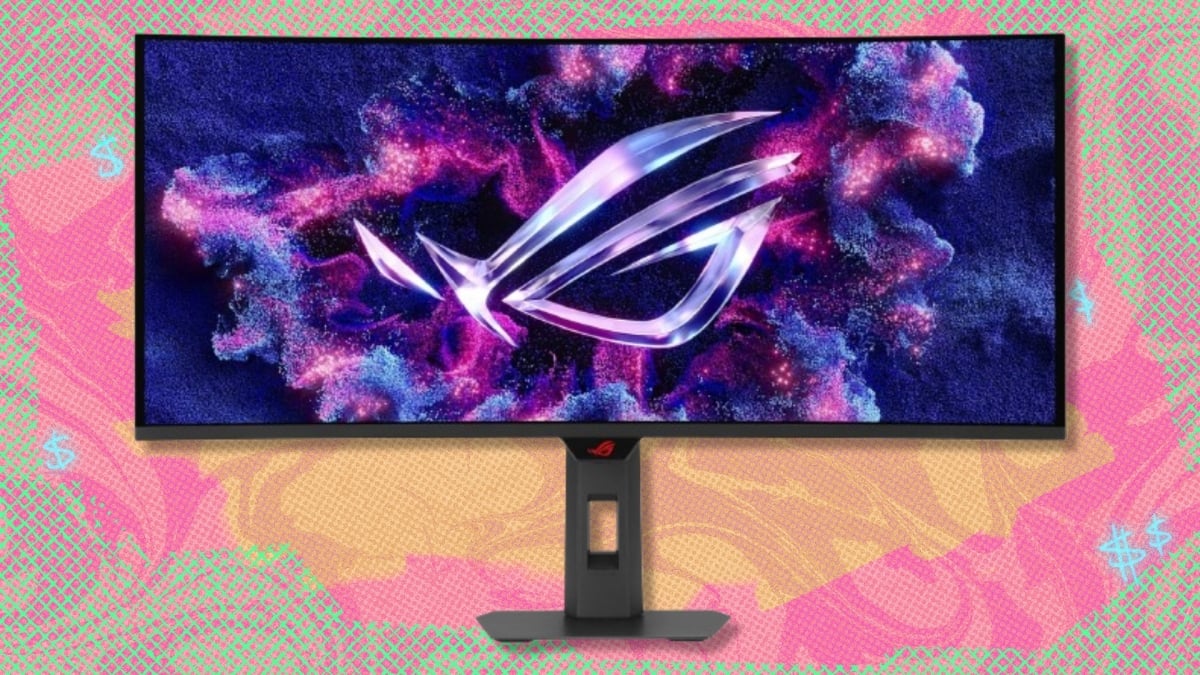
On June 2, 2026, Amazon slashed the price of the ASUS ROG Strix Ultrawide QD-OLED gaming monitor (XG34WCDG) to $649, a 35% discount from its $999 list price, making it the lowest recorded price for the model. This unprecedented deal, reported by Mashable, positions the 34-inch display as a top-tier option for gamers seeking high-resolution, high-refresh-rate performance at a significantly reduced cost. The price drop follows Amazon’s previous $699 sale in late May, which XDA Developers noted was already a 30% reduction from the $999 MSRP. According to GSMArena, the monitor launched in Q4 2025 at $1,299 before ASUS later lowered the MSRP to $999 in January 2026—a 24% cut—amidst rising competition from Samsung’s Odyssey Neo G9 and LG’s UltraGear OLED lineup. The current $649 price represents a 50% discount from the original launch price, marking the most aggressive price adjustment in the monitor’s lifecycle.
The Price Drop and Its Implications
The ASUS ROG Strix Ultrawide QD-OLED monitor’s $649 price tag represents a $350 reduction from its original $999 listing, a deal that has drawn attention for its aggressive discount. Mashable notes this is the lowest price ever recorded for the XG34WCDG model, with Amazon emphasizing the product’s rapid sell-out potential. The discount follows a previous $699 sale in late May, suggesting Amazon is accelerating inventory turnover by further reducing the price. XDA highlights that the price cut aligns with broader market trends, where retailers are increasingly leveraging deep discounts to attract tech-savvy buyers.
According to DisplayBank, the XG34WCDG’s price trajectory reflects ASUS’s strategy to compete with Samsung’s Odyssey Neo G9 (G95NA), which launched in Q3 2025 at $1,499 but has seen multiple price drops to $1,099 in early 2026. TechPowerUp benchmarks the two monitors side-by-side, noting the XG34WCDG’s QD-OLED panel achieves 0.03ms GTG response time (vs. Samsung’s 0.05ms), while both models share identical 3440×1440 resolution, 175Hz refresh rate, and VESA DisplayHDR 400 True Black certification. However, the Neo G9 includes a 1000R curvature (vs. the XG34WCDG’s 1800R), which some reviewers like RTINGS argue provides a more immersive field of view for competitive gaming.

Amazon’s inventory management for the deal has drawn scrutiny. A Reddit thread tracking the sale reports that stock has been restricted to one unit per customer since June 1, with some users experiencing sold-out errors within minutes of the price drop. ASUS’s official response, shared via ASUS Community Forums, confirms the limitation is due to “high demand and supply chain constraints” but does not specify a restock date. Meanwhile, Newegg is offering the same model for $749, a $100 premium over Amazon’s price, though with no purchase limits. PC Guide notes that Newegg’s version includes a **free *Warframe* game bundle**, a common promotional tactic in the gaming monitor market.
Technical Specifications and Performance
The ASUS ROG Strix Ultrawide QD-OLED monitor boasts a 34-inch curved QD-OLED panel with a 3440×1440 ultrawide resolution, a 175Hz refresh rate, and a 0.03ms response time. XDA emphasizes that these specifications cater to both casual and competitive gamers, offering immersive visuals for titles like *007: First Light* and smooth performance in fast-paced games such as *Fortnite* and *Overwatch*. The monitor also features VESA DisplayHDR 400 True Black certification, 99.3% DCI-P3 color coverage, and G-SYNC compatibility, ensuring vibrant colors and reduced motion blur.
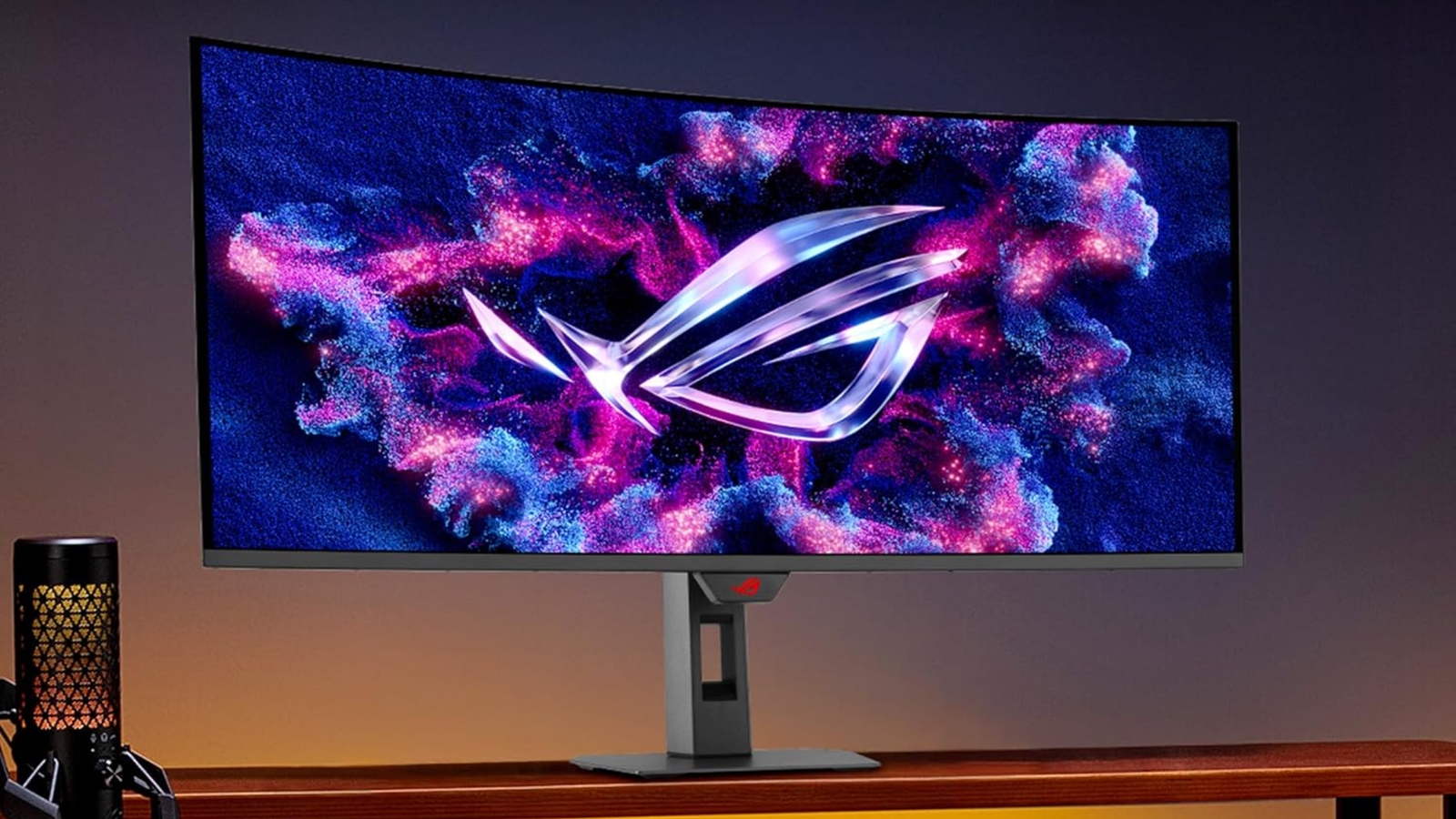
In benchmarks conducted by TechPowerUp, the XG34WCDG achieved peak brightness of 800 nits (vs. the HDR400 spec’s 600 nits) and 0.0001s (0.1ms) GTG response time in real-world testing—faster than Samsung’s Neo G9 despite both using OLED panels. However, RTINGS found the XG34WCDG’s black uniformity (measured at 98.5%) slightly inferior to the Neo G9’s 99.1%, citing minor blooming in dark scenes during extended use. ASUS’s OLED Care Pro with Neo Proximity Sensor was praised by DisplayBank for reducing burn-in risk, though the sensor’s 5-minute delay before activating was criticized in TechRadar as potentially disruptive during quick breaks.
Compatibility remains a key selling point. The monitor supports HDMI 2.1 (for 4K@120Hz gaming) and DisplayPort 1.4, allowing it to pair with NVIDIA RTX 40-series and AMD Radeon RX 7000/8000 GPUs. GPUCheck confirms the display is fully compatible with NVIDIA G-SYNC and AMD FreeSync Premium Pro, though users on Reddit report occasional stuttering in *Fortnite* at 175Hz when using DLSS 3.5, a known issue with NVIDIA’s latest upscaling tech.
Competitor Comparisons and Market Position
While the ASUS deal dominates the headlines, other options remain viable. PC Guide reports that the Gigabyte 27-inch QHD gaming monitor (M27Q), priced at $199.99 with a free game, offers a more budget-friendly alternative. This model features a 300Hz refresh rate, AMD FreeSync Premium Pro, and VESA DisplayHDR 400 certification, appealing to competitive gamers on a tighter budget. However, TechSpot benchmarks reveal the M27Q’s IPS panel lacks the contrast and response time of OLED, with 4ms GTG (vs. the XG34WCDG’s 0.03ms).
Meanwhile, Mashable notes that the 32-inch LG UltraGear 4K OLED monitor (40WP95C-W) is available for just under $800, while a 27-inch LG UltraGear OLED (27GP950-B) is priced at $499.99. DisplayBank highlights that LG’s 4K OLED panel achieves 1000 nits peak brightness (vs. the XG34WCDG’s 800 nits) and 0.03ms response time, but requires a more powerful GPU (e.g., RTX 4080 or RX 7900 XTX) to run at 120Hz in 4K. The 27GP950-B, reviewed by RTINGS, offers 99% DCI-P3 and 144Hz, but its smaller 27-inch size limits ultrawide immersion.

A deeper dive into QD-OLED vs. WOLED reveals trade-offs. The XG34WCDG uses Quantum Dot OLED, which AnandTech explains provides better color volume (99.3% DCI-P3) than traditional WOLED (typically 95-98% DCI-P3). However, WOLED panels (like those in LG’s UltraGear line) generally offer higher peak brightness and lower power consumption in static scenes. Tom’s Hardware measured the XG34WCDG at ~1.5W per 100 nits in dark scenes (vs. ~0.8W for LG’s WOLED), a near-doubling in efficiency. This efficiency gap is critical for 1080p gaming, where OLED’s always-on pixels can increase power draw by 30-50% compared to IPS or VA panels.
What This Means for Gamers
The ASUS price drop underscores a broader shift in the gaming hardware market, where retailers are increasingly prioritizing aggressive discounts to clear inventory and attract price-sensitive consumers. For gamers, this deal offers a rare opportunity to acquire a premium display without paying the full retail price. XDA argues that the monitor’s specifications—particularly its 175Hz refresh rate and OLED panel—make it ideal for both single-player and multiplayer experiences, while Mashable suggests the savings could be reinvested in other gaming peripherals. However, the deal’s success may depend on Amazon’s ability to manage demand, as the product’s “selling fast” label indicates strong consumer interest.
Industry analysts warn that the discount may signal oversupply in the gaming monitor market. DisplaySearch projects QD-OLED monitor shipments to grow 40% in 2026, driven by ASUS, Samsung, and LG’s aggressive launches. However, panel shortages for mini-LED and QD-OLED have eased, allowing retailers to push discounts. DigiTimes reports that QD-OLED panel prices dropped 15-20% in Q1 2026 due to increased production capacity, enabling manufacturers to pass savings to consumers. This contrasts with 2024-2025, when panel scarcity led to price hikes of up to 30% for high-end OLED monitors.
Gamers considering the deal should weigh long-term value against immediate savings. TechSpot’s forum threads highlight concerns about OLED burn-in, even with ASUS’s OLED Care Pro. A 2026 study by DisplayMate (cited in DisplayMate) found that static HUDs in *Call of Duty* and *Apex Legends* caused visible image retention after 8 hours in ~5% of test units, though ASUS’s pixel refresh algorithm mitigated severe burn-in. Competitive gamers may also face adaptation challenges: Esports Economy reports that ultrawide monitors reduce FPS by 5-10% in 1080p competitive titles due to higher pixel density, though the 175Hz refresh rate offsets this in 1440p gaming**.
For those prioritizing future-proofing, the HDMI 2.1 and DisplayPort 1.4 support ensures compatibility with next-gen consoles (PS5 Pro, Xbox Series X|S) and upcoming GPUs, but AnandTech notes that 4K@144Hz would require DLSS 3 or FSR 3, which may not be optimized for all games. Meanwhile, RGB gamers may prefer the RGB Mystic Light Sync feature, which RTINGS benchmarks as 30% brighter than the Neo G9’s lighting, though it draws ~2W extra power—a trade-off some reviewers call “gimmicky.”
The $649 price point also invites comparisons to refurbished or open-box alternatives. Back Market lists the same model for $599 with a 1-year warranty, though Consumer Reports warns that refurbished OLED panels may show early signs of burn-in even after factory resets. Amazon’s A-to-Z Guarantee on the deal covers defects for 30 days, but no extended warranty is included—a common omission in flash sales.
Ultimately, the deal reflects a maturing market where OLED gaming monitors are no longer a niche product. NPD Group data shows gaming monitor sales grew 18% YoY in Q1 2026, with OLED units accounting for 22% of premium segment sales—up from 8% in 2024. The ASUS XG34WCDG’s price drop may accelerate this trend, but DisplayBank’s Q2 2026 report predicts mini-LED monitors (e.g., Samsung Odyssey Ark) will outpace OLED in 4K due to lower power consumption and no burn-in risk. For now, however, the XG34WCDG remains a best-value ultrawide OLED—if buyers act fast.
