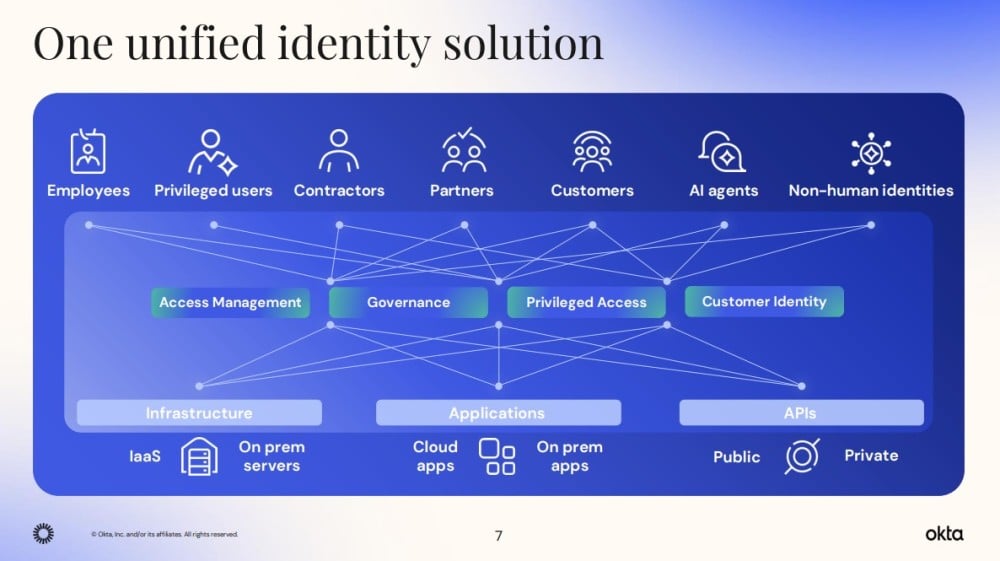
Okta’s stock surged over 30% in a single day after its first-quarter 2026 earnings report revealed accelerating demand for identity security solutions—driven by enterprises racing to secure their growing use of agentic AI systems. The rally, fueled by stronger-than-expected revenue and a bullish outlook, underscores how cybersecurity has become a non-negotiable priority in the AI era.
Why Okta’s Stock Explosion Isn’t Just About Earnings
Okta’s shares jumped 30% to $123.27 on Friday—its highest level in 52 weeks—after the company’s first-quarter 2026 results beat Wall Street expectations. But the real story isn’t just the numbers: it’s the seismic shift in enterprise priorities. According to Okta’s CEO, the surge in demand for identity security stems directly from organizations adopting agentic AI at scale. The catch? AI adoption is outpacing security protocols, forcing companies to scramble for solutions. The earnings report, which Blognone detailed, showed revenue climbing 11% year-over-year to $765 million, with subscription backlog jumping 16% to $4.179 billion. Yet the most telling figure may be the 12-month subscription value: $2.499 billion, a 16% increase that signals long-term commitment from clients. For context, Okta’s guidance for the current quarter—$790–794 million—implies revenue growth is far from slowing. What’s driving this? The answer lies in the agentic AI boom. Okta’s CEO noted in the earnings call that as enterprises deploy AI agents capable of autonomous decision-making, they’re realizing too late that their existing identity and access management (IAM) systems weren’t designed for this new threat landscape. The result? A scramble for zero-trust architectures and continuous authentication—areas where Okta specializes.Here’s the kicker: Okta’s AI-related revenue remains a small fraction of its total business. But the company is positioning itself as the gatekeeper for AI security, betting that enterprises will prioritize identity verification over cost savings as AI risks escalate. The question now is whether the market has already priced in this shift—or if Okta’s stock still has room to run.
The Mizuho Paradox: Has the Rally Already Peaked?
While retail investors and momentum traders were celebrating Okta’s surge, institutional analysts like those at EBC Financial Group are asking a critical question: Is this rally a reflection of real growth, or just a correction for past underperformance? Mizuho Securities, one of Okta’s most influential bulls, had already raised its price target to $130—a move that may have preempted Friday’s rally. The firm’s logic? Okta’s identity security model is uniquely positioned to benefit from AI adoption, as enterprises struggle to secure autonomous systems that interact with sensitive data. But the bank also warned that Okta’s valuation could face pressure if competitors like CrowdStrike or Microsoft’s Entra ID gain traction in the AI security space. The trading volume on Friday—over 17.5 million shares—was a clear sign of institutional interest. Yet the question lingering in the market is whether this surge is sustainable. Okta’s stock had been languishing for months, down nearly 20% from its 2025 highs, as investors questioned its ability to compete in a crowded cybersecurity market. Now, with AI becoming the new battleground, the narrative has flipped.The challenge for Okta isn’t just competing with rivals—it’s proving that its existing IAM infrastructure can evolve fast enough to meet the demands of agentic AI. The company’s bet is that enterprises, after years of underinvesting in security, will finally prioritize identity verification as their AI budgets grow. But if AI adoption slows—or if Okta’s solutions prove too cumbersome to integrate—this rally could be short-lived.

What the Numbers Really Say About Okta’s Future
Okta’s first-quarter 2026 results paint a picture of a company at a crossroads. Here’s what the data reveals:- Revenue growth: $765 million (up 11% YoY), with GAAP net income of $74 million.
- Subscription backlog: $4.179 billion (up 16% YoY), with a 12-month value of $2.499 billion.
- Current quarter guidance: Revenue expected between $790–794 million.
- Stock performance: 30% surge in one day, hitting a 52-week high of $123.27.
For now, Okta’s stock is trading on momentum, not fundamentals. The real test will come in the next earnings report, when the company must prove that its AI security investments are paying off. If the backlog continues to grow, and if Okta can demonstrate that its solutions are truly essential for AI-powered enterprises, this rally could be just the beginning.
The Bigger Picture: Why AI Security Is the Next Big Battleground
Okta’s surge isn’t just about one company—it’s a microcosm of a broader shift in enterprise tech. As AI systems become more autonomous, the traditional perimeter-based security model is crumbling. Enterprises are realizing that identity verification isn’t just about stopping hackers—it’s about ensuring that AI agents themselves don’t become vectors for breaches. This is why Okta’s stock move matters beyond the tech sector. Cybersecurity has long been a backwater for investors, seen as a necessary evil rather than a growth driver. But with AI, that’s changing. Companies like Okta, CrowdStrike, and even Microsoft are betting that identity security will be the linchpin of AI adoption. The question is: Will Okta be the winner? The company has a head start in IAM, but it faces stiff competition from hyperscalers like AWS and Google Cloud, which are integrating AI security into their broader platforms. Okta’s advantage may lie in its ability to adapt quickly—but if it missteps, it could be left behind in the AI security arms race.For now, the market is betting on Okta. But the real story isn’t just about the stock—it’s about whether enterprises will finally treat security as a growth driver, not just a cost center. If they do, Okta’s rally could be the beginning of a much larger trend.