
Astronomers Discover “Cosmic Infant” Planet IRAS 04125+2902 b
In a significant breakthrough for planetary science, astronomers have identified an exceptionally young planet, IRAS 04125+2902 b, offering a rare glimpse into the earliest stages of planetary evolution. At approximately 3 million years old, the discovery provides a unique opportunity to study a world that has emerged from its “cosmic cradle” far earlier than typically observed.
Located within the Taurus Molecular Cloud, this nascent planet is challenging existing scientific timelines regarding when young planets become visible to observers. The discovery, detailed in recent reports, highlights a pivotal moment in the life cycle of a planetary system, capturing a world in its absolute infancy.
A Crowded Cosmic Nursery
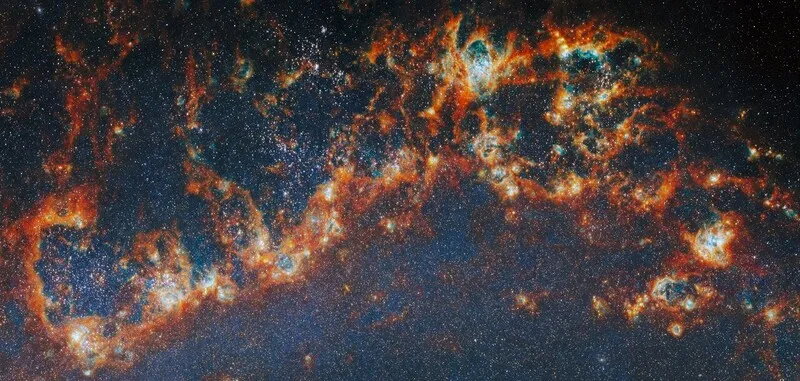
The environment surrounding IRAS 04125+2902 b is far from isolated. The planet is situated in a dense star-forming region, effectively growing up alongside numerous “siblings”—other young stars and planetary embryos forming within the same molecular cloud. This crowded nursery provides critical context for researchers attempting to understand how gravitational interactions and available materials influence the birth of a planet.
The ability to detect a planet at this stage is a testament to advancements in high-resolution observational technology. By capturing a planet that is only 3 million years old, scientists can now observe the transition from a disk of gas and dust into a structured planetary body in real-time.
This discovery signals a growing capability in astronomical innovation, allowing researchers to refine models of solar system formation. By analyzing “cosmic infants” like IRAS 04125+2902 b, the scientific community can better understand the chaotic and rapid processes that define the first few million years of a planet’s existence, potentially shedding light on the early history of our own solar system.
