
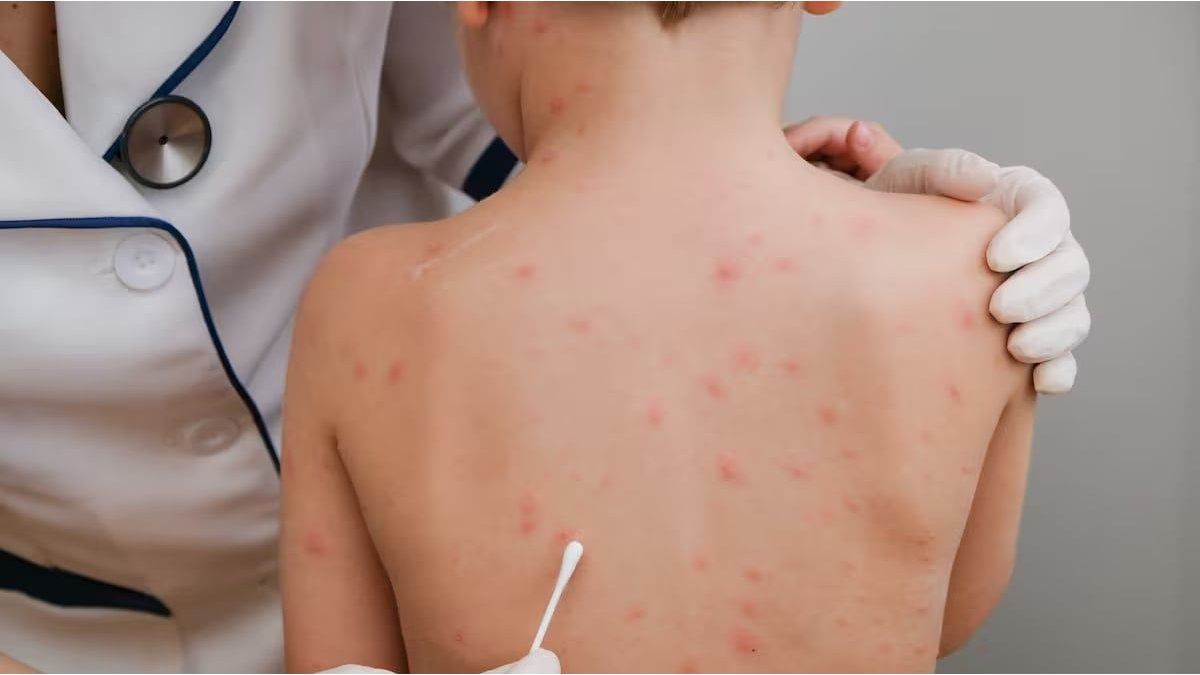
Buenos Aires province is facing a renewed measles outbreak just weeks after the previous alert was lifted, sparking concerns from health officials about declining vaccination rates and national funding cuts. The resurgence of the highly contagious disease, with recent cases linked to travelers from Bolivia, underscores a growing public health challenge in Argentina. Buenos Aires Health Minister Nicolás Kreplak has publicly criticized the national government’s response and is also opposing an upcoming anti-vaccine event scheduled to be held in the National Congress, raising the stakes in a debate over public health policy and scientific consensus.
Health officials in Buenos Aires province have raised concerns over a new outbreak of measles, just weeks after the last epidemiological alert was lifted. The resurgence of this highly contagious disease highlights the importance of maintaining robust vaccination programs and surveillance systems. Buenos Aires Health Minister Nicolás Kreplak warned of new cases and criticized national government cuts to public health funding.
On November 25, 2024, the national health ministry reported four new measles cases in residents of Uruguay who had recently traveled through Argentine provinces after returning from Bolivia.
“Just 15 days after declaring the region free of measles, successfully closing a significant outbreak that began in Buenos Aires City and spread to Buenos Aires province thanks to months of intensive case blocking, vaccination efforts, home monitoring, and province-led campaigns, we now have a new alert with four confirmed cases in a Uruguayan family who traveled through Argentina from Bolivia,” Kreplak stated.
“Once again, it will be the provinces that shoulder the responsibility of controlling this new outbreak, while we grapple with a government that cuts resources instead of providing support, resources that are fundamental to guaranteeing care. This is not a game. It’s about the health of thousands of people,” he continued.
In a separate post on X (formerly Twitter), Kreplak criticized the current administration for the re-emergence of preventable diseases. “New measles alert just weeks after closing the previous outbreak. This adjustment-focused government and its lack of management are failing to fulfill their responsibilities,” he wrote.
The Buenos Aires province health chief specifically pointed to a lack of response from the national health ministry, led by Mario Lugones, regarding prevention efforts, citing a rollback in surveillance and vaccination systems.
Strong Opposition to Anti-Vaccine Event in Congress
Kreplak also voiced strong opposition to an anti-vaccine event scheduled to take place in the National Congress.
Kreplak referenced sectors promoting the discrediting of scientific consensus. “They are also convening and promoting anti-vaccine events in the National Congress. Unbelievable,” he said regarding the event convened by PRO party representative Marilú Quiroz, titled “What Do COVID-19 Vaccines Really Contain?: Legal, Political, Genetic and Infectiological Perspectives.”
The event, scheduled for November 27 in the Chamber of Deputies, has drawn widespread condemnation from the scientific community, including a petition sent to Martín Menem urging him to order its cancellation.
Among the signatories of the condemnation are the Argentine Society of Pediatric Infectology (SADIP); the Argentine Society of Vaccinology and Epidemiology (SAVE); the Argentine Society of Virology; the Argentine Society of Pediatrics; the Argentine Society of Infectology (SADI); and the Argentine Association of Microbiology.
Quiroz defended her initiative, stating she is “against mandatory and coercive vaccination.” “I have to be free to do what I feel I have to do; the police shouldn’t come after me to vaccinate me,” she affirmed. She also proposed modifying Law 27.491, which mandates vaccines on the national calendar, to incorporate principles of “freedom, informed consent, and patient autonomy.”
In response, Kreplak confirmed he would participate in an event convened by national deputies from the Health and Science and Technology committees, specifically in rejection of the anti-vaccine initiative and in defense of vaccination, scientific evidence, and evidence-based health policies.
Kreplak emphasized the importance of maintaining the decades-long scientific consensus and confronting denialism “with clarity, responsibility, and commitment to collective health.”
Historic Decline in Childhood Vaccination Rates
Childhood vaccination coverage in Argentina experienced an unprecedented decline in 2024. Less than half of children received the required doses of the vaccination schedule for 5-6 year olds, and a similar situation was observed among 11-year-old pre-adolescents, with widespread setbacks that have raised alarms throughout the healthcare system.
Experts warn that this decline exposes the country to the re-emergence of serious diseases such as polio, measles, pertussis (whooping cough), and meningococcal disease, which are only controlled through high immunization rates. This trend underscores the critical role of vaccination in protecting public health.
While the Pan American Health Organization (PAHO) sets a standard of coverage above 85%, current figures are barely around 50%. Experts attribute the decline to failures in follow-up, confusion among some healthcare professionals, and serious deficits in public communication regarding the importance of the mandatory vaccination schedule.
Between 2009 and 2019, booster rates for polio never fell below 84% in children entering primary school. But in 2024, that percentage plummeted to 47.6%, a historic low.
Although Argentina eradicated polio decades ago, the disease persists in other countries, and low coverage rates reopen the possibility of its reintroduction.
The decline also affected the MMR (measles, mumps, and rubella) vaccine, which immunizes against mumps, rubella, and measles. After a decade with levels close to 90%, the 2024 figure fell to just 46.7%, a concerning value for experts.
