
Questions are swirling around the Canadian Olympic men’s hockey team as the selection of veteran goaltender jordan Binnington-despite a statistically challenging season with the st. Louis Blues-has sparked debate among analysts and fans alike.The team is set to face the Czech Republic in the group stage of the upcoming Milan games, and while Canada boasts offensive firepower, concerns are rising about its depth in net. This report examines the factors behind Binnington’s inclusion, the broader trends impacting Canadian goaltending development, and what it could mean for the team’s chances at Olympic gold.
The coach’s frustration was evident as he gestured for his star goaltender, Jordan Binnington, to leave the ice during a recent game. The outburst highlighted a concerning trend: Binnington, a key player for both his team and the Canadian national program, appears to be struggling significantly this season.
Binnington reportedly responded with visible frustration, and a video circulated on social media showing a heated exchange with the coach. This incident underscores the pressure facing elite athletes and the challenges of maintaining peak performance.
The situation is particularly concerning given Binnington’s past success, including a Stanley Cup win in 2019 with the St. Louis Blues. However, his performance this season has been markedly below expectations, ranking among the worst goaltenders in the NHL in key statistical categories.
With a save percentage of just 87.1%, analysts suggest a replacement may be necessary. Further data indicates he has allowed 17 more goals than statistically expected, the second-worst figure among 86 NHL goaltenders. These numbers raise questions about his ability to perform at an elite level.
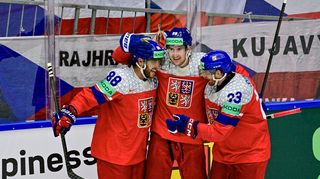
Despite his current struggles, Binnington was considered for a spot on the Canadian Olympic team, which will face the Czech Republic in the group stage of the upcoming games in Milan. Canada boasts a roster of star forwards like Connor McDavid, Nathan MacKinnon, and Sidney Crosby, along with top defensemen such as Cale Makar.
However, the selection of Binnington has drawn criticism, with some questioning the decision to include a goaltender who is demonstrably underperforming and whose struggles have been widely documented online, including a viral video of the coach struggling to find a replacement during a game.
After the Blackhawks scored their 7th of the game, Jim Montgomery tried to pull Jordan Binnington for Joel Hofer…
But Binnington appeared to refuse to come off the ice, and Hofer was hiding down the tunnel to the Blues’ locker room? 😭😅 pic.twitter.com/j2V7q5bze4
— Gino Hard (@GinoHard_) January 8, 2026
“When we were selecting players, we looked at their recent performances as well as their overall history,” explained Doug Armstrong, Canada’s general manager. “Jordan’s resume speaks for itself.” Armstrong also noted his surprise that there was little debate within the coaching staff regarding Binnington’s inclusion.
Binnington’s experience is seen as a potential asset, but his current form is a significant concern. The debate highlights a broader issue: Canada’s depth at the goaltender position has diminished in recent years. The team’s past success was built on legendary goaltenders, a standard that is currently unmet.
Trofej pro nejlepšího brankáře NHL |Sport SZ
Table of Contents
- 2025: Connor Hellebuyck (USA)
- 2024: Connor Hellebuyck (USA)
- 2023: Linus Ullmark (Švédsko)
- 2022: Igor Šesťorkin (Rusko)
- 2021: Marc-André Fleury (Kanada)
- 2020: Connor Hellebuyck (USA)
- 2019: Andrej Vasilevskij (Rusko)
- 2018: Pekka Rinne (Finsko)
- 2017: Sergej Bobrovskij (Rusko)
- 2016: Braden Holtby (Kanada)
Names like Patrick Roy, Martin Brodeur, Roberto Luongo, Marc-André Fleury, and Carey Price represent a golden era of Canadian goaltending, players who consistently delivered on the biggest stage. The current situation raises concerns about whether Canada can replicate that level of success.
Canada currently lacks a clear-cut number one goaltender, with no representative currently playing in the NHL who has won either the Vezina Trophy (awarded to the league’s best goaltender) or the Conn Smythe Trophy (awarded to the most valuable player in the playoffs). This lack of elite goaltending is a potential weakness for the team.
Experience Without Current Form
The world admires Canada’s exceptional offensive talent, but its goaltending situation is a clear area of concern. “They still have a relatively good pool of goaltenders,” said Zdeněk Orct, a former goaltending coach for the Czech national team. “But they don’t have a number one like they did in the Brodeur era. They’re missing a goaltender who the entire country looks up to.”
Another perspective suggests that Canada is selecting players based on their overall achievements. The team can boast a trio of elite forwards – Connor McDavid, Nathan MacKinnon, and Sidney Crosby – and top defensemen like Cale Makar. However, the choice of goaltender raises questions about prioritizing experience over current performance.
The situation reflects a broader trend in Canadian goaltending development. In recent years, the country has seen a decline in the percentage of Canadian-born goaltenders in the NHL, falling from over 65% around the time of the 1998 Nagano Olympics to 25.9% in the most recent season. This shift highlights the need for a reevaluation of goaltending development programs within the country.
The emphasis on early specialization, with young players focusing exclusively on goaltending from a young age, is seen as a potential contributing factor. This approach, while aiming to develop technical skills, may be hindering the development of well-rounded goaltenders who can read the play and adapt to different game situations.
Brankáři Kanady na ZOH |Sport SZ
| jméno | zápasy | úspěšnost zákroků | góly chycené nad očekávání* |
|---|---|---|---|
| Jordan Binnington | 26 | 87,1 % | -17,5 |
| Logan Thompson | 31 | 91,5 % | +16 |
| Darcy Kuemper | 27 | 91 % | +10 |
*čím vyšší hodnota do plusu, tím brankář pochytal větší množství šancí. Čím vyšší je mínusová hodnota, tím víc zbytečných gólů brankář inkasoval
The selection of Binnington, a Stanley Cup winner and veteran of international competition, reflects a preference for experience. However, this approach is being questioned by some, who argue that prioritizing current form is more crucial for a short-term tournament.
“They chose a path of taking an internationally experienced goaltender who isn’t in form,” said Orct. “Alongside him, they have two others who are doing well in the NHL. Thompson looks really good. So, the question is whether you bet on experience or form.”
Orct’s perspective is clear: “For a short-term tournament, I would take the goaltender who is in the best form. Many people may say that’s nonsense, but that’s my view, which has worked for me.”
The entire debate surrounding Binnington is a symptom of broader issues in Canadian goaltending development. The country produces a wealth of talented forwards and defensemen, but has struggled to keep pace in the development of elite goaltenders.
Money, Camps, and Early Specialization
The NHL operates on a merit-based system, with clubs prioritizing skill over nationality. This trend has led to an influx of talented goaltenders from Russia, Sweden, the United States, and Finland, and a growing presence of Czech goaltenders in the league.
In recent years, Canada has seen a decline in the number of its citizens playing in the NHL as goaltenders. In the 2014-15 season, 42% of NHL goaltenders were Canadian, compared to just 25.9% in the most recent season.
One key issue is the trend towards early specialization, with young players dedicating themselves to goaltending as early as age seven or eight. This can lead to a lack of versatility and limited exposure to different game situations.
Sport na Seznam Zprávách
We cover major events and behind-the-scenes stories, bringing you the latest in sports news.
“The US Hockey model, for example, encourages players to specialize in goaltending around age twelve, allowing them to play other positions and develop a broader skillset until then,” explained one expert. “The goal is to have players who are well-rounded and adaptable.”
A key tenet of this approach is to encourage young hockey players to experience the “hat trick” – scoring a goal, assisting on a goal, and making a save in net. This promotes a more holistic understanding of the game.
However, in Canada, the emphasis on winning at a young age often undermines these efforts. “In Canada, coaches are under tremendous pressure because even in youth hockey, the emphasis is on winning,” said Robert Gherson, a former goaltending coach for the Czech national team, in an interview with The Athletic. “It’s crazy; kids are essentially becoming professionals at age eight.”
This pressure to win can lead to early specialization and a limited pool of potential goaltenders. As Jérémie Blain told Seznam Zprávy, the Canadian system is often driven by financial investment and a focus on immediate results.
Shining Bright, Then Fading
The idea that Canadian talent is hidden away on lakes in Ontario and undiscovered until age ten is outdated.
Those who don’t dedicate themselves to hockey year-round, lack access to top coaching, and play in highly competitive leagues are unlikely to progress. This is especially true for goaltenders, where the demands of the position require specialized training.
If someone trains as a goaltender from age eight, they gain an advantage that a ten-year-old simply doesn’t have.
But what good is all that technical training if you don’t have the opportunity to read the game in a real game environment?
The concern is that this intense focus on technical skills comes at the expense of game awareness and adaptability. “The best young goaltenders practically don’t have any work all season if they aren’t playing against top competition,” said Mike McKenna, a former NHL goaltender and current coach, to Daily Faceoff.
Canada’s abundance of hockey players will always produce capable goaltenders. They may look impressive at age eighteen, but they can be surpassed by European or American goaltenders who may not appear as polished at that age but continue to develop through specialized training.
The Canadian Hockey Association has recommended changes, such as allowing goaltenders to play more frequently and using smaller nets, but these efforts have faced resistance from parents and coaches who prioritize tradition.
As The Athletic reported, these recommendations are often ignored in practice, as parents who have invested heavily in their children’s hockey careers are reluctant to embrace change.
