
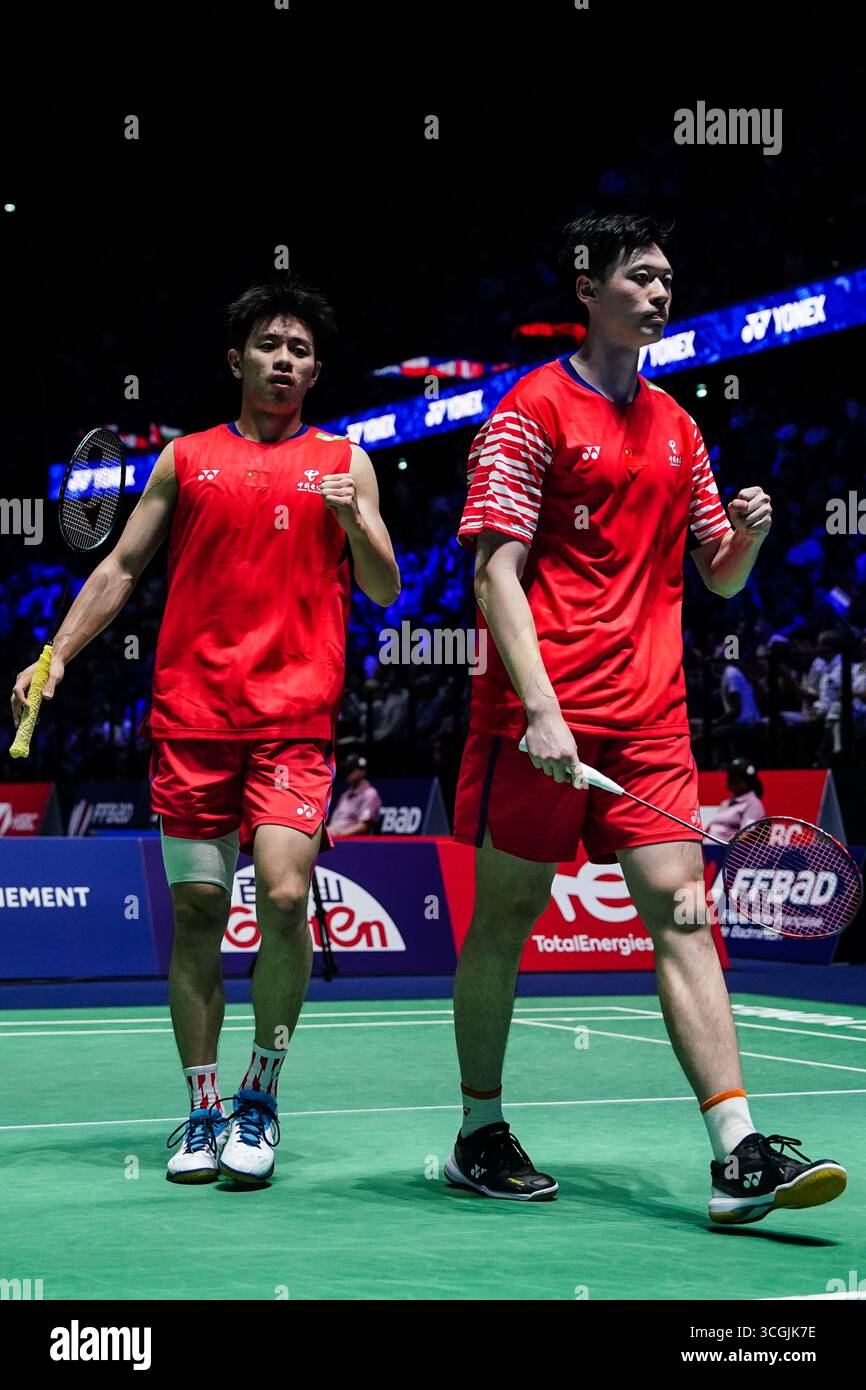
Chinese badminton players dominated the 2026 Australia Open in Sydney, securing titles across multiple disciplines during the tournament’s final phase on June 14. Chen Boyang and Liu Yi claimed the men’s doubles championship, while Jia Yifan and Zhang Shuxen captured the women’s doubles title, following a series of high-stakes matches held throughout the week.
Men’s Doubles Victory for Chen Boyang and Liu Yi
In the men’s doubles final held on June 14, the Chinese pair of Chen Boyang and Liu Yi secured a 2-0 victory over Indonesian opponents Shohibul Fikri and Bagas Maulana—identified in reports as the pair of Muhammad Shohibul Fikri and Bagas Maulana—to clinch the title. The match, hosted in Sydney, saw the Chinese duo maintain control throughout the contest to overcome their Indonesian counterparts.

The path to the final required the pair to navigate an all-Chinese semifinal matchup. According to reporting from Zhejiang Online, Chen and Liu defeated compatriots Liang Weikeng and Wang Chang in straight sets, 21-12 and 21-18, on June 13 to earn their spot in the championship round. This victory over their teammates highlighted the depth of the Chinese men’s doubles roster, as Liang and Wang are frequently cited as top-tier competitors on the BWF World Tour circuit.
The Australia Open, a BWF World Tour Super 500 event, serves as a critical stop for players looking to accumulate ranking points. For Chen and Liu, the title represents a significant milestone in their professional development, providing the necessary points to climb the world rankings and secure seeding positions for higher-tier Super 750 and Super 1000 events later in the 2026 season.
Jia Yifan and Zhang Shuxen’s Women’s Doubles Campaign
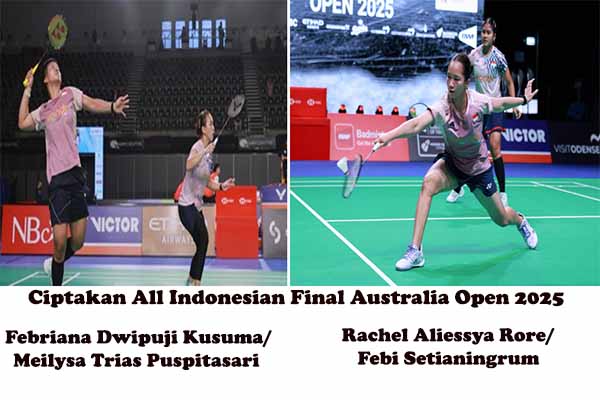
The women’s doubles final saw the top-seeded Chinese team of Jia Yifan and Zhang Shuxen defeat the Indonesian duo of Febriana Dwipuji Kusuma and Amallia Cahaya Pratiwi in a 2-0 sweep. The victory marked a successful conclusion to a challenging tournament run for the pair.
The road to the trophy was far from routine. In the semifinals, Jia and Zhang faced a grueling three-set match against Indonesian opponents, winning 21-16, 20-22, 21-16. Reflecting on the semifinal, Jia noted that the team had previously lost to that specific Indonesian pair during the Asian Championships, which necessitated a highly disciplined approach.
“The opponents played with great tenacity, saving many difficult shots and exerting significant pressure. Winning despite their strong performance serves as a meaningful affirmation for us.”
Jia Yifan, via Zhejiang Online
Zhang Shuxen added that the competitive gap between the two sides was narrow, characterizing the Indonesian playstyle as “persistent” and “tenacious.” The key to the win, according to Zhang, was maintaining patience during long rallies rather than rushing to attack, which helped the Chinese pair minimize unforced errors. This strategic adjustment is a hallmark of elite doubles play, where teams often look to force opponents into making high-risk shots during extended exchanges.
Mixed Doubles and Singles Developments
Beyond the doubles success, the Chinese team demonstrated significant depth across other brackets. In the mixed doubles, the tournament saw an all-Chinese final secured as early as June 13. The world number one pair, Feng Yanzhe and Huang Dongping, advanced by defeating an American duo, while the second-seeded team of Guo Xinwa and Chen Fanghui moved past their Thai opponents to set up the internal clash. Such internal finals are common in major badminton tournaments where a dominant national federation consistently places multiple pairs in the late stages of the draw.
In the men’s singles, Dong Tianyao advanced to the final after a hard-fought three-set victory against Indonesian player Alwi Farhan—identified in reports as Ubaidillah and Farhan. Dong’s semifinal path involved a 21-19, 9-21, 21-18 result, characterized by crucial scoring runs in the final stages of the first and third games. The physical toll of such matches is significant, especially in the humid conditions often found in indoor arenas during tournament play, requiring players to rely heavily on their conditioning routines established during their training blocks.
Broader Significance and Tournament Context
As the tournament concluded on June 14, the results reinforced the competitive standing of the Chinese national team in international badminton. The BWF World Tour structure rewards consistency, and the Chinese team’s performance in Sydney suggests a strong commitment to maintaining their leadership in the sport. By securing multiple titles, the athletes have solidified their standing in the “Race to the Finals,” the annual ranking system that determines which players qualify for the prestigious season-ending championships.
The players now transition from the Sydney courts to prepare for upcoming events in the 2026 calendar. For these athletes, the schedule remains demanding, with little downtime between major international competitions. The ability to pivot quickly from one venue to the next, while managing travel fatigue and the technical demands of varying court speeds, is a defining characteristic of the modern professional badminton player. With the Australia Open now in the rearview mirror, the focus shifts to the next series of world tour events, where the points earned in Sydney will provide a vital cushion for the remainder of the season.
Find more reporting in our Sport section.
