
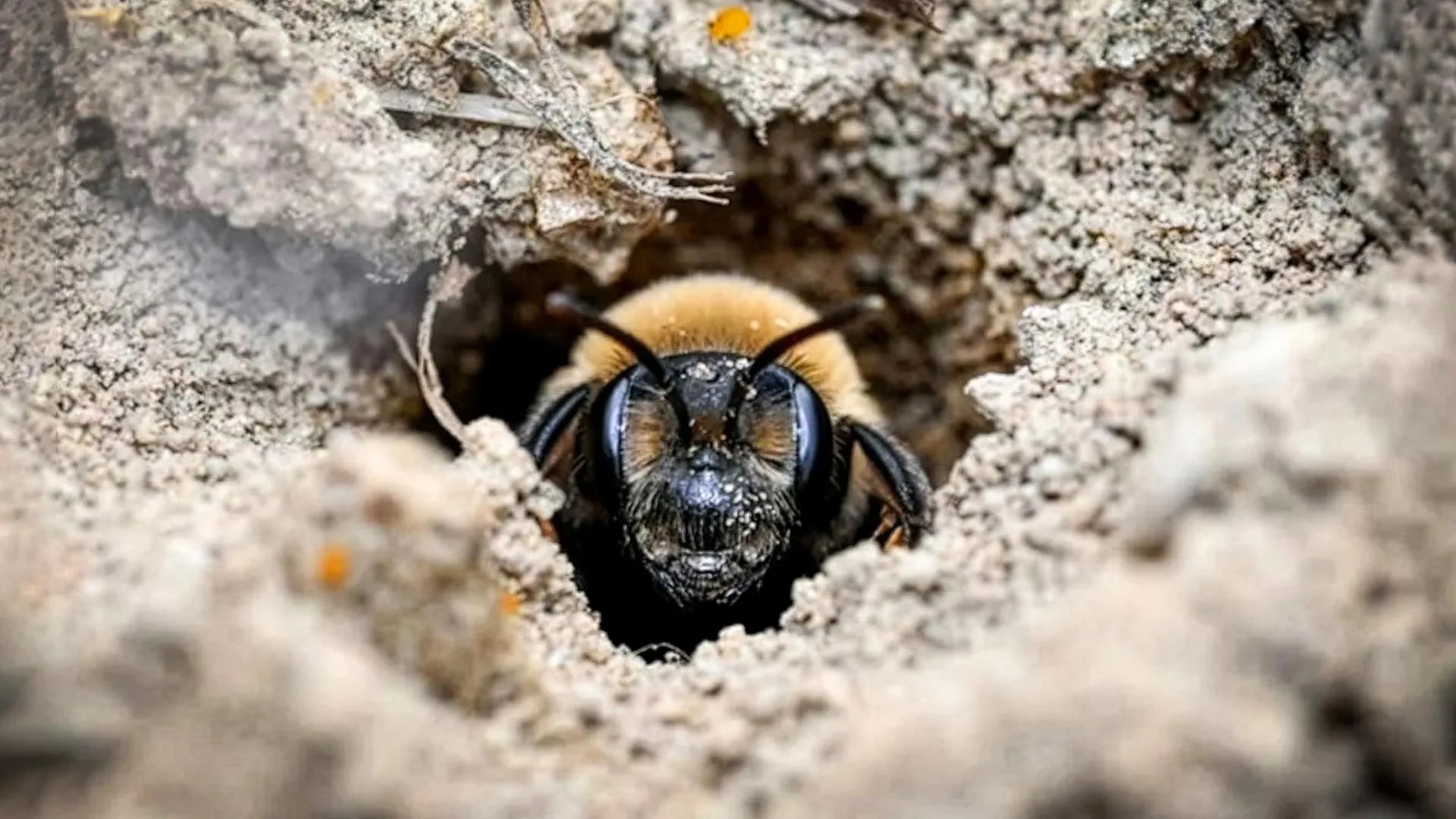
The Accidental Discovery of a Subterranean Super-Colony
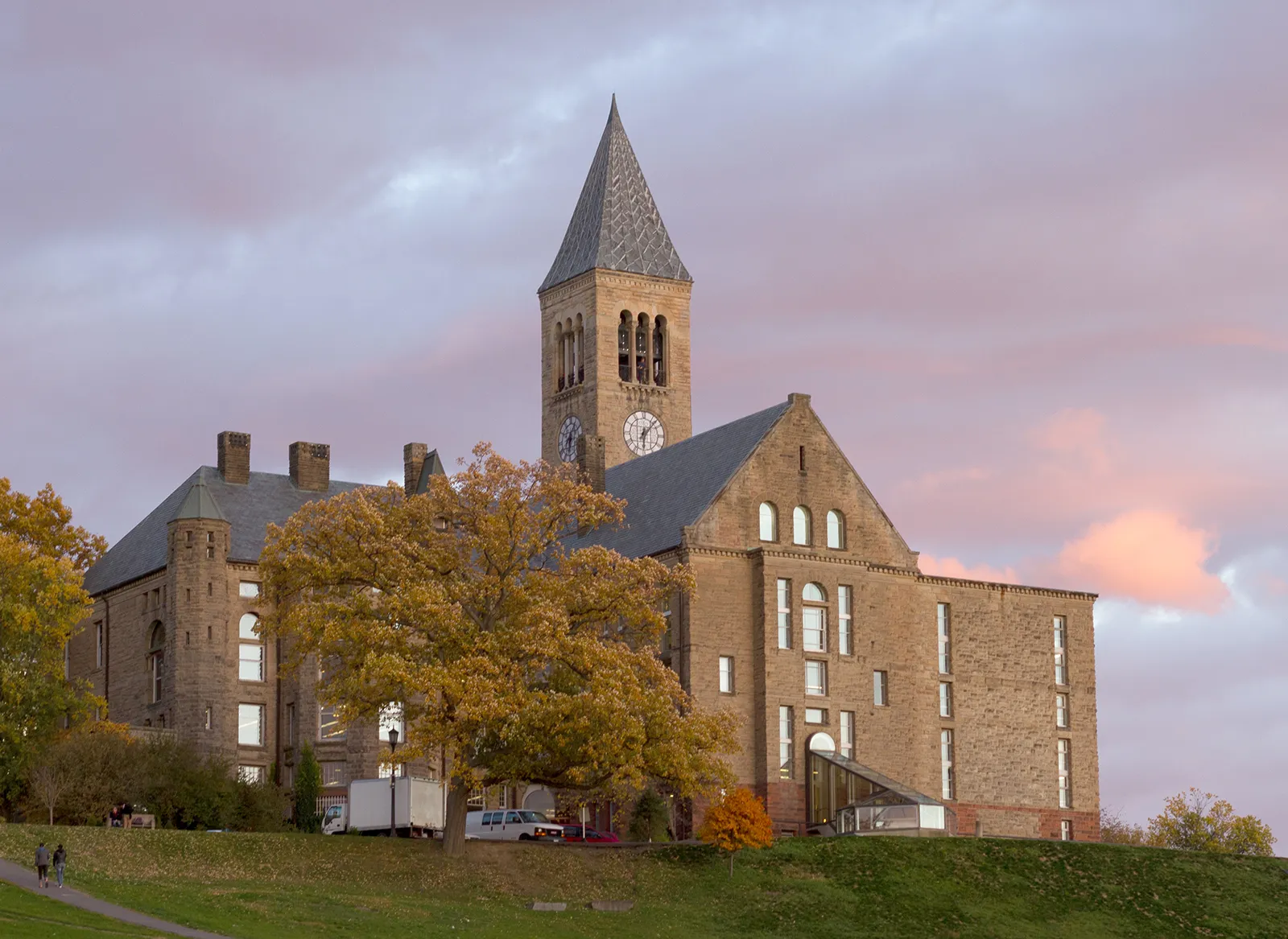
The existence of this vast, hidden population was not the result of a targeted search, but rather a chance encounter. In 2022, a technician from Cornell University noticed an unusually high concentration of bees while walking through the cemetery grounds. Intrigued by the sheer volume of insect activity, the technician collected samples and returned them to the laboratory for analysis.
This initial observation triggered a more rigorous investigation led by entomologist Bryan Danforth and his team at Cornell University. Over a six-week period in 2023, the researchers deployed traps to capture bees as they emerged from the ground. By examining more than 3,000 specimens, the team determined that the vast majority belonged to the same species, Andrena regularis. Statistical modeling based on the observed density across approximately 6,000 square meters led the researchers to estimate a total population ranging between 3 million and 8 million individuals, with a calculated average of 5.5 million.
Why Andrena Regularis Thrives in a Cemetery

The behavior of Andrena regularis distinguishes this finding from typical honeybee colonies. Unlike social bees that inhabit organized, hive-based structures, this species is solitary. Each female constructs an individual nest in the soil. The fact that millions of these insects have chosen to aggregate in one location represents one of the largest concentrations of a solitary bee species ever documented.
According to reporting from Exame, the cemetery provides a near-perfect micro-environment for this species. Several factors have allowed the population to flourish, likely over several decades:
- Soil Composition: The sandy soil found at East Lawn facilitates the digging required for individual nest construction.
- Stability: Because the land is a cemetery, the soil is rarely disturbed by construction or heavy human activity.
- Chemical Safety: The absence of pesticides creates a low-toxicity environment essential for the survival of the larvae.
- Food Proximity: The site is located near fruit orchards, which provide a reliable source of nutrition during the critical spring bloom.
Historical records indicate that the species has been present in the region since at least 1935, suggesting that the colony is not a recent arrival but an ancient, stable population that has grown incrementally alongside the cemetery’s history.
Cemeteries as Unlikely Biodiversity Refuges
The findings at East Lawn highlight a broader ecological reality: cemeteries often serve as vital, overlooked sanctuaries for wildlife in urban and suburban landscapes. Keven Morse, the superintendent of the East Lawn Cemetery, whose family has been involved with the private, non-profit organization managing the site for 46 years, noted that the area has long hosted a diverse range of wildlife, including foxes, coyotes, hawks, and nesting geese.
Morse, who spoke about the tranquil environment of the cemetery, emphasized that despite the massive number of bees, he has never been stung. This coexistence underscores the benign nature of Andrena regularis, which, while highly efficient as a pollinator for fruit trees, poses little threat to human visitors.
The research team warns, however, that these “refuges of biodiversity” are fragile. The very characteristics that make the cemetery a home—lack of human interference and chemical-free soil—are easily disrupted. Researchers highlighted that future decisions regarding the land, such as paving areas or introducing fertilizers and pesticides, could rapidly collapse the population.
The Ecological Stakes
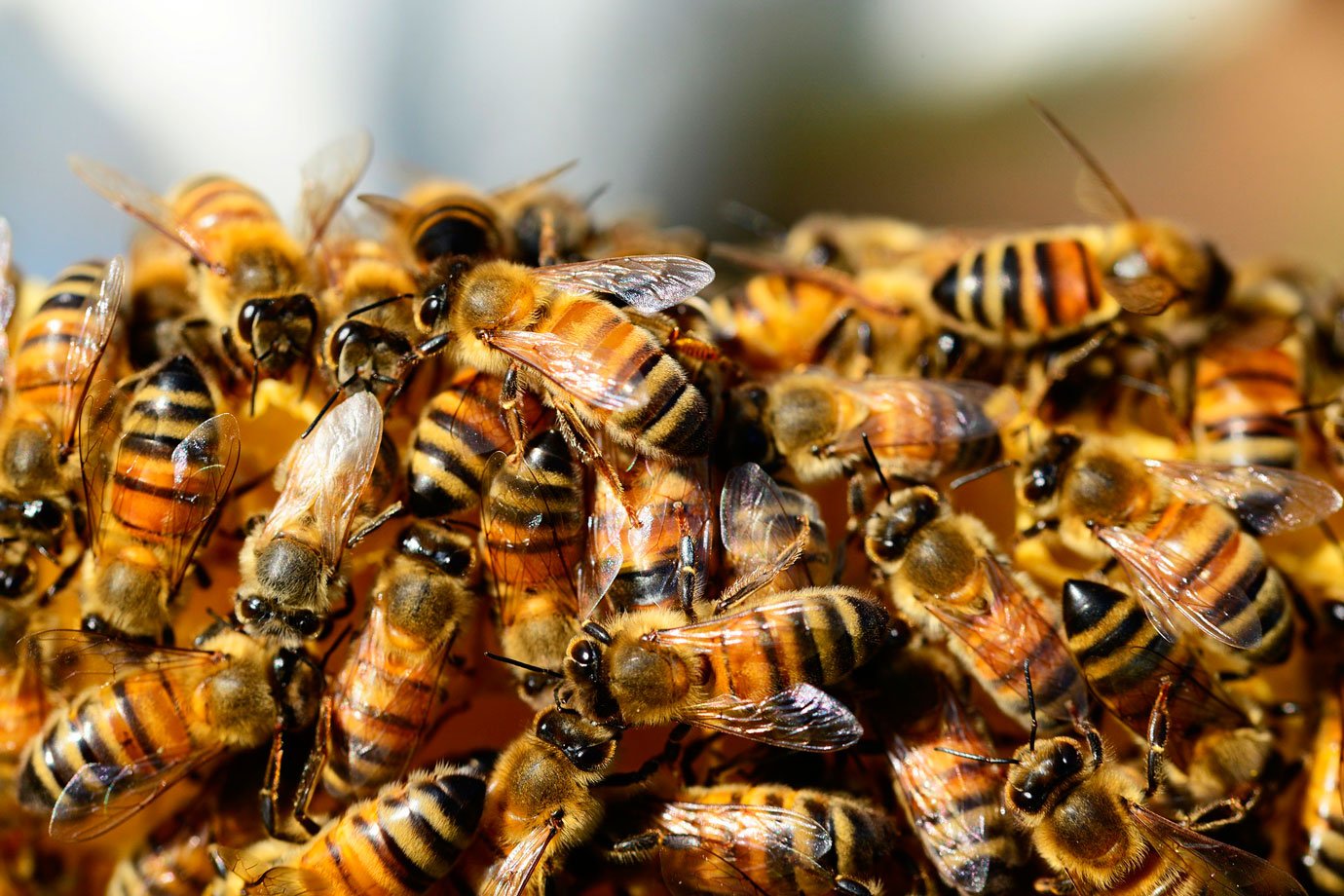
Beyond the scientific curiosity of the massive aggregation, the presence of these bees has significant agricultural implications. As solitary ground-nesting insects, Andrena regularis plays a vital role in pollination cycles, particularly for high-value agricultural crops that rely on specific timing for fertilization.
The study serves as a reminder that the most significant conservation successes often happen in plain sight, within human-managed spaces that we frequently ignore. As urban development continues to encroach on natural habitats, the preservation of “quiet” spaces like East Lawn becomes an essential strategy for maintaining the ecosystem services—such as pollination—upon which our agricultural systems depend. For now, the millions of bees remain beneath the headstones of Ithaca, a testament to the resilience of nature when left undisturbed.
