
Lede block
Chinese scientists have developed a high-speed ferroelectric transistor using a novel bismuth-based two-dimensional oxide material, overcoming three critical challenges in chip design. The breakthrough, published in Science, enables ultra-low-power "storage-in-memory" computing and positions China at the forefront of next-generation semiconductor technology.
A New Era in Chip Design: The Ferroelectric Breakthrough
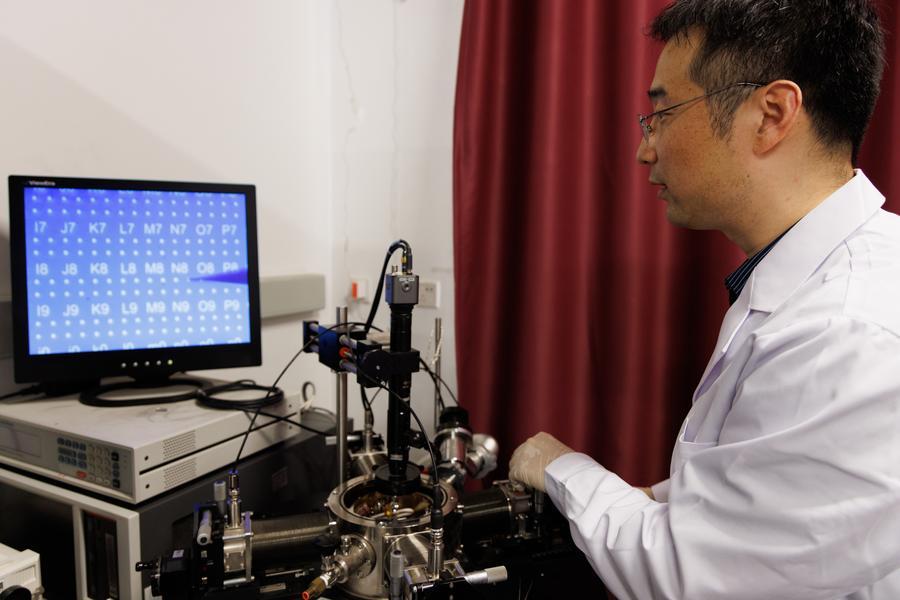
Researchers led by Professor Peng Hailin from Peking University’s School of Chemistry and Molecular Engineering have created a high-performance ferroelectric transistor that addresses longstanding limitations in chip architecture. The device, based on a newly synthesized bismuth-based two-dimensional ferroelectric oxide material, achieves unprecedented energy efficiency and reliability, according to a report by Xinhua News Agency.
- Producing large-area, ultra-thin, and uniform ferroelectric films.
- Maintaining strong ferroelectric properties in ultra-thin layers.
- Ensuring seamless integration with semiconductor interfaces.
Engineering Atomic-Scale Memory
Peng’s team achieved this by replicating the precision of single-crystal silicon wafer fabrication, creating a 1-nanometer-thick ferroelectric layer (about 60,000 times thinner than a human hair) that retains robust “memory” capabilities. “Even at this extreme thinness, the material exhibits excellent ferroelectricity, and its integration with the semiconductor layer is flawless,” Peng stated.
How the Transistor Works: Bridging Storage and Computation
Modern chips separate “storage” and “computation” into distinct components, causing data to “travel” between them—a process that slows performance and increases energy use. Ferroelectric materials, which can rapidly switch polarization states, offer a solution by enabling “storage-in-memory” (or “存算一体”) architectures.
The new transistor leverages this property to reduce data movement. Experimental results show it can write data in 20 nanoseconds at just 0.8 volts, with over 1.5 trillion write-erase cycles—far exceeding industrial standards for hafnium-based ferroelectric systems. “This device’s performance is a game-changer for low-power, high-speed computing,” said Peng, whose team’s findings were published in Science.
MIT professor Sura Chowdhury, in a commentary for Science, highlighted the significance: “This research simultaneously solves the three major challenges in ferroelectric chip integration, creating a top-tier transistor and storage-in-memory device.”
Transforming Edge Computing and AI Efficiency
The development has far-reaching applications. By minimizing data transfer between storage and computation units, the technology could extend battery life in mobile devices and enable more efficient AI processing at the edge (e.g., in smartphones, vehicles, and IoT devices).
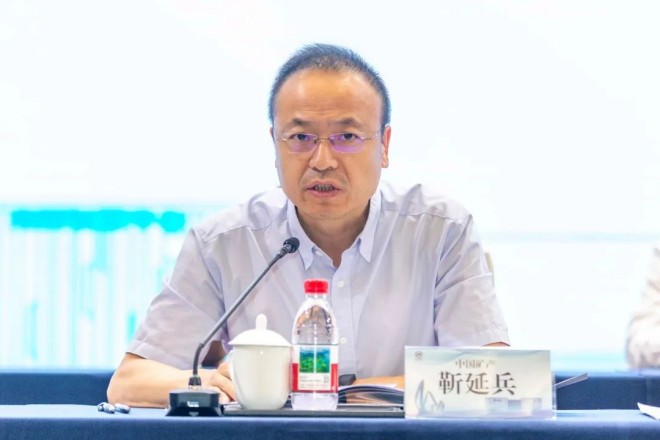
Peng emphasized that the material’s compatibility with existing chip manufacturing processes could accelerate its adoption. “This is a critical step toward ‘Beyond Moore’ technologies, which aim to transcend traditional silicon-based scaling limits,” he said.
The research also builds on earlier work by Peng’s team, including a 2023 study on ballistic two-dimensional indium selenide (InSe) transistors, which demonstrated superior performance over silicon-based alternatives. However, the current breakthrough focuses specifically on ferroelectric properties, addressing a distinct set of challenges.
Navigating the Path to Mass Production
While the results are promising, scaling the technology for mass production remains a hurdle. Peng’s team is now focusing on optimizing large-scale fabrication and exploring integration with other materials, such as carbon-based or silicon-based systems.
The study’s authors note that further research is needed to validate the transistor’s durability under real-world conditions and to refine its compatibility with existing semiconductor manufacturing infrastructure. However, the work represents a significant milestone in the global pursuit of energy-efficient, high-performance computing.
Why This Matters: A Shift in Semiconductor Innovation
This advancement underscores China’s growing influence in semiconductor research, particularly in areas like ferroelectric materials and two-dimensional electronics. It also highlights the potential of “Beyond Moore” strategies—technologies that prioritize novel materials and architectures over traditional transistor scaling.
As global demand for low-power, high-capacity computing surges, the ability to merge storage and computation could redefine the future of AI, consumer electronics, and data centers. For now, the work by Peng’s team offers a glimpse of what’s possible when material science and chip design converge.
Verbatim quote.
