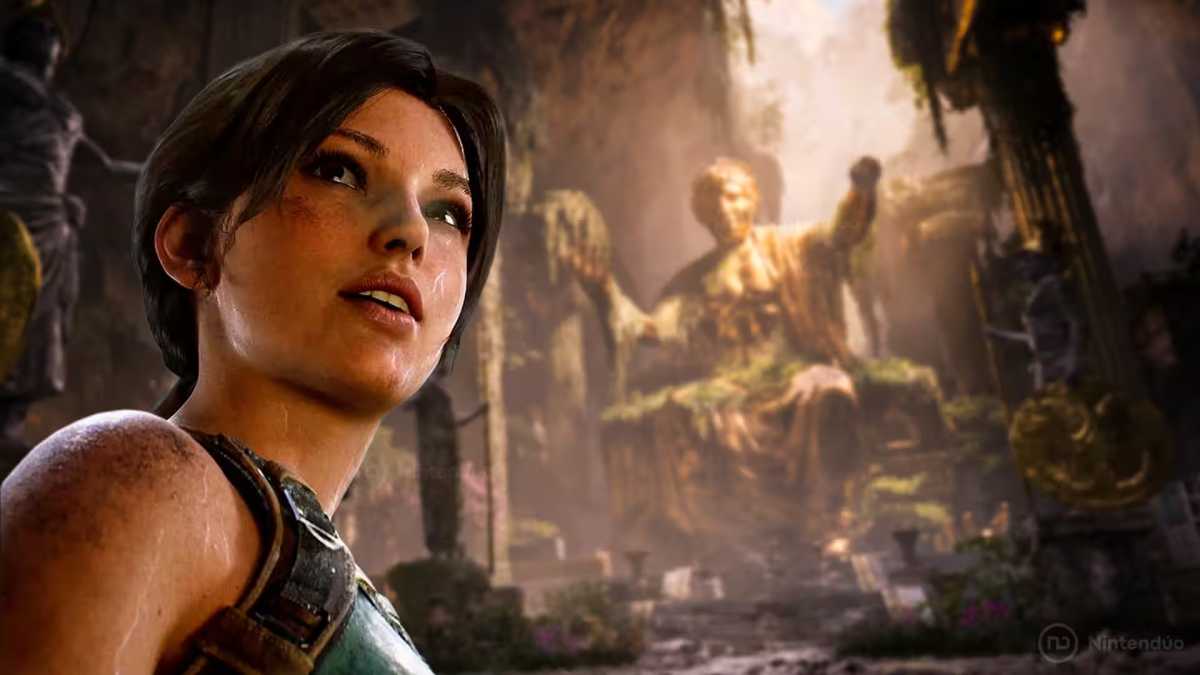
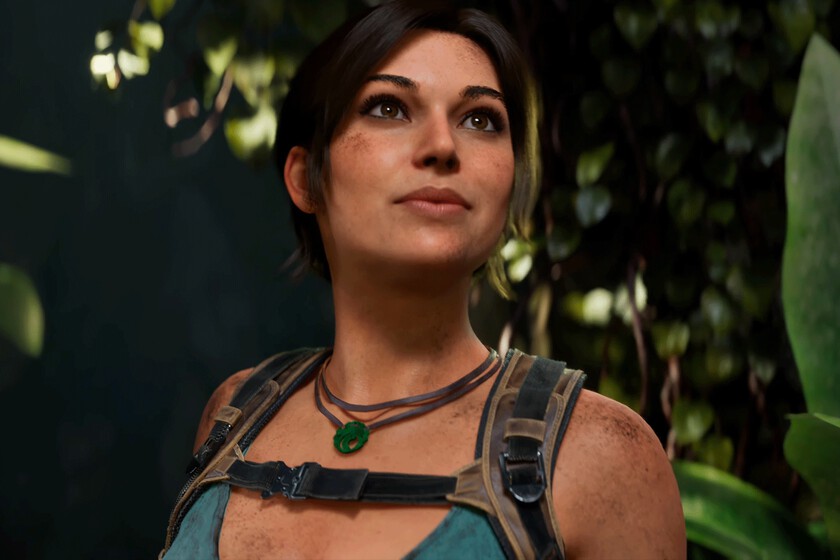
Crystal Dynamics has confirmed that its upcoming title, Tomb Raider: Legacy of Atlantis, will rely on human developers for all final content, despite using generative AI for early-stage conceptualization. The game, which is scheduled for release on February 12, 2027, on Nintendo Switch 2 and other platforms, recently addressed fan concerns regarding artificial intelligence.
Clarifying the Role of Generative AI in Production
The developer, Crystal Dynamics, faced scrutiny after a notice appeared on the game’s Steam page indicating the use of AI tools during development. In response, the studio emphasized that these tools are strictly relegated to the pre-production phase. According to reports from NintenduO, studio director Jeff Adams explained that the technology is used to visualize objects quickly during level design. If a concept proves viable, it is moved into the traditional production pipeline, where artists recreate and refine the asset from scratch.
Photo: Nintenderos
“El producto final en el juego será elaborado por personas.”
Photo: PlayStation
Jeff Adams, director at Crystal Dynamics, via NintenduO
The Steam notice specifically clarified that AI helped support early exploration and temporary development content, and that all such assets were replaced or refined by human staff. This approach mirrors controversies seen in other recent titles, such as Level-5’s Holy Horror Mansion, highlighting the ongoing tension within the gaming industry regarding the integration of generative technology. The integration of AI in game development has become a significant topic of discussion among industry stakeholders, including labor unions and trade associations, who remain focused on how these tools impact the job security and creative ownership of traditional digital artists.
In the broader context of the industry, many studios are currently experimenting with AI to accelerate the prototyping process. By using AI to generate placeholder assets, developers can iterate on level layouts and environmental concepts in a fraction of the time it previously took to draft manual sketches. However, the industry standard remains that “production-ready” assets—those that appear in the final game—are required to be original works created by human artists to avoid copyright complications and to ensure the high-quality artistic consistency that fans expect from major franchises like Tomb Raider.
Design Philosophy and the Redesign of Lara Croft
Beyond technical production, the game’s creative direction has drawn significant attention. Following the announcement, some fans expressed criticism regarding the updated character model for Lara Croft. Project leads Raul Siqueira and Jeff Adams have publicly stated that their goal is not to engage in cultural debates, but to deliver a definitive version of the character. As noted by Nintenderos, the team aims to preserve Croft’s core traits: confidence, wit, and personality.
“Intentamos no verlo desde ninguno de esos puntos de vista. No buscamos complacer a un bando y hacer infeliz al otro. No lo vemos así. Simplemente pensamos: ‘Esta es Lara. Así es ella y este es el icono que conocemos. ¿Cómo podemos presentarla en su versión más completa y definida hasta la fecha?’. Es Lara. Es un icono por algo. Así que solo queremos hacerle justicia.”
How Crystal Dynamics Failed Tomb Raider and Lara Croft. Twice.
Raul Siqueira, game director at Crystal Dynamics, via Nintenderos
The redesign process for a long-standing pop culture icon involves navigating decades of legacy. Lara Croft, who first debuted in 1996, has undergone numerous visual evolutions across consoles. Crystal Dynamics has indicated that their approach involves synthesizing these past iterations to create a modern look that feels authentic to her history while utilizing the graphical fidelity of current and next-generation hardware. This balancing act is common in high-budget “remake” projects, where developers must reconcile nostalgic expectations with the demands of modern visual standards.
Gameplay Mechanics and Modernized Exploration
Early hands-on impressions suggest that Legacy of Atlantis serves as a modernized reimagining of the original 1996 title and the 2008 entry, Tomb Raider Anniversary. During a session at the Summer Game Fest, players experienced the “Lost Valley” section in Peru. According to PlayStation Blog, the developers have intentionally moved away from hand-holding, opting for environmental puzzles that require players to observe their surroundings.
Photo: 3DJuegos
The game features a mix of classic platforming and new traversal mechanics. Players can use a scanner to gather information or a grapple hook to navigate gaps, while swimming mechanics allow for the discovery of hidden ruins. Jeff Hays, director of experience at Crystal Dynamics, defended the lack of explicit guidance:
“¿Y dónde está el desafío? ¿Dónde está la conexión con el personaje y la situación en la que se encuentra?”
Jeff Hays, director of experience at Crystal Dynamics, via PlayStation Blog
Despite the focus on challenge, the studio noted that they are not aiming to make the game inaccessible. Players will have the ability to adjust the difficulty of puzzles and combat independently, tailoring the experience to their preferred style. Reports from 3DJuegos also highlight the inclusion of modern cinematic flourishes, such as slow-motion camera effects during combat, which serve to heighten the action sequences while maintaining the core identity of the series. The move toward modular difficulty settings is a growing trend in the industry, intended to widen the audience reach of challenging titles by allowing players to customize the “friction” of specific gameplay systems without compromising the overall narrative arc.
As the February 2027 release date approaches, the gaming community continues to monitor Crystal Dynamics for further updates regarding performance specifications on the Nintendo Switch 2 and the extent of the game’s post-launch support. The studio’s commitment to transparency regarding their development process, particularly concerning AI, reflects a broader push for accountability in the AAA game space.
ail: emily.johnson@headlinez.news
Bio:
Emily Johnson serves as News Editor at Headlinez.News, overseeing the publication’s coverage of national and breaking stories. She has worked in journalism for more than 12 years, building a reputation for precision, credibility, and rapid-response reporting. Emily’s editorial philosophy focuses on clear, fact-based writing that helps readers understand the full context behind the day’s most important events. Her expertise bridges traditional reporting and modern digital news strategies.
Expertise: Breaking news, political reporting, fact-checking, newsroom coordination, public affairs.
Location: Washington, D.C., USA