
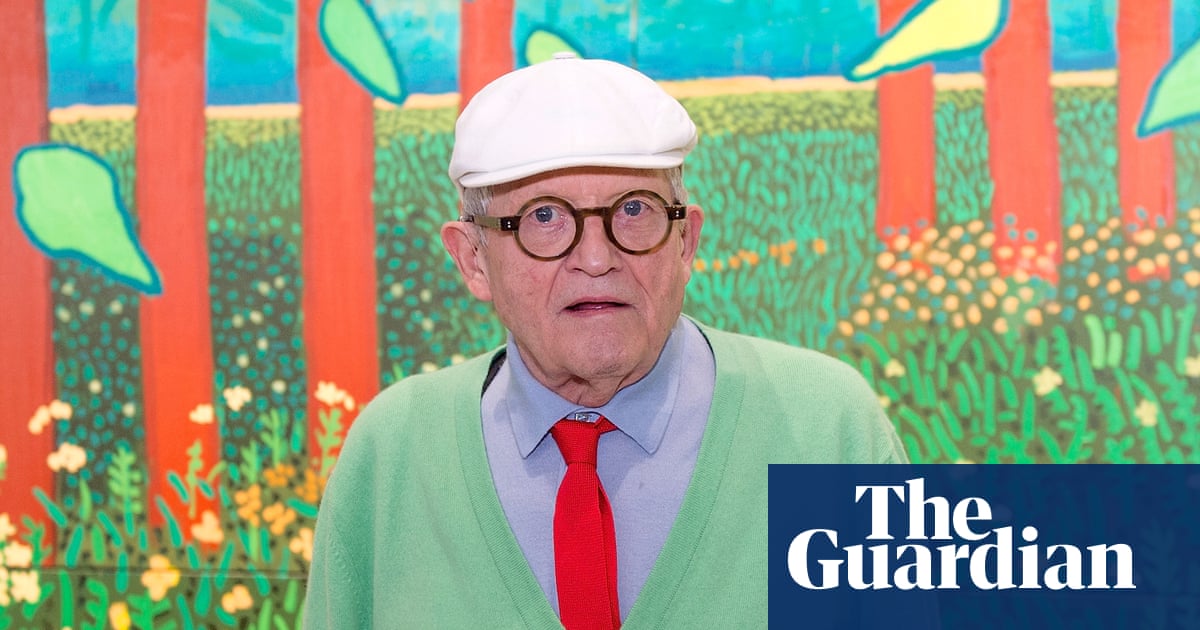
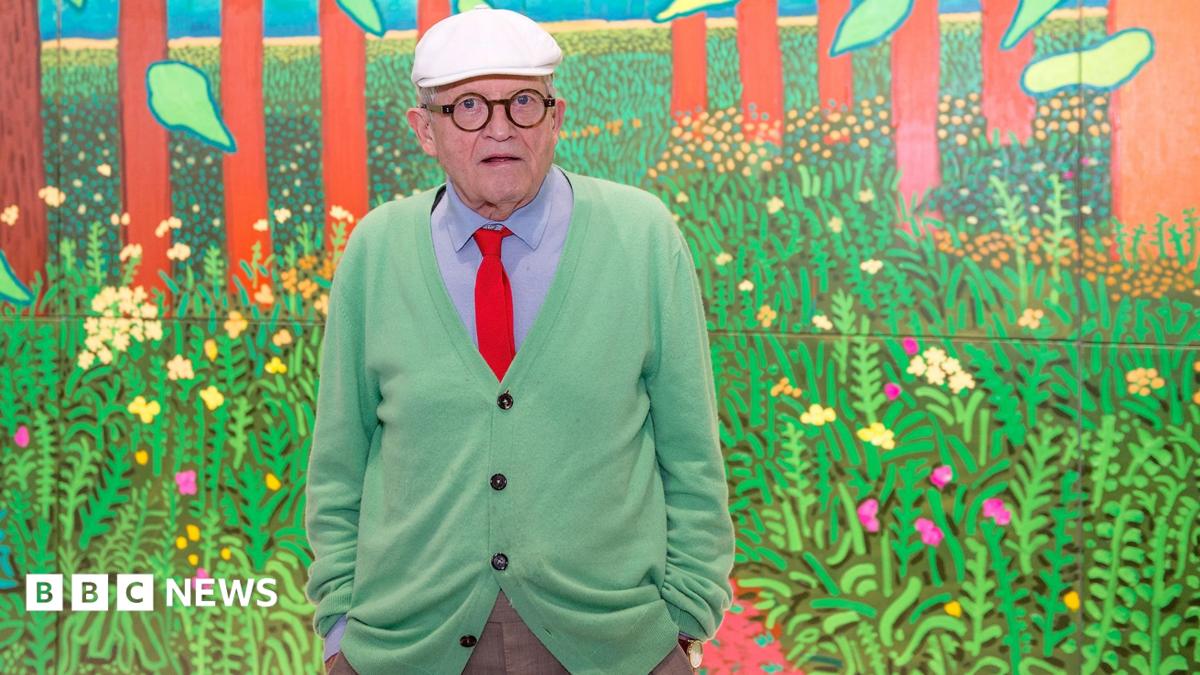
British artist David Hockney, renowned for his vibrant depictions of Los Angeles swimming pools and his pioneering use of technology in art, died at home on 11 June 2026, aged 88. His representatives confirmed the death, which occurs one month before the artist would have turned 89.
A Career Spanning Decades of Artistic Innovation
Born in Bradford in 1937 to a “radical working-class family,” Hockney’s path to international acclaim began early. He sold his first painting, a portrait of his father, for £10 in 1957. After completing national service as a hospital orderly, he enrolled at London’s Royal College of Art in 1959. According to The Guardian, the institution bent its own rules to award him a diploma after he refused to write a final essay, demonstrating the early independence that would define his six-decade career.
Hockney’s work defied easy categorization. While he rose to prominence as a Pop artist during the 1960s, he continuously evolved, moving from photo-collage portraits to abstract landscapes and, in his later years, exploring 3D technology and iPad-based art. As the BBC reported, his work has been showcased globally, including at the Tate Britain in London, the Museum of Contemporary Art in Tokyo, and the Louis Vuitton Foundation in Paris. These major retrospectives served to cement his reputation not merely as a painter of the mid-century, but as a restless innovator who refused to settle into a single aesthetic signature.
The California Influence and the Los Angeles Aesthetic
Hockney’s move to Los Angeles in the mid-1960s fundamentally shifted his style. While many of his peers in the Pop art movement were critical of consumer culture, Hockney embraced the freedom he found in California. He famously preferred the openness of the West Coast to the social climate of London at the time.
“I never thought London was that swinging when I did come back. It was for a few people, but in LA it was for the many, which I preferred. In LA in 1964 there were enormous gay bars. There wasn’t anything like that in London, or even in New York.”
This era produced some of his most recognizable works, including A Bigger Splash and Man in Shower in Beverly Hills (1964). His paintings of sun-drenched pools became synonymous with the Los Angeles aesthetic, capturing what one observer described as “a calm distillation of love and sorrow.” The technical mastery required to capture the refractive quality of water—a notoriously difficult subject in fine art—became a hallmark of his California period, influencing generations of painters who looked to his work to understand the marriage of light and movement.
Market Records and Legacy of Subversion
Hockney’s artistic influence was matched by his significant market value. In November 2018, his 1972 masterpiece, Portrait of an Artist (Pool With Two Figures), sold for $90.3m (£70.2m) at Christie’s. While The Guardian notes this set a world record for a living artist at the time, the BBC reports the sale price as $90m (£70m). Regardless of the slight variance in reported figures, the sale cemented his status as one of the most bankable figures in contemporary art. Such auction results are rare for living artists and often serve as a barometer for the health of the global art market, reflecting both the scarcity of the artist’s seminal works and the intense demand from private collectors and major institutions alike.
Beyond the canvas, Hockney challenged social norms. He came out as gay at 23, years before the decriminalization of homosexual acts in Britain. His early works, such as We Two Boys Together Clinging (1961) and Domestic Scene, Los Angeles (1961), were described by the artist himself as “homosexual propaganda.” He resisted labels, however, stating he would be upset to be remembered only as “Britain’s first openly gay artist,” according to The Guardian.
Persistence Through Personal Challenges and Technological Curiosity
Even as he aged, Hockney remained committed to his craft. He maintained a rigorous work ethic throughout his life, continuing to create art even after suffering a stroke in 2012 that temporarily impaired his speech. His curiosity regarding the intersection of technology and imagery remained a constant, leading him to experiment with Brushes, an app for the iPhone and iPad, which allowed him to paint with light and touch, effectively bypassing the physical constraints of traditional paint and canvas.
“I’m really only interested in technology that is about pictures,” he once said, adding, “I’m interested in anything that makes a picture.”
This openness to new media often sparked debate within the traditional art establishment, yet Hockney’s willingness to embrace digital tablets in his 70s and 80s was widely viewed as a continuation of his lifelong mission to explore how the human eye perceives space. By utilizing technology, he sought to create works that were immediate and vibrant, often printing his digital paintings on large-scale formats that rivaled his earlier acrylic canvases in both scale and impact.
His death marks the end of a prolific period for a creator who viewed the world as a “feast of visual pleasure.” From his early days in Bradford to his final years in Malibu, Hockney’s career remains a testament to the power of the observant eye, leaving behind a legacy that fundamentally changed how the modern world is captured on canvas and beyond. His influence persists not only through the paintings that reside in the permanent collections of the world’s most prestigious galleries but also through his relentless challenge to the boundaries of what constitutes “fine art” in the digital age.
Find more reporting in our Entertainment section.
