
Despite economic headwinds facing key trade partner Germany, the Czech Republic is poised for continued, albeit moderating, growth in the year ahead. Economists predict a 2.2 to 2.5 percent GDP increase alongside easing inflation and a strengthening koruna, though wage growth is expected to slow. The Czech National bank is widely anticipated to hold interest rates steady as it navigates these shifting economic currents.
The Czech economy is poised for continued growth in the coming year, with forecasts pointing to moderate expansion, easing inflation, and a slight uptick in unemployment. However, wage growth is expected to decelerate after a period of rapid increases. Economists also anticipate a modest strengthening of the Czech koruna against the euro.
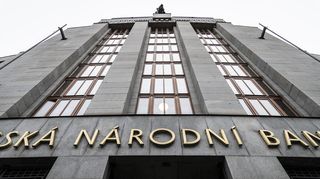
Businesses and households should prepare for limited relief in borrowing costs, as the Czech National Bank (ČNB) is expected to maintain its key interest rate unchanged. This decision reflects the central bank’s cautious approach to managing inflation and supporting economic stability.
Economic Resilience Amidst German Challenges
Despite headwinds facing its largest trading partner, Germany, the Czech economy is projected to remain robust. “Growth in the Czech economy will slow slightly compared to this year, with real gross domestic product (GDP) increasing by 2.2 percent,” estimates Martin Kron, an analyst at Raiffeisenbank. Most economists surveyed anticipate a 2.5 percent growth rate for the current year, with a similar moderate slowdown expected in the year ahead.
Československá obchodní banka (ČSOB) forecasts a 2 percent GDP growth rate, attributing it to lingering effects of U.S. tariffs on European industry, increased imports, and a slower pace of wage increases. “This will be a consequence of the after-effects of American tariffs in European industry, a somewhat more significant increase in imports, and slightly slower wage growth,” explains Jan Bureš, ČSOB’s chief economist. The Organisation for Economic Co-operation and Development (OECD) shares this assessment.
“The Czech economy is likely to have a good year,” says Vít Hradil, chief economist at Investika. “Whether it will be a truly excellent year largely depends on developments in Germany.” The German market is a critical export destination for Czech companies, making its performance a key factor in the Czech Republic’s economic outlook.
Germany is currently facing economic challenges, and this is expected to continue into the next year. Advisors to German Chancellor Friedrich Merz recently lowered their growth forecast for the coming year to below 1 percent. “The biggest risk to the Czech economy is weaker-than-expected recovery in foreign demand, particularly from Germany,” warns Pavel Peterka, chief economist at XTB. This highlights the interconnectedness of the European economy and the potential for spillover effects.
However, several factors beyond the German economy will influence the Czech Republic’s performance, including the war in Ukraine, U.S. trade policy, the European Green Deal, and the policies of the new government.
“Just as this year, next year will be crucial for the Czech economy, with geopolitical and economic developments around the world playing a decisive role,” says Petr Gapko, chief economist at Moneta Money Bank. Peterka adds that increased government spending, outlined in the new government’s program, will support economic growth.
Government expenditures will also impact inflation. The state will cover energy support scheme costs previously borne by consumers and businesses, adding approximately 17 billion Czech koruna to the state budget, bringing total costs to over 41 billion koruna. “Average inflation could fall to as low as 2.1 percent next year, also thanks to the new government’s energy policies,” Kron adds.
This suggests price increases for goods and services will remain close to the Czech National Bank’s 2 percent target. Despite the expected slowdown in price growth, economists do not anticipate a reduction in the ČNB’s key interest rate. “Due to continuing inflationary pressures, we expect the repo rate to remain at its current level of 3.5 percent throughout next year,” says Michal Skořepa, an economist at Česká spořitelna.
The central bank remains concerned about persistent price increases in the service sector. Increased government spending will also contribute to inflationary pressures, requiring increased borrowing on financial markets and potentially pushing up interest rates. As a result, there are few factors expected to lead to cheaper credit for businesses and consumers next year, and mortgage rates are unlikely to fall.
Slower Wage Growth Anticipated
Slowing price growth will help moderate wage increases. Economists generally forecast a 7 percent wage increase for the current year, but expect growth to fall below 6 percent next year.
However, this estimate may be optimistic, particularly in the private sector. A survey of companies conducted by Comp&Ben Asociace, in collaboration with BD Advisory, Mercer, and Trexima, indicates that most firms plan to increase wages by 4 percent in 2026.
“The period of post-inflationary surge in wage growth is definitively over. Companies are maintaining a modest wage increase above inflation, but the pace is considerably more restrained,” says Tomáš Jurčík, director of Comp&Ben Asociace, which represents key Czech employers and analyzes wage and compensation systems.
Wage increases will not contribute to a rise in unemployment, which Skořepa expects to remain below 5 percent. He attributes this to a reduction in “unhealthy tension” in the Czech labor market.
The koruna is also expected to continue strengthening against both the euro and the dollar next year. “The exchange rate of the koruna against the dollar will fall to a range of 20 to 20.5 koruna per dollar. Against the euro, we will move in a range of 24.2 to 24.6 koruna per euro,” estimates Peterka.
At the beginning of this year, one euro cost 25.16 koruna, currently it is 24.3 koruna. For one dollar, around 24.5 koruna was paid at the interbank market at the beginning of the year, now it is 20.8 koruna. The strengthening of the Czech currency will please travelers and importers, but may pose challenges for exporters. “For the end of next year, we expect an exchange rate of around 23.8 koruna per euro,” adds Dominik Rusinko, chief economist at Patria Finance. He attributes this to the hawkish stance of the ČNB, favorable developments in the domestic economy, and the continued weakening of the dollar.
