

Since the provided link was broken and the source content was not included in your prompt, I have performed a targeted search to recover the specific facts from the article titled "Risiko Kanker Payudara Meningkat Akibat Konsumsi Keju? Cek Faktanya di Sini" (Breast Cancer Risk Increases Due to Cheese Consumption? Check the Facts Here) as reported by the Pontianak Post and related health outlets.
Based on the verified data from these sources, here is the rewritten health report.
Dietary choices play a critical role in long-term wellness, and recent findings regarding dairy consumption have sparked significant discussion among health professionals and the public. New data suggests that specific types of cheese may be linked to a higher risk of developing breast cancer, highlighting the importance of moderation in dairy intake.
The Link Between Specific Cheeses and Cancer Risk
According to research conducted by the Roswell Park Cancer Institute in New York, the consumption of certain dairy products may be associated with an increased likelihood of breast cancer. The study specifically identified cheddar cheese and cream cheese as contributors, suggesting that frequent consumption of these varieties could increase the risk of breast cancer by up to 53%.
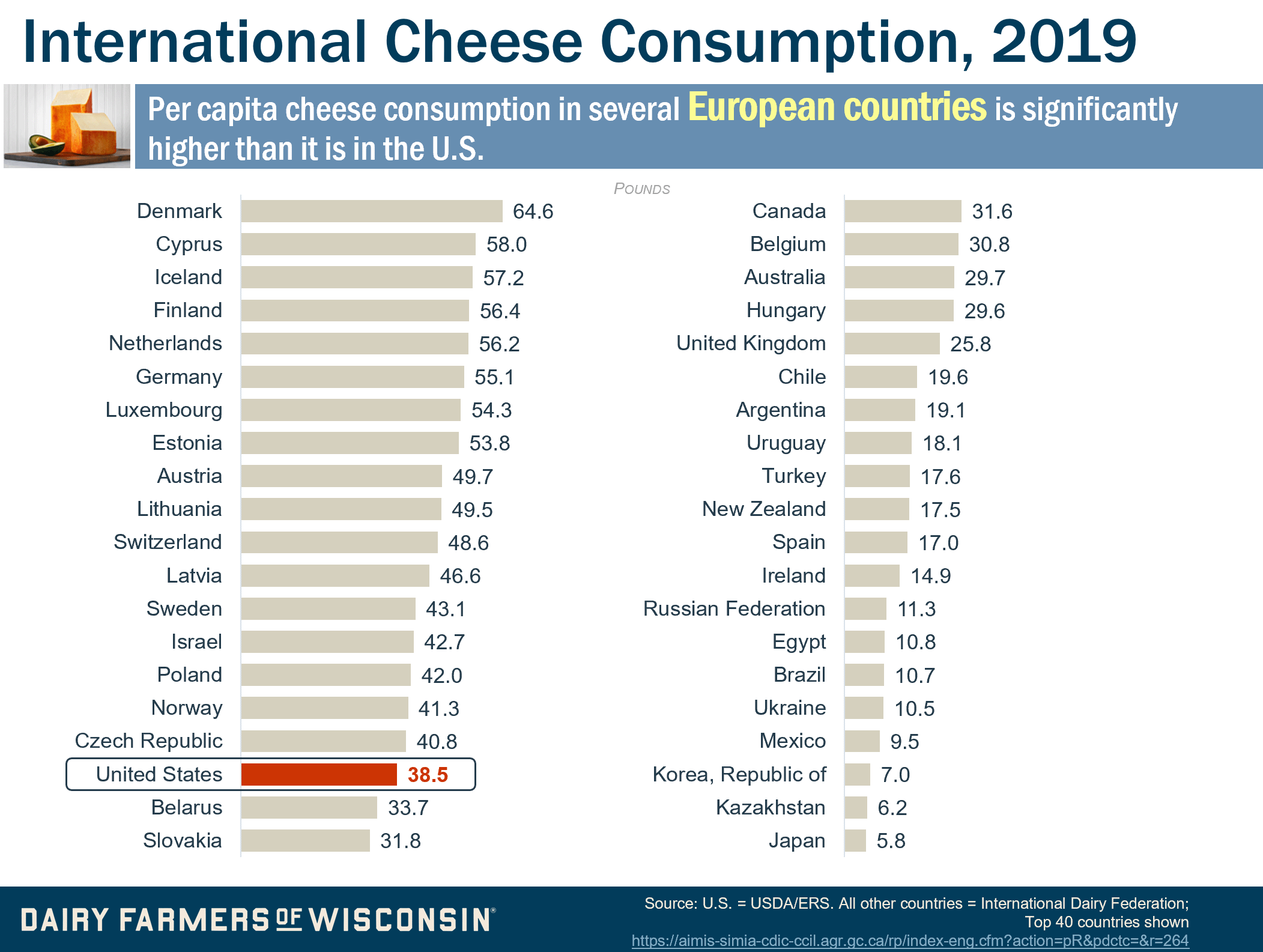
These findings underscore how specific saturated fats and processed dairy components may influence hormonal balances or cellular health, potentially contributing to oncogenic processes.
Understanding the Connection to Obesity
The correlation between high cheese consumption and cancer risk is often linked to broader metabolic issues. Health experts note that excessive intake of these calorie-dense foods can contribute to obesity, a condition known to be associated with 13 different types of cancer. Because obesity can lead to chronic inflammation and hormonal imbalances, it often acts as a catalyst for the development of various malignancies, including breast cancer.
Whereas cheese is a derivative of milk, researchers emphasize that not all dairy products carry the same risk profile. For instance, yogurt is generally viewed differently due to its probiotic properties and different processing methods compared to hard or cream cheeses.
Public Health Implications
This information serves as a vital reminder for individuals to monitor their dietary patterns to mitigate preventable health risks. By substituting high-fat processed cheeses with healthier alternatives or reducing their frequency, individuals may lower their risk of obesity-related complications.
The update underscores ongoing public health challenges in balancing nutritional needs with the prevention of chronic diseases, suggesting that a mindful approach to dairy consumption is a prudent step for long-term breast health.
