
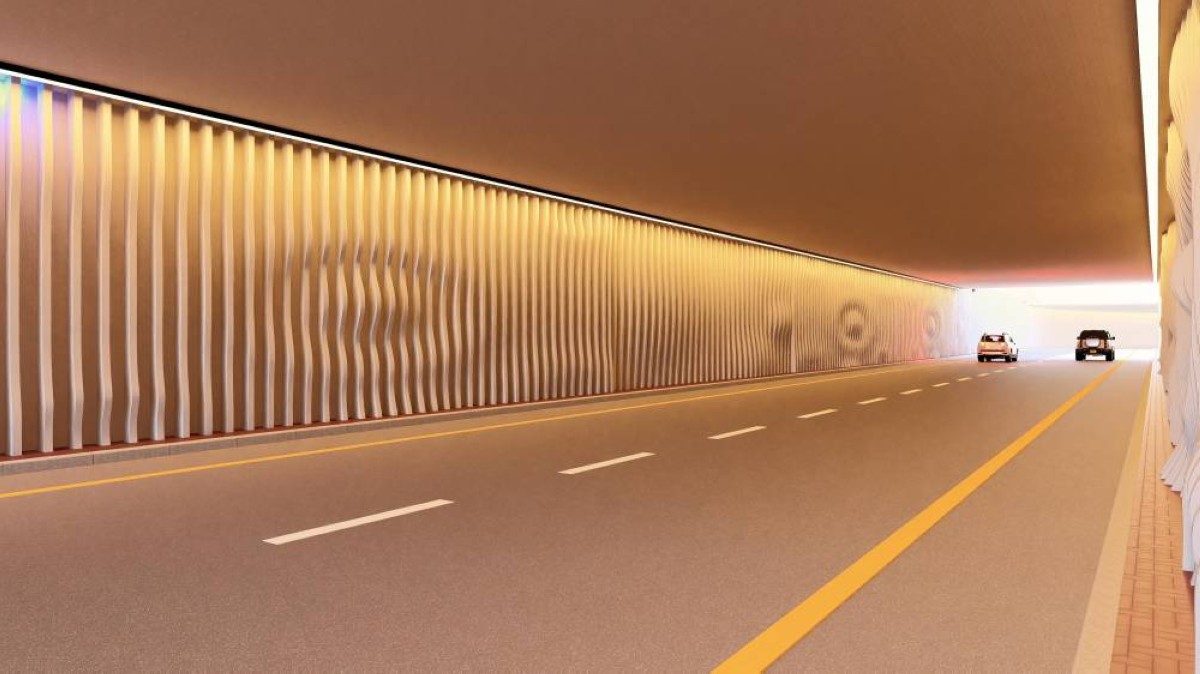
Dubai is embarking on a multi-billion dirham overhaul of its transportation infrastructure,aiming to alleviate congestion and enhance the city’s aesthetic appeal for both residents and the more than 16.73 million tourists who visited in 2023, according to the Department of Economy and Tourism. Sheikh Hamdan bin mohammed bin Rashid Al Maktoum recently approved a new architectural identity for these road projects, signaling a commitment to sustainable and integrated urban design. The initiative encompasses not only major roadway construction but also a unique “Dubai Tunnels” program transforming underground spaces into public art installations.
Dubai is investing billions of dirhams in a comprehensive overhaul of its road network, aiming to enhance both functionality and aesthetic appeal for residents and the millions of tourists who visit each year. Sheikh Hamdan bin Mohammed bin Rashid Al Maktoum, Crown Prince of Dubai, recently approved a new architectural identity for road projects across the emirate, reflecting a vision for a sustainable and integrated city.
Infrastructure Efficiency
Table of Contents
During a visit to the ongoing development of the Al Markaz Commercial Center intersection and Future Street, Sheikh Hamdan was briefed on the progress of a project valued at 1.3 billion dirhams. The project includes the construction of seven bridges and three tunnels, totaling approximately 6,500 meters in length, and is designed to serve seven residential and development areas, as well as key landmarks like the Dubai World Trade Centre, Dubai International Financial Centre, Emirates Towers, the Museum of the Future, and Downtown Dubai. Officials estimate the project will benefit over one million residents and visitors, reducing travel time in the area by 75%.
The Crown Prince also reviewed the “Dubai Tunnels” initiative, a program that will transform underground infrastructure into cultural and artistic spaces through collaborations with local and international artists. The initiative will see murals adorning the interior of several Dubai tunnels.
According to Matar Al Tayer, Director-General and Chairman of the Board of Executive Directors of the Roads and Transport Authority (RTA), Dubai’s road network currently spans over 25,000 lane-kilometers and accommodates more than 3.5 million vehicles daily. The RTA has consistently exceeded global averages in road network development, completing approximately 829 kilometers of roads annually – double the global average of around 400 kilometers. The cost-efficiency of road and metro construction in Dubai is also reportedly 1.5 to 2.5 times better than in cities like Moscow, Shenzhen, and Milan. These transportation projects have contributed to a 6 to 16% increase in property values.
The RTA plans to undertake 72 projects to further develop the road network between 2025 and 2027, with a total estimated cost of 35 billion dirhams.
The Al Markaz Commercial Center intersection project, currently 40% complete, is a key component of these improvements. The project aims to connect Sheikh Zayed Road with five vital streets – Sheikh Khalifa bin Zayed Street, Sheikh Rashid Street, Second of December Street, Qasr Al Za’abeel Street, and Al Majlis Street. It will be opened in phases, beginning in January with the launch of two bridges serving traffic from Second of December Street towards Al Majlis Street and Sheikh Rashid Street. A bridge connecting Sheikh Zayed Road to Sheikh Khalifa bin Zayed Street will open in March, followed by two additional bridges in October 2026, facilitating traffic flow from Sheikh Rashid Street and Al Majlis Street towards Second of December Street.
Al Tayer explained that the project involves constructing five bridges totaling 5,000 meters in length and converting the existing roundabout into a surface intersection to improve traffic flow from Sheikh Zayed Road towards Second of December Street and Future Street. The project will also provide free-flowing traffic from Second of December Street (Jumeirah and Al Satwa) to Al Majlis Street, leading to the Dubai World Trade Centre and Dubai International Financial Centre, and Sheikh Rashid Street towards Deira. Upon completion, the intersection’s capacity is expected to double, reducing delays from 12 minutes to 90 seconds and cutting travel time from Sheikh Zayed Road to Sheikh Khalifa bin Zayed Street from six minutes to just one minute.
Future Street
Sheikh Hamdan also received an update on the Future Street development project, which stretches from its intersection with Qasr Al Za’abeel Street to the Financial Centre Street. Scheduled for completion in 2027, the project includes bridges and tunnels spanning 1,500 meters, as well as an increase in lanes from three to four in each direction. This is expected to increase the street’s capacity from 6,600 to 8,800 vehicles per hour – a 33% increase – and reduce travel time from 13 minutes to 6 minutes. The project includes three tunnels, totaling 1,100 meters in length, at the intersection of Future Street with the Financial Centre Street, and a 400-meter bridge with two lanes serving traffic from the Dubai World Trade Centre towards the intersection of Qasr Al Za’abeel Street and Future Street.
The project also encompasses the expansion of Future Street from its intersection with Financial Centre Street to Qasr Al Za’abeel Street, a 3,500-meter stretch that will increase the number of lanes to four in each direction. Free-flowing connections will be added to improve traffic flow at the intersections of Future Street with Al Asayel Street and the Financial Centre Street, along with a pedestrian bridge on Al Sukook Street and upgrades to existing intersections.
Architectural Identity
Sheikh Hamdan was also presented with the new architectural identity for Dubai’s road projects, designed to create a visually appealing aesthetic throughout the emirate and enhance the urban landscape. The strategy aligns with Dubai’s 2040 Urban Master Plan, which focuses on improving quality of life, enhancing the city’s aesthetic identity, and improving the urban environment through designs inspired by the local environment and architectural heritage.
The new identity aims to establish a comprehensive design and architectural framework for infrastructure elements, including bridges, canopies, street furniture, lighting, and aesthetic features, ensuring visual and functional consistency across projects. It also emphasizes integrating sustainability and innovation into the design, using eco-friendly materials and balancing technical and aesthetic requirements.
The implementation of this identity is expected to strengthen Dubai’s distinctive architectural presence and highlight its urban features on a global scale, positioning it as a city that blends tradition with modernity.
Six Zones
According to the strategy, Dubai’s areas have been classified into six main zones based on land use, prevailing activities, and building shapes and architectural facades. This classification will allow for specific design standards for each zone, ensuring harmony and differentiation in the emirate’s urban landscape. The zones include residential areas, rural areas, industrial areas, mixed-use areas, historical and artistic areas, and attraction areas.
Specific materials, colors, and architectural styles have been assigned to each zone to ensure visual consistency within each area while preserving the diversity that reflects Dubai’s rich urban identity and varied architectural styles.
Dubai Urban Challenge
Sheikh Hamdan also reviewed the Dubai Urban Challenge, a global competition launched by the RTA to develop an architectural identity for Dubai’s roads. The competition invited artists and designers to create innovative designs for road elements that reflect the spirit of the city and balance functionality, beauty, and sustainability. Over 500 artists and designers from 91 countries participated, and the entries were evaluated by a panel of local and international architects. The winners were Oliver Charles from the United Kingdom, with a design titled “A Thread Through Time”; Mohammed Ayash from Saudi Arabia, with a design called “Breathing Masonry”; and Julieta Debrouti from Argentina, with a design titled “Echo.”
Dubai Tunnels
Concluding the visit, Sheikh Hamdan was briefed on the “Dubai Tunnels” initiative, which aims to enhance the aesthetic and urban landscape of Dubai by involving artists in shaping the city. The initiative will beautify 18 tunnels in three phases. The first phase covers three tunnels on Al Khaleej Street, Umm Suqeim Street, and Oud Metha Street. The second phase includes five tunnels on Future Street, the Financial Centre Street, and Al Sukook Street, while the third phase encompasses 10 tunnels on Al Wasl Street, Jumeirah Street, and Umm Suqeim Street.
The RTA is also exploring innovative technologies for the design and construction of tunnels in the next phase, including smart, variable lighting systems to enhance the user experience and provide a safer, more attractive environment, as well as high-performance panels resistant to humidity and heat, developed to showcase Dubai’s modern aesthetic identity. The use of sustainable and more efficient materials reflects Dubai’s vision of making infrastructure an extension of the city’s beauty, highlighting its architectural uniqueness and combining functionality, beauty, and sustainability.
