
The euro surpassed $1.20 against the dollar today,reaching a level not seen as june 2021,as the greenback faces renewed pressure from both economic factors and political rhetoric.The shift comes amid comments from former President Donald Trump, who surprisingly welcomed the dollar’s decline, signaling a potential shift in U.S. economic strategy focused on bolstering exports and addressing the nation’s trade imbalance. This developing situation is prompting analysis of potential impacts for both the U.S. and Eurozone economies, as well as broader implications for global currency markets.
The euro has broken the $1.20 exchange rate against the dollar for the first time since June 2021, predating the start of the Russia-Ukraine war. The move, anticipated by some analysts later this year, comes shortly after comments from former U.S. President Donald Trump, who expressed enthusiasm over the dollar’s decline. The dollar fell 1.5% against a basket of major world currencies in the previous session, a drop not seen since the imposition of tariffs last April.
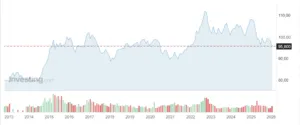
Trump Welcomes Euro-Dollar Exchange Rate Increase
“It’s fantastic” and “the dollar is doing great,” Trump stated.
These comments may seem paradoxical, given the weighted average exchange rate’s decline to levels not seen since late 2021. However, a weaker dollar is seen favorably by the White House as a means of rebalancing the U.S. trade balance. A consistently strong dollar has weighed on the U.S. economy for decades, making exports less competitive and imports more affordable, contributing to the decline of domestic manufacturing.
Impact on the Eurozone
The euro’s rise against the dollar presents a mixed outlook for the Eurozone. On one hand, it eases inflationary pressures and simplifies the European Central Bank’s (ECB) task of maintaining price stability. A weaker dollar translates to cheaper imports for European consumers, potentially lowering costs. However, it simultaneously makes Eurozone exports more expensive. This is a key concern, as the current exchange rate increase doesn’t reflect strong underlying macroeconomic fundamentals in Europe, but rather conditions in the United States.
This trend could lead to a weakening of economic momentum. Economies like Germany and Italy are heavily reliant on exports, and Berlin cannot afford another year of stagnation following two years of recession. As a result, Frankfurt may be compelled to cut interest rates later this year to avoid a downturn. Such a move could weaken the euro-dollar exchange rate or, at least, prevent further appreciation of the euro.
Federal Reserve, Tariffs, and Debt Weigh on Dollar
The dollar’s decline is, in part, attributable to the current U.S. administration’s explicit aim of weakening the exchange rate to boost exports, as confirmed by Trump’s statements. Markets are reacting to signals from the White House while also expressing concern about a potential shift towards a more accommodative stance at the Federal Reserve. Trump is reportedly considering candidates to succeed Jerome Powell, whose term expires in May, with speculation pointing towards a “dove” like Stephen Miran to facilitate interest rate cuts that would fund debt issuance at lower costs.
More broadly, the dollar’s crisis is a consequence of a paradigm shift underway in the world’s largest economy. After decades of pursuing open market policies, Washington is now challenging globalization through tariffs and the dismantling of established trade agreements. Even historically close allies, like Europe, are seeking to reduce their economic and military dependence on the U.S. A growing global desire for autonomy from the superpower and its currency is emerging. Concerns surrounding the $38.6 trillion U.S. national debt, fueled by ever-increasing fiscal deficits, are also contributing to the situation. However, the euro has only benefited marginally from this trend, in line with other major currencies; instead, precious metals are gaining value, signaling a broader loss of confidence in fiat currencies.
