
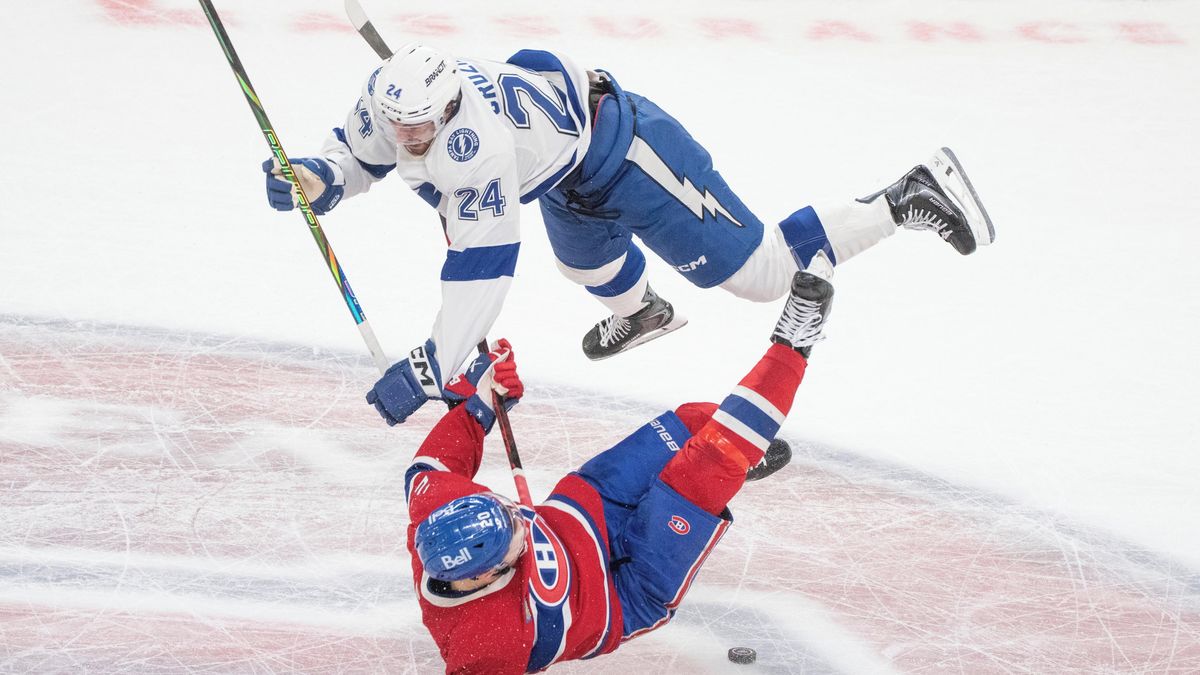
NHL Star Juraj Slafkovský Suffers Hard Hit in Playoff Game—Medical Concerns Rise Over Player Safety
The high-stakes world of professional hockey faced another moment of concern over player safety on April 26, 2026, when Montreal Canadiens forward Juraj Slafkovský absorbed a brutal hit from Tampa Bay Lightning defenseman Maxwell Crozier during Game 4 of their first-round playoff series. The collision, which occurred late in the third period, left Slafkovský visibly shaken and sparked immediate debate about the physical toll of playoff hockey—particularly as the league grapples with growing scrutiny over concussions and long-term brain health in athletes.
According to reports from the game, Slafkovský was skating near the Tampa Bay blue line when Crozier delivered a shoulder check that sent the 21-year-old Slovakian star crashing to the ice. The hit, which appeared to target Slafkovský’s head and upper body, drew no penalty from officials despite its force. Slafkovský remained on the ice for several moments before being helped to the locker room, though he later returned to the bench in the final minutes of the game—a decision that has raised questions about the NHL’s concussion protocols and the pressures players face to return to action.
“Simulanti, klauni, zloději.”
— Criticism from Tampa Bay Lightning forward Nikita Kucherov, directed at the Montreal Canadiens following the game
The incident has reignited long-standing tensions between the two teams, with Tampa Bay’s Nikita Kucherov later criticizing the Canadiens in post-game comments, calling them “fakers, clowns, and thieves.” Although Kucherov’s remarks were likely fueled by the heat of competition, they underscore the broader culture of toughness in hockey—a culture that often prioritizes playing through pain over prioritizing player health.
For Slafkovský, the hit comes at a pivotal moment in his career. The 6-foot-4 forward, who was the first overall pick in the 2022 NHL Draft, has emerged as one of the league’s most promising young talents. In the 2025-26 season, he became the youngest player in Canadiens history to score 30 goals in a single campaign, a milestone he reached just days before the playoff series against Tampa Bay. His performance in the postseason has been even more impressive, with multiple clutch goals—including a late-game winner in Game 2 that tied the series at one game apiece.
The Physical Toll of Playoff Hockey
While hockey is inherently a contact sport, the intensity of playoff games often amplifies the risks. Players are more likely to engage in aggressive physical play, and the pressure to perform can lead to situations where injuries—particularly head injuries—are downplayed or overlooked. The NHL has made efforts in recent years to address player safety, including stricter penalties for hits to the head and expanded concussion protocols. However, critics argue that enforcement remains inconsistent, and the league’s culture still rewards toughness over caution.
Slafkovský’s case is particularly concerning given his age, and potential. As one of the NHL’s brightest young stars, his long-term health could be at stake if he sustains repeated head trauma. Research has increasingly linked contact sports like hockey to chronic traumatic encephalopathy (CTE), a degenerative brain condition caused by repeated blows to the head. While the NHL has taken steps to mitigate these risks, incidents like the one involving Slafkovský highlight how quickly a single hit can escalate into a serious health issue.
The Canadiens went on to win Game 4 in overtime, with goaltender Samuel Dobeš making 38 saves to secure the victory. However, the focus of the game—and the series—has shifted to Slafkovský’s condition. As of Monday, April 27, the Canadiens have not provided an official update on his health, leaving fans and medical experts alike to speculate about the potential long-term consequences of the hit.
A Broader Conversation About Athlete Safety
The incident involving Slafkovský is not an isolated one. Across professional sports, leagues are facing growing pressure to prioritize player safety, particularly when it comes to head injuries. The NFL, for example, has implemented stricter concussion protocols and invested in research to better understand the long-term effects of repeated trauma. Hockey, however, has been slower to adopt similar measures, in part because of the sport’s physical nature and the resistance from players and fans who see toughness as a core part of the game.

For now, the Canadiens and Lightning are preparing for Game 5 of their series, with the outcome hanging in the balance. But the bigger question looms: How much longer can the NHL afford to ignore the risks of its most violent plays? As Slafkovský’s situation demonstrates, the consequences of inaction could extend far beyond the rink.
Public health experts emphasize that the risks of contact sports extend beyond professional athletes. Youth and amateur leagues often model their play after the NHL, meaning that the culture of toughness—and the potential for injury—trickles down to younger players. While the thrill of playoff hockey is undeniable, the long-term health of its stars may depend on whether the league is willing to make difficult changes now.
