
The gaming industry is undergoing a quiet revolution in 2026, shifting from a product-focused model to one that increasingly resembles a living, learning organism. While explosive trailers still grab headlines, a more subtle change is taking hold: characters reacting with greater logic, advanced graphics on smaller screens, and controllers that finally overcome the frustrating issue of wear and tear.
This evolution is fueled, in part, by the increasing adoption of generative AI tools. Approximately one in three game developers are now leveraging AI to streamline tasks like content creation, prototyping, and production, according to industry reports. This influx of AI is accelerating development cycles in a sector known for brutal schedules and high expectations, raising the question of whether it will foster creativity or simply generate more polished filler.
AI-Powered Gameplay: NPCs That Feel Less Robotic
The most disruptive trend isn’t AI-generated concept art; it’s the integration of AI directly into gameplay. New tools are making it easier to train and implement intelligent behaviors, leading to Non-Playable Characters (NPCs) that are more contextual and responsive. NPCs are beginning to remember interactions, adjust their tone, and react to player decisions, creating a new level of realism that extends beyond visuals to encompass social dynamics. This development promises to enhance immersion and player engagement.
For gamers, this translates to fewer repetitive dialogues, less formulaic quests, and a greater sense that the game world is truly reacting to their actions. This increased personalization also raises privacy considerations, as games become more data-driven and reliant on telemetry, requiring users to carefully review permissions and settings, similar to managing privacy on social media platforms.
Ending Gamer Pain: TMR to Eliminate “Stick Drift”
One of the most universal frustrations for modern gamers is “stick drift”—when a joystick moves on its own, ruining gameplay and testing patience. In 2026, Tunnel Magnetoresistance (TMR) sensors are emerging as a potential solution. These contactless magnetic sensors reduce the mechanical wear that causes drift, and kits and components featuring “anti-drift TMR” technology are already available for certain controllers. This innovation addresses a key pain point for players.
This advancement is significant due to the fact that it focuses on durability. In countries like Colombia, where controllers can be expensive, a longer-lasting controller is just as essential as a new console.
“Console-Quality” Graphics on Mobile: Neural Upscaling Gains Traction
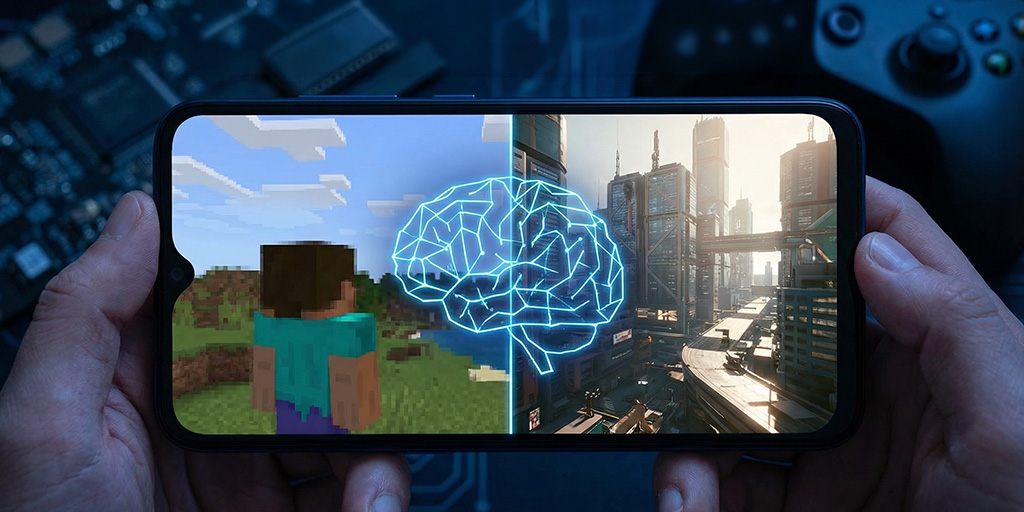
Another seemingly small but impactful development is AI-powered upscaling. Arm is pushing Neural Super Sampling, a neural-based super-resolution technique, to deliver “sharper graphics” on mobile devices using neural acceleration in GPUs, aiming to improve quality without significantly increasing power consumption. The technology represents a significant step forward in mobile gaming performance.
While it won’t transform a phone into a PlayStation, it brings mobile and handheld gaming closer to a more refined, stable, and less-laggy experience. For the average gamer, this means a better visual experience without overheating the device.
Immersion: From Control to Skin (Haptics and Sensors)
Immersive gaming is also pushing the boundaries of how we interact with games, with advancements in haptics, sensors, and even haptic suits. While not all of these technologies will become mainstream immediately, the direction is clear: if a game can be not only seen but also felt, immersion increases—as does potential fatigue. The industry will need to find a balance between “wow” factor and real-world comfort.
VR and Mixed Reality: The Market Grows and Brands Reinvest
The immersive technology market in gaming is projected to experience significant growth, rising from US$18.37 billion in 2025 to US$66.59 billion by 2030. Other global immersive market analyses also demonstrate an aggressive growth curve towards 2030.
In 2026, competition is intensifying in the “spatial computing” space, driven by Apple Vision Pro and pressure from competitors like Meta, Apple, and Samsung.
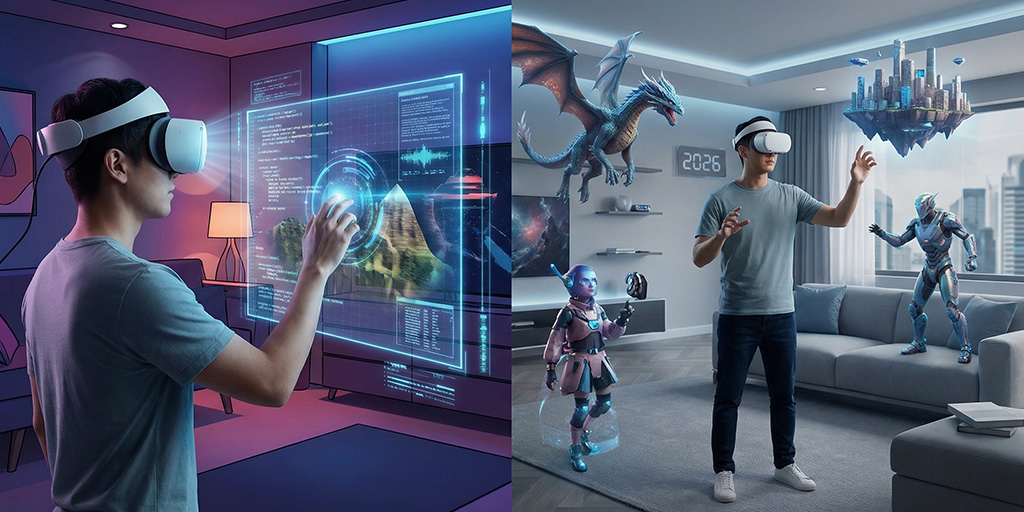
In Colombia, the impact typically arrives gradually: first curiosity, then price drops, and finally, real adoption within communities (streamers, VR arcades, gaming cafes, universities). But the key takeaway is that VR/MR may be moving beyond a “trend” and regaining momentum.
The 2026 Gamer Buys Fewer “Games” and More “Experiences”
gaming is evolving from simply content consumption to an adaptive experience. AI accelerates development and begins to modify gameplay; hardware addresses long-standing issues like stick drift; and immersion pushes towards more vivid and realistic worlds.
The promise is compelling: greater realism, more personalization, and less friction. The risk is equally significant: more persuasive worlds, designed to retain attention, and—most concerningly—worlds that are harder to disconnect from.
