
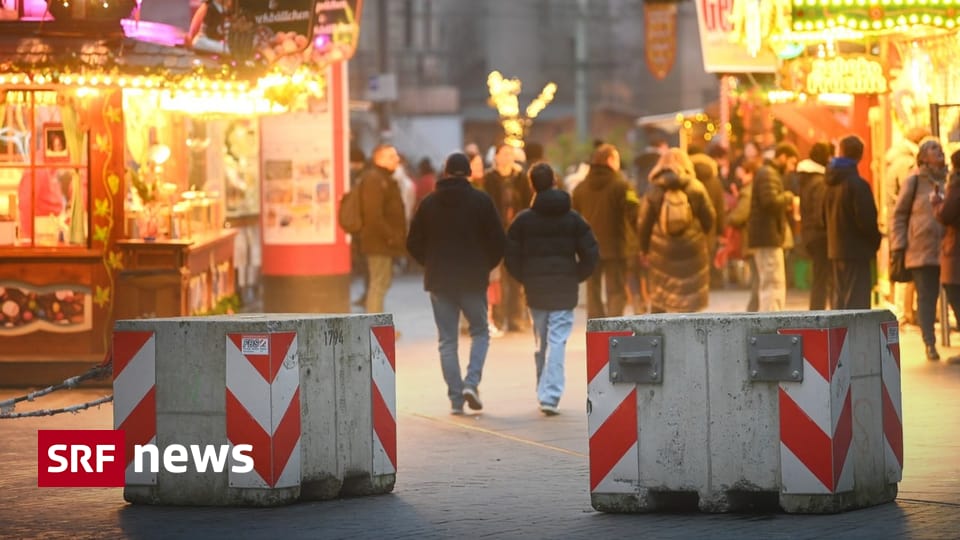
Germany’s cherished Christmas markets, a tradition dating back six centuries, are facing unprecedented challenges this year as escalating security costs force some towns and cities to consider cancellations. The financial strain highlights a growing dilemma for European nations striving to preserve festive traditions amid heightened security concerns following recent attacks [[1]]. The situation is prompting debate over who should bear the burden of increased safety measures – local authorities, event organizers, or a combination of both.
Germany’s beloved Christmas markets, a tradition stretching back 600 years, are facing cancellation in some towns and cities this year as soaring security costs prove unsustainable for local authorities. The trend highlights a growing challenge for European nations balancing festive traditions with heightened security concerns.
Klicken, um die Teilen-Funktion zu öffnen.
The increasing expense of security measures – including threat assessments, certified road barriers, and personnel for entrance controls – is putting a strain on smaller towns and municipalities across Germany. Many are finding they simply can’t afford the necessary precautions.
The question of how to balance security with the festive atmosphere is increasingly pressing.
Keystone / HEIKO REBSCH
The town of Overath in North Rhine-Westphalia, for example, has been forced to cancel its popular Christmas market. In Hamburg Rahlstedt, insufficient revenue and a lack of vendors led to a similar decision, while Kerpen is rebranding its market as a “Advent Enjoyment Market” in an attempt to circumvent stricter security regulations.
Security Comes at a Cost
Magdeburg, however, is investing heavily in a comprehensive security plan. The city and event organizers are jointly investing around half a million euros to ensure the market can proceed this year. This comes after a tragic incident last year when a man drove a car into a crowd, killing six people, as detailed in this report on the city’s trauma and recovery.
Security is very expensive. To cancel the Christmas market just because we don’t want to spend the money would be a disaster.
According to Magdeburg’s Mayor Simone Borris, minimizing the risk of an attack is the responsibility of both organizers and the city. “Security is very expensive. To cancel the Christmas market just because we don’t want to spend the money would be a disaster.”
Traders also face significant consequences from cancellations. “We’ve purchased everything, paid for much of it in advance. If the market were canceled, my business would be over,” said merchant Elke Selle.
Calls for Improved Cooperation
Jochen Kopelke, national chairman of the German Police Union, argues that the costs often fall solely on event organizers. He calls for increased funding and better coordination between police, municipalities, and organizers.
“Why should a small market vendor have to buy bollards themselves? Why can’t the police provide them?” Kopelke advocates for a fairer distribution of financial burdens and improved collaboration between law enforcement, local governments, and event organizers.
Amidst the bollards and police presence, the question remains: how to reconcile security with the spirit of Christmas? In Magdeburg, stallholders and visitors alike hope their market will remain what it has always been – a place of connection, normalcy, and a touch of Christmas joy.
Klicken, um die Teilen-Funktion zu öffnen.
