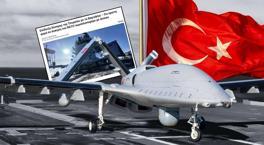
ABD–İran tensions are escalating as Iran has initiated military exercises in the Strait of Hormuz, a critical waterway for global oil shipments. The move comes amid heightened concerns over security in the region and follows increased U.S. Military presence in the Middle East.
TEHRAN CITES SECURITY THREATS
The Iranian state television reported that the exercises, named “Smart Control of the Strait of Hormuz,” are being conducted by the Islamic Revolutionary Guard Corps Navy in the Persian Gulf and the Strait of Hormuz. According to the report, the drills are focused on the Guard’s ability to respond quickly and decisively to potential maritime threats.
The exercises are taking place as the U.S. Government has increased its military presence in the region in recent weeks, deploying additional naval assets in response to perceived threats from Iran. Tehran views this build-up as a security risk.
STRATEGIC IMPORTANCE OF THE STRAIT
The Strait of Hormuz is a strategically vital chokepoint for global oil trade. Iran has previously stated it could close the Strait of Hormuz in the event of a conflict with the United States.
The U.S. Department of Defense is rapidly deploying an aircraft carrier strike group, advanced fighter aircraft, and missile defense batteries to the region.
While diplomatic contacts between Iran and the U.S. Continue, the United States has significantly expanded its military footprint in the Middle East.
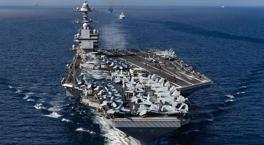
The Pentagon is sending a second aircraft carrier strike group to the area, with the USS Abraham Lincoln and USS Gerald R. Ford accompanied by Aegis-equipped destroyers and at least one nuclear-powered submarine. The U.S. Air Force is shifting F-15E fighter squadrons from bases in Europe to the Middle East, and bolstering air, intelligence, and refueling capabilities at key bases in Qatar and the United Arab Emirates. These deployments have notably increased U.S. Naval, air, and defense capabilities in the region.
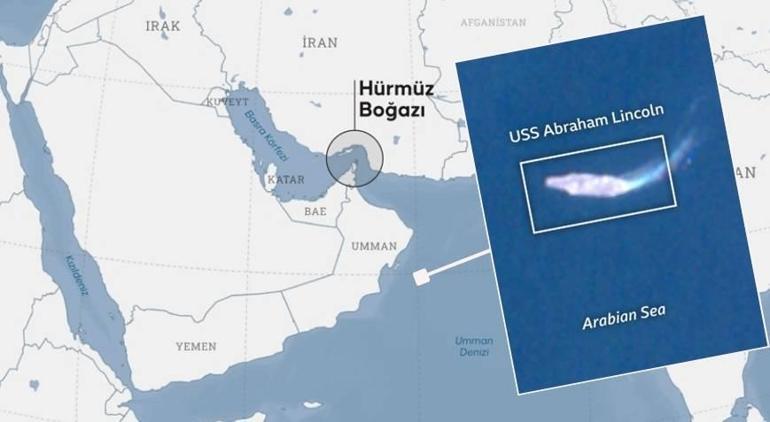
Meanwhile, BBC Verify, has confirmed, through satellite and open-source imagery analysis, that the USS Abraham Lincoln is currently sailing in the Arabian Sea, positioned approximately 240 kilometers off the coast of Oman.
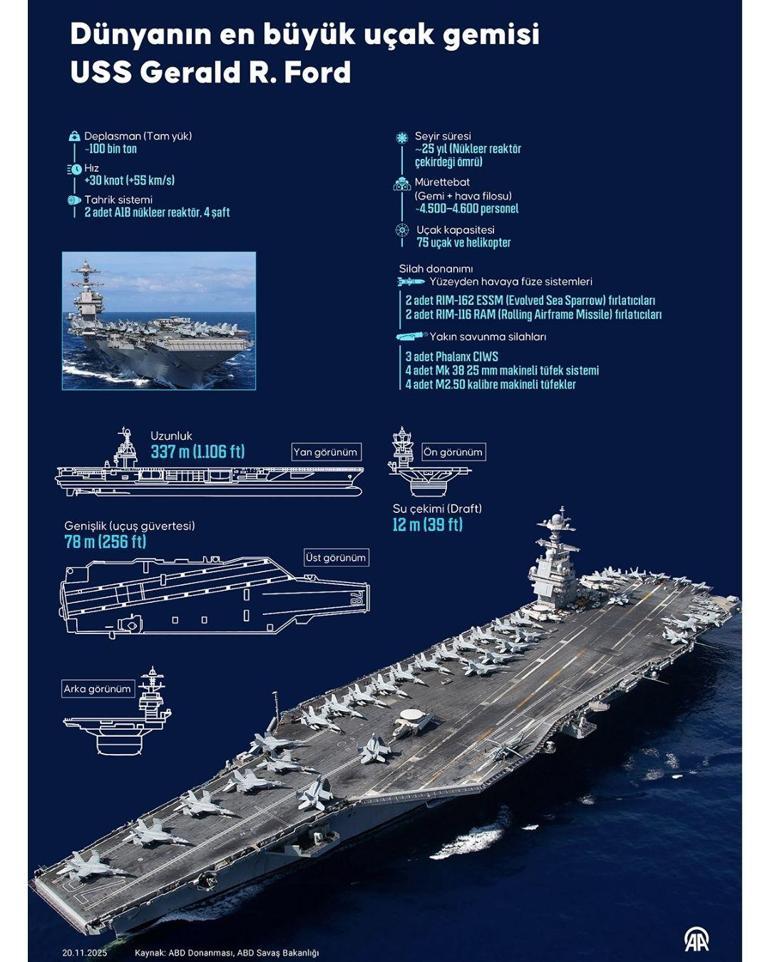
U.S. TO SEND ANOTHER CARRIER
The United States has decided to send a second aircraft carrier strike group to the region to further strengthen its military presence in the Middle East. In addition to the USS Abraham Lincoln, the USS Gerald R. Ford is also being directed to the CENTCOM area of responsibility, accompanied by Aegis-equipped destroyers and at least one nuclear-powered submarine.
The U.S. Air Force is also repositioning F-15E squadrons from bases in Europe to the Middle East, while enhancing air, intelligence, and refueling capabilities at bases in Qatar and the UAE, including Al Udeid Air Base and Al Dhafra Air Base.
NUCLEAR PROGRAM IN FOCUS DURING TALKS
Indirect talks between Iran and the U.S. Are ongoing, with the focus on issues related to Iran’s nuclear program and the potential lifting of sanctions.
Although the parties are not meeting directly, negotiations are being facilitated by Oman. A second round of talks is scheduled to grab place in Geneva, Switzerland, tomorrow, and is expected to provide a clearer picture of the progress of the negotiations.