
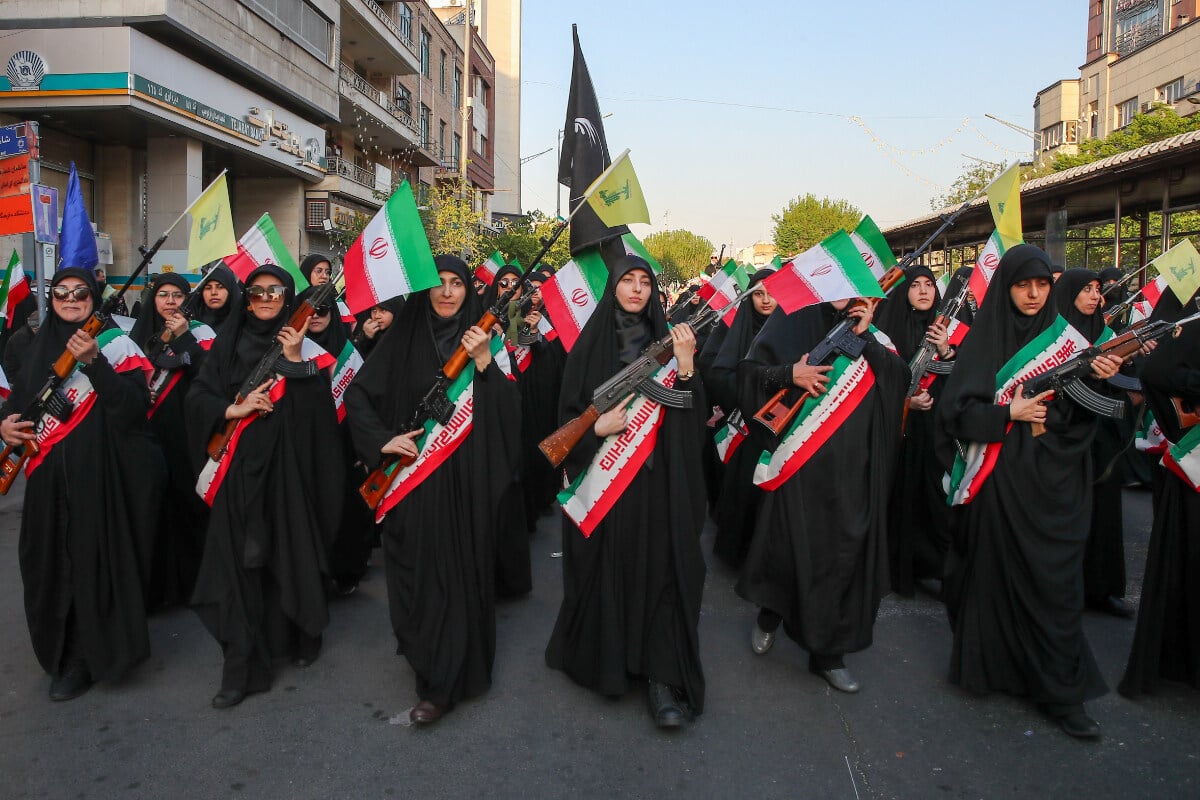
Iran has declared It’s ready to respond militarily if hostilities with the United States and Israel resume after a fragile ceasefire expires, according to parliamentary officials in Tehran.
Parliament Speaker Mohammad Bagher Ghalibaf stated that Iran is prepared to “indicate new cards on the battlefield” should fighting restart following the end of a two-week truce set to conclude on Wednesday, April 22, 2026. His remarks underscore Tehran’s refusal to engage in diplomatic talks while under what it describes as the “shadow of threats” from Washington.
Iran maintains that the U.S.-led blockade of its ports must be lifted before negotiations can begin, a position directly opposed by the United States, which insists the restrictions will remain until a deal is reached. President Donald Trump has framed the pressure as necessary to compel Tehran to halt its nuclear program and surrender enriched uranium—demands Iran continues to reject, asserting its nuclear activities are solely for civilian research.
Despite the ongoing standoff, Iran has taken steps to normalize internal operations, including the recent reopening of Imam Khomeini and Mehrabad airports after weeks of closure due to conflict-related disruptions, aviation authorities confirmed.
The current escalation traces back to large-scale U.S. And Israeli strikes on February 28, 2026, which targeted Iranian military sites and resulted in the death of Supreme Leader Ayatollah Ali Khamenei. In response, Iran’s Assembly of Experts appointed his son, Mojtaba Khamenei, as the new leader.
Since then, Iran has retaliated by striking U.S. Military installations across the region, targeting locations in Israel, and attacking energy and civilian infrastructure in Gulf states. Israeli forces have also launched offensives into southern Lebanon following rocket fire from Hezbollah, while Iran-aligned Houthi militants in Yemen have fired ballistic missiles at Israel in solidarity.
Iran’s UN ambassador has reported that over 1,500 civilians have been killed in the conflict so far, including at least 175 fatalities attributed to a U.S. Strike.
Tehran insists it holds strategic leverage in the confrontation, with officials suggesting that the U.S. Is more dependent on negotiations than Iran is. Academic Zohreh Kharazmi noted that Iran believes it can avoid renewed conflict but will not concede under duress.
The U.S. Department of State is scheduled to hold new diplomatic talks on Thursday, April 23, 2026, following the ceasefire’s expiration, though prospects for a breakthrough remain uncertain amid mutual distrust and competing preconditions.
