
Iran has proposed reopening the strategic Strait of Hormuz to global shipping—on the condition that the U.S. Lifts its economic blockade and formally ends the war, according to regional officials familiar with the offer. The move would delay negotiations over Tehran’s nuclear program, a key sticking point in the months-long conflict.
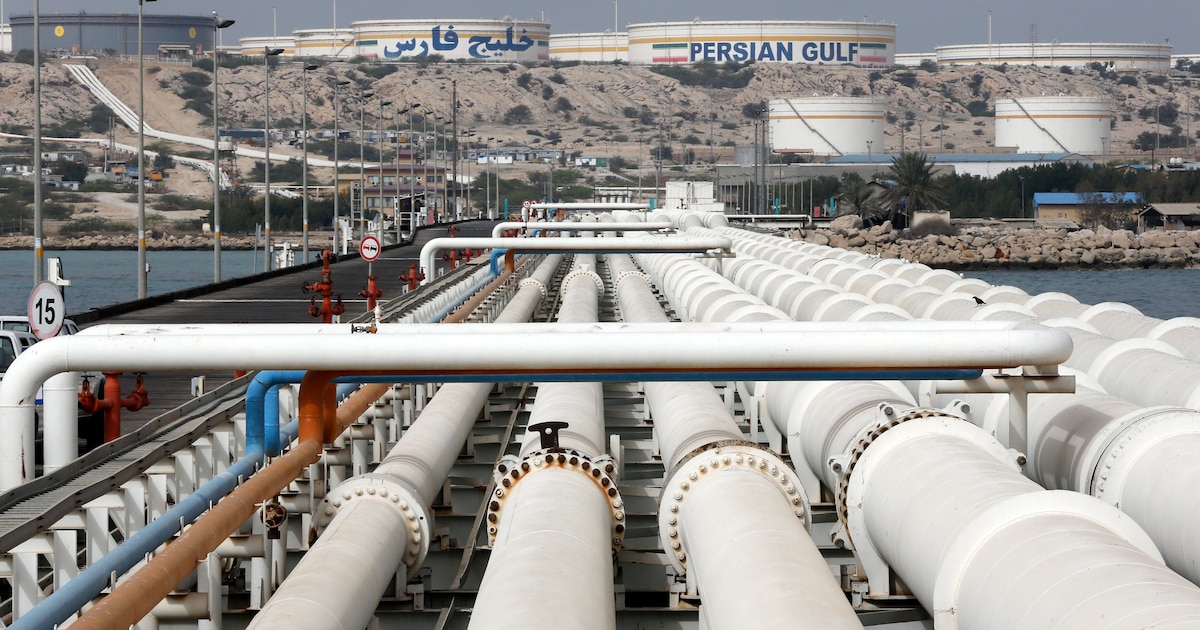
The offer comes as Iran’s oil industry teeters on the brink of collapse, with storage tanks overflowing and the country scrambling to transport crude by rail to China, its last major buyer. The Strait of Hormuz, a narrow waterway through which roughly 20% of the world’s oil and gas flows in peacetime, has been effectively closed since the war began in late February, sending energy prices soaring and straining global supply chains.
Regional officials said the proposal was relayed to Washington through Pakistan after high-level ceasefire talks between U.S. And Iranian envoys were abruptly canceled over the weekend. President Donald Trump called off the planned face-to-face negotiations, suggesting instead that discussions could proceed by phone—a shift that analysts say signals deep skepticism within the administration about Iran’s willingness to compromise.
Secretary of State Marco Rubio dismissed the offer outright in an interview with Fox News on April 27, calling it insufficient to address U.S. Security concerns. “We cannot let them off the hook,” Rubio said. “Any deal we make must permanently block Iran’s path to a nuclear weapon. That’s non-negotiable.”
The blockade, imposed by the U.S. And its allies, aims to cripple Iran’s economy by cutting off its oil exports, its primary source of revenue. With storage facilities at capacity and production nearing a forced shutdown, Tehran faces mounting pressure to identify alternative buyers or risk a full-scale economic meltdown. Reports indicate Iran has resorted to storing crude in abandoned tanks and shipping limited quantities by rail to China, though analysts warn these measures are unsustainable.
For the U.S., the closure of the strait has created a political headache ahead of midterm elections, with gasoline prices spiking and allies in the Gulf—who rely on the waterway for their own oil exports—growing increasingly vocal in their demands for a resolution. The economic fallout has rippled across industries, driving up costs for fertilizers, food and other essential goods worldwide.
Trump, however, has framed Iran’s offer as a sign of desperation. In a live broadcast on April 27, the president claimed Tehran had “begged” to reopen the strait “as soon as possible,” describing the regime as “in a state of collapse.” His remarks underscored the administration’s hardline stance, even as global markets brace for prolonged disruptions.
The standoff leaves the fragile ceasefire in a precarious position. Whereas neither side has resumed large-scale military operations since the initial strikes in February, the lack of progress on core issues—particularly Iran’s nuclear ambitions—threatens to reignite hostilities. With both sides digging in, the fate of the Strait of Hormuz remains a critical flashpoint in the broader conflict.
The stakes extend far beyond the region. The strait’s closure has exposed vulnerabilities in global energy markets, forcing countries to seek alternative supply routes and accelerating investments in renewable energy. For now, though, the world’s oil traders—and millions of consumers—are left waiting for a breakthrough that shows no signs of coming.
Iran’s offer to reopen the Strait of Hormuz in exchange for lifting U.S. Sanctions is a high-stakes gamble. With storage tanks full and production at risk, Tehran may be betting Trump will blink first—but Rubio’s comments suggest otherwise. https://t.co/example
— CNN International (@cnni) April 28, 2026
Analysts caution that Iran’s proposal may be less about compromise and more about buying time. By shifting focus to the strait, Tehran could be attempting to divide international opinion, portraying the U.S. As the aggressor in a conflict that has already claimed thousands of lives and destabilized the Middle East. Whether the strategy will work remains uncertain, but with neither side willing to back down, the impasse shows no signs of easing.
