Rarely does reporting from the Israeli-occupied West Bank extend beyond brief visits and politically-framed narratives. this article details the account of a journalist who spent nearly a year living amongst Jewish settlers, offering an unusually sustained and immersive look into a community at the heart of the ongoing Israeli-Palestinian conflict and providing a glimpse into perspectives often absent from mainstream coverage. His reporting challenges conventional understandings of the settlers’ motivations and fears, particularly in the wake of the October 7th attacks and ongoing war in Gaza.
For roughly a year, a journalist lived among Jewish settlers in the West Bank, gaining a rare, immersive perspective on a community often viewed through the lens of political conflict. The ongoing Israeli-Palestinian conflict continues to draw international scrutiny, and understanding the lives and perspectives of those living within the contested territories is crucial to comprehending the complexities of the situation.
Accommodation isn’t readily available in the settlements, but rooms and houses can typically be rented. The journalist and his wife moved between settlements, spending approximately three weeks in each, to broaden their understanding and gather diverse stories.
Initially, settlers were surprised by the journalist’s extended stay. “Regular journalists who write about them don’t spend that much time there,” he explained. “They often come for two hours, and that’s it. They often also come with left-wing activists. They don’t speak Hebrew, so the activists translate for them – of course, what they *want* to translate.” This led to initial suspicion from the settlers.
The journalist noted that much of the existing reporting on the settlements is done without the benefit of long-term, on-the-ground experience. “They write about them, but they haven’t lived with them,” he said. “I think it was the first time in their history that someone wanted to spend more time there. It was also a shock to me. But enough has already been written about dumb journalists, and we’ve already talked about it.”
The West Bank, despite its small size, requires a vehicle for travel between settlements.
Around twenty years ago, Jewish settlers were removed from the Gaza Strip. The journalist asked those he encountered in the West Bank about their views on that event. “The settlers who lived in Gaza are the same people as those who live in the West Bank,” he explained. “It’s difficult for them. Emotionally, psychologically, but it was almost twenty years ago. Now, only Jewish soldiers are in Gaza. However, half a million Jews live in the West Bank, many in cities like Ariel.”
He described the settlers in Hebron, who live amidst a large Palestinian population, as a unique case. “These settlers are really something special because they live in the center of an Arab city. People live there because they want to feel the touch of old Hebron, where the patriarch Abraham lived. It’s about eighty-five families. It’s a very small enclave.”
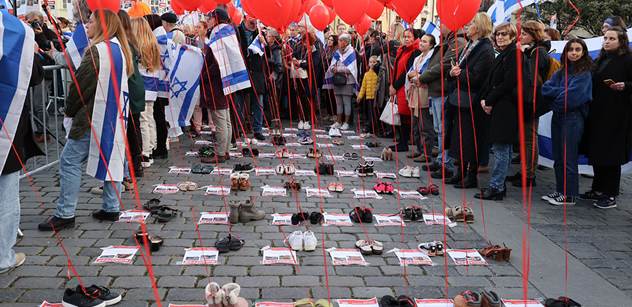
The journalist also asked the settlers about their reaction to the October 7, 2023, Hamas attack. “They said that if they didn’t live in the West Bank, Hamas would have done it a long time ago in Tel Aviv and Jerusalem. If they weren’t in the middle of it, people would be getting killed everywhere. And, in my opinion, they’re right. After all, the war is still not over, and many settlers have died in it because many of them serve in the army. Almost every family is mourning the dead, so they take it as other Israelis do. They also didn’t think something like this could happen. It’s not easy.”
When asked if the settlers believed they were living in the West Bank to dilute Palestinian animosity towards Jews, the journalist responded, “Palestinians hate them, they hate Palestinians. However, the settlers and the West Bank are perhaps the biggest topic in the long-running conflict, because Palestinians want the entire area for themselves. If we look at it globally, the world hates Jews and even more hates their settlers. They see them as criminals, hateful animals. But as I said, the world doesn’t know what the settlers are like because journalists write about them from their desks without knowing the reality. After all, the solution of dividing Israel into two states means that the settlers will leave the West Bank.”

The prospect of a two-state solution, with Israel and Palestine coexisting peacefully, was deemed unrealistic. “It doesn’t have hope, it’s impossible,” the journalist stated. “Once you realize what it’s about and how small the territory is, it’s a chimera for you. However, you have to live there for a while to understand that. We sat on balconies in some settlements in the West Bank and looked at Tel Aviv. It’s so close. And how do you divide that? You can divide a large loaf of bread, but not a crumb. No one will be satisfied, fed, no one will survive.”
Regarding a potential resolution to the conflict, the journalist expressed pessimism. “I don’t have one, and I think it can’t be solved. In the American and European way of thinking, we have it coded that there is one solution to every problem, if not more. But that’s not true. Not every problem has a solution.”
When challenged with the example of peaceful coexistence between European nations with historically fraught relationships, the journalist acknowledged the difference. “The squabbles of the aforementioned triangle of European countries had to be resolved because there was a memento of World War II. They had no choice. They are large countries with large populations. However, Israel with Palestine is a very small space and it cannot be solved. The hatred is enormous and has lasted for thousands of years. It will be the same mess. It can be solved by murdering the Jews, which Hitler started, or the Palestinians.”

“And the settlers? They think that if they leave their homes, they will gradually lose all of Israel. They think they must stay!”