
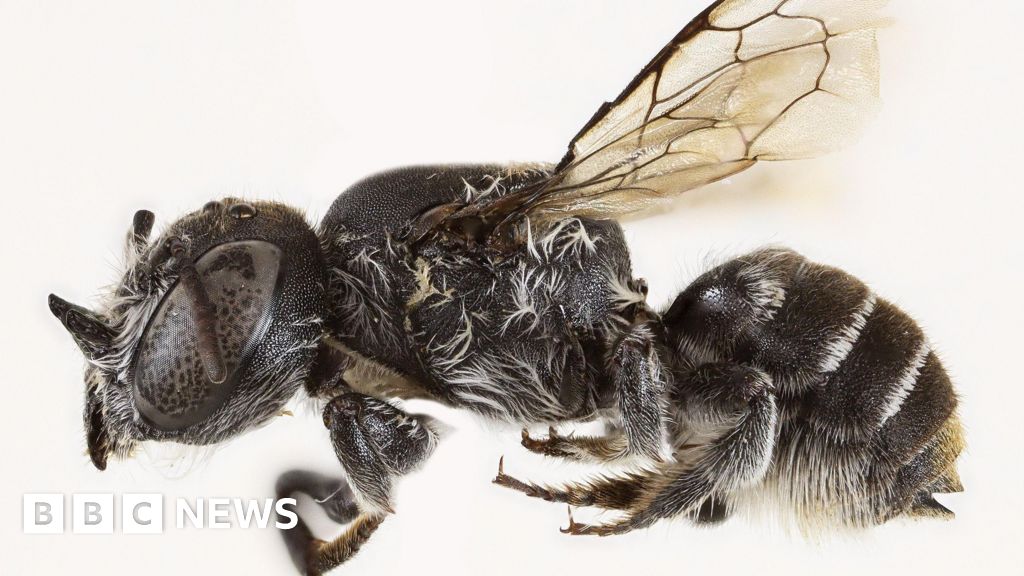
New Horned Bee Species Discovered in Western Australia, Named *Megachile Lucifer*
A new species of native bee, distinguished by tiny horns on the females, has been discovered in the remote Bremer Ranges of Western Australia, researchers announced today.
The bee, officially named Megachile Lucifer, was found while scientists were studying a rare wildflower in the Goldfields region, approximately 470km (292 miles) east of Perth. Researchers believe the horns, present only on female bees, may serve as a defense mechanism, aid in pollen or nectar collection, or assist in gathering nesting materials like resin. This discovery marks the first new member of this bee group identified in two decades.
Dr. Kit Prendergast, from Curtin University, explained the unusual naming choice, stating, “When writing up the new species description I was watching the Netflix show Lucifer at the time, and the name just fit perfectly. I am also a huge fan of the Netflix character Lucifer so it was a no-brainer.” She also noted the name’s Latin meaning – “light bringer” – is intended to highlight the need for increased conservation efforts for native bee species and a better understanding of plant pollination, a critical component of healthy ecosystems. Understanding these relationships is vital as bee populations globally face increasing threats.
The research, published in the Journal of Hymenoptera Research, urges formal protection for the area where both the new bee species and the endangered wildflower were located, citing risks from habitat disturbance and climate change. Researchers also point out that environmental impact assessments by mining companies often overlook the importance of native bee populations. The loss of even a single pollinator species can have cascading effects on plant life and the broader environment.
Researchers are now advocating for expanded surveys to identify other potentially undiscovered native bee species in the region and assess their roles in supporting threatened plants and ecosystems.
