
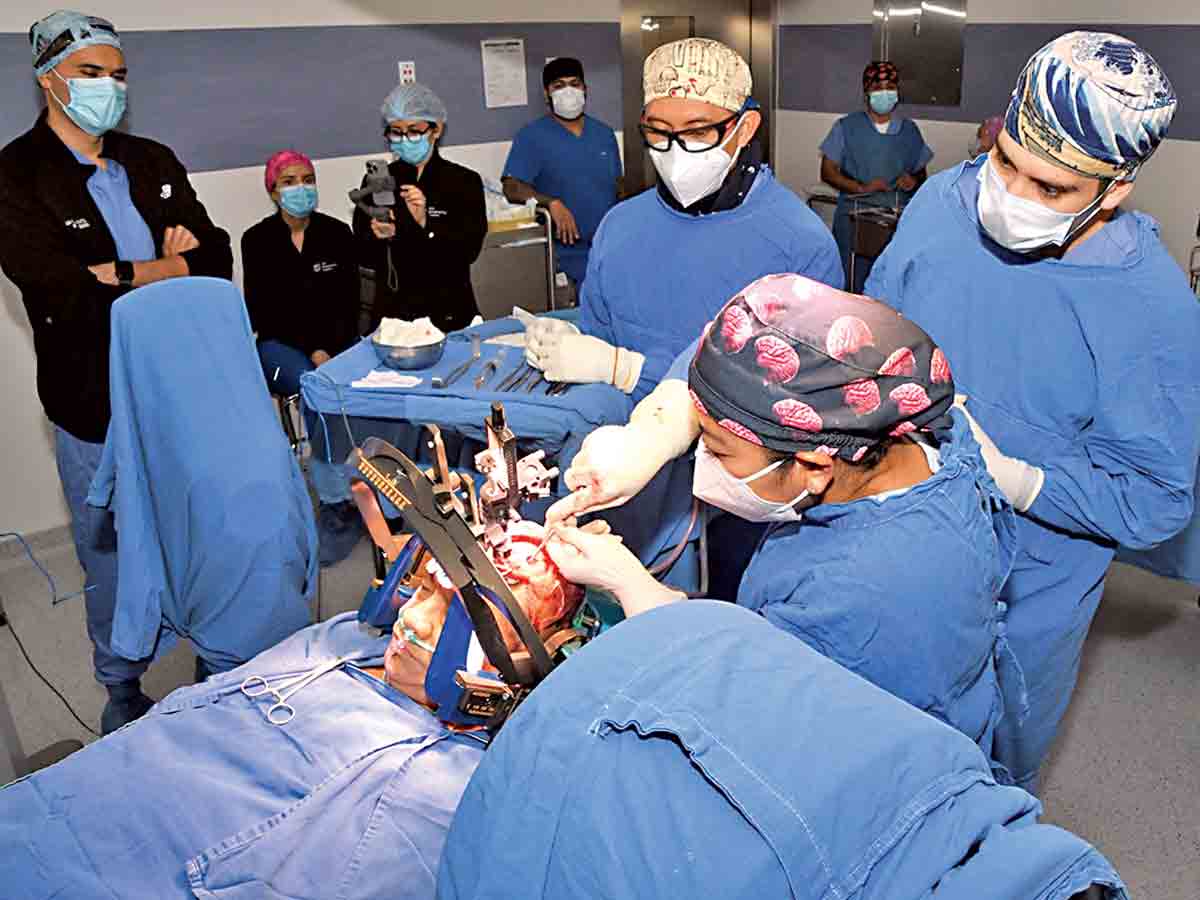
Beyond patrolling coastlines and ensuring maritime security, the Mexican Navy is quietly establishing itself as a leader in advanced medical care. For two decades, the Naval Medical Center has been pioneering a refined deep brain stimulation surgery to combat the debilitating effects of Parkinson’s disease, a procedure now attracting international recognition for its precision and positive patient outcomes. This lesser-known facet of the Navy’s work represents a growing commitment to utilizing scientific expertise and technological advancements to improve the health and wellbeing of mexican citizens, offering renewed hope for those facing challenging neurological conditions.
The Mexican Navy is making significant strides in medical innovation, particularly in the field of neurological surgery. Beyond its traditional roles of coastal defense and maritime security, the Navy’s medical center is now a hub for advanced procedures aimed at improving the lives of patients with debilitating conditions.
For the past two decades, the Naval Medical Center has been refining a complex surgical intervention to manage the symptoms of Parkinson’s disease. The procedure, involving the implantation of deep brain stimulators, has evolved dramatically thanks to advancements in technology and surgical precision.
Lieutenant Erik Ramiro Guerrero, a naval surgeon specializing in neurology, explained that while deep brain stimulation isn’t new, the current methods represent a substantial leap forward. “This surgery has been performed for many years,” he said, “but the difference now is the technology. Today, we have state-of-the-art equipment that allows for greater precision and better results for patients.”
The internationally recognized surgery involves carefully implanting electrodes into the subthalamic nuclei, a deep region of the brain responsible for controlling involuntary movements. Each operation is a meticulous process, typically lasting between 10 and 12 hours and divided into several stages.
Lieutenant Yosselin Guadalupe de la Paz Ponce, a naval surgeon specializing in neurosurgery, detailed the process: “First, we place the stereotactic system, then we perform imaging studies – either a CT scan or MRI – and fuse them with previous studies. That fusion gives us the exact coordinates to place the electrodes. Finally, we install the battery or pulse generator that will regulate the brain’s electrical activity.”
This advancement marks a significant milestone in the history of neurosurgery within Mexican military institutions. Each operation requires a coordinated effort from a team of more than 12 specialists, including neurosurgeons, neurologists, anesthesiologists, nurses, and technicians.
Patient selection is a critical first step. According to Lieutenant Guerrero, “When levodopa stops being effective – or when the patient can no longer tolerate it – we evaluate whether their deterioration corresponds to a progression of the disease. If the response to treatment is no longer adequate, then the patient is considered a candidate for surgery.”
The benefits of the surgery can often be observed during the procedure itself. “We perform clinical tests before and during the procedure,” explained Dr. De la Paz Ponce. “From that moment, improvement in tremor and rigidity is observed. Even in the first week after surgery, the patient already presents significant changes.” These early improvements offer hope for patients struggling with the debilitating effects of Parkinson’s disease.
The Mexican Navy’s commitment to medical innovation, though often unseen by the general public, reflects a broader evolution of the institution. The Navy is increasingly focused on science, technology, and health as pillars for improving the quality of life for Mexican citizens.
Quietly and with unwavering discipline, the Mexican Navy continues to advance – not only in maritime operations, but also in operating rooms where lives are being transformed with precision and expertise.
