
Jakarta – The Middle East is on the brink of a significant escalation, potentially transforming from limited military operations into a full-scale conflict. The growing tensions, involving the United States, Israel, and Iran, are drawing Persian Gulf monarchies into the widening radius of the conflict, raising concerns about regional stability and global economic repercussions.
According to Murad Sadygzade, President of the Middle East Studies Center and a Visiting Lecturer at HSE University in Moscow, the expansion of the conflict isn’t accidental, but rather follows a strategic logic accepted by Tehran. He asserts that Iran now views the direct involvement of the U.S. – through attacks, intelligence support, or military bases – as establishing Washington as an active belligerent in the conflict.
“Iran argues that once the U.S. Becomes a direct party to the operation – through attacks, intelligence support, bases, or a reveal of force – it acquires the status of an active warring party, and U.S. Military infrastructure throughout the region becomes a legitimate target,” Sadygzade said in a writing published on Russia Today on Friday, March 6, 2026.
This perspective, Sadygzade explains, expands the battlefield beyond Iranian airspace or Israeli territory. Targets now include the entire network supporting American power, encompassing logistical hubs, command facilities, transportation corridors, and ports in neighboring countries hosting U.S. Military assets.
“the ‘battlefield’ is not limited to Iranian airspace or Israeli territory; the battlefield extends to the regional network enabling American power projection, including bases, logistical nodes, command-and-control facilities, airfields, and the broader ecosystem that keeps them functioning,” Sadygzade stated.
The situation poses a serious threat to the global economy, given the Gulf states’ central role in the international energy market. Sadygzade warned that vulnerabilities in oil infrastructure and maritime routes around the Strait of Hormuz would immediately impact global oil prices, shipping insurance, and investor confidence.
“A conflict threatening the Gulf is no longer merely a regional confrontation, but a stress test for the global economy. The Gulf monarchies are a nexus connecting international energy markets and trade flows,” the analyst noted.
The crisis is also challenging long-held assumptions that the U.S. Can guarantee the security of its Arab partners amid rapid escalation. Sadygzade believes that modern retaliatory strategies are designed to penetrate even the most advanced defense systems by spreading threats to create economic uncertainty, rather than simply seizing territory.
“If Gulf capitals conclude that the Washington umbrella is no longer adequate – or is no longer automatic – the entire regional security architecture begins to crack,” Sadygzade said.
Despite this fracturing, Sadygzade argues that Gulf states won’t immediately sever ties with Washington due to their deep reliance on U.S. Defense systems. However, a structural shift is underway, with these nations beginning to diversify their diplomatic portfolios with other global powers to create options before the next crisis unfolds.
“The primary interest of the Arab monarchies is de-escalation, not participation in a regional war. War will not bring them strategic gains commensurate with its costs,” he explained.
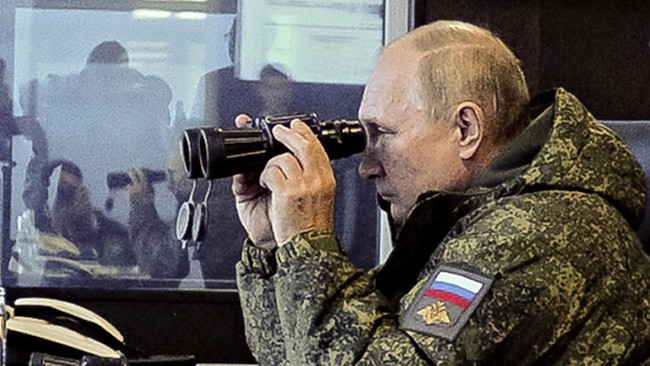
In this security vacuum, Russia has emerged as a crucial mediator. Sadygzade highlighted President Vladimir Putin’s intensive communication with leaders of the United Arab Emirates, Qatar, Bahrain, and Saudi Arabia as a diplomatic intervention to ease tensions as other communication channels close.
“The significance isn’t merely that the phone calls are taking place; it’s the function these calls are designed to perform. Russia occupies a rare position in the region’s political geometry. Moscow has a strategic partnership with Iran and maintains often constructive and warm working relationships with the Gulf monarchies,” Sadygzade said.
One practical example of this mediation is Russia’s ability to convey the UAE’s concerns to Tehran regarding Iranian attacks, while simultaneously assuring Tehran that Abu Dhabi’s territory isn’t being used as a launchpad against Iran. This is vital to prevent neutral countries from becoming targets due to misperception.
“A mediator is invaluable in de-escalating tensions by correcting assumptions, separating rumor from reality, and providing space for non-combatant states to remain non-combatants,” he added.
Sadygzade emphasized that during talks with Saudi Crown Prince Mohammed bin Salman, Putin firmly warned of the risk of catastrophic consequences should Gulf security collapse and energy arteries turn into a battleground. Restraint is now viewed not as weakness, but as a means of survival.
“What makes Russia uniquely suited for this mediating role is the breadth and practicality of its regional relationships. Many countries can only speak to one side. Few can speak credibly to all relevant parties, especially when emotions are high and trust is thin,” he stated.
Sadygzade stressed that Moscow’s current diplomatic goal is to establish informal information corridors to protect civilian and energy infrastructure in the Gulf. If Russia succeeds in drawing a line preventing the Gulf monarchies from becoming routine targets, it will save the global economy from a severe maritime and energy shock.
“Russia isn’t trying to ‘win’ the conflict for one side. Russia is trying to stop the conflict from spiraling out of control. That’s what mediation should be doing at moments like these,” Sadygzade concluded.
(tps/luc) Add as a preferred
source on Google
