
نمی
Michael Jackson’s groundbreaking music video for “Thriller” – a 14-minute short film featuring a werewolf transformation and a dance-off with zombies – redefined the medium and propelled MTV to new heights. Directed by John Landis in 1983, the video became a cultural phenomenon, playing on repeat across the newly launched music television channel and launching both Jackson and MTV into superstardom.
Jackson passed away in 2009, and now, with the final night of broadcasting for many of its music channels on December 31st, MTV is entering a new chapter. While the MTV brand will continue, the network is shifting its focus towards reality television and general entertainment. The move provides an opportunity to reflect on the profound impact the world’s first music television channel had on popular culture.
“MTV owes everything to Michael Jackson. He put us on the map,” says MTV co-founder John Sykes in the book *I Want My MTV*, compiled by music journalists Craig Marks and Rob Tannenbaum.
The book details just how revolutionary MTV was for young Americans when it launched in August 1981. “I first saw MTV at a hotel in the Bahamas while on vacation with my parents. It was 90 degrees and sunny outside, but I spent the whole week glued to the TV, completely captivated,” recalls singer Lenny Kravitz.
Dave Grohl, later of Nirvana and Foo Fighters, shares a similar formative experience. “Growing up in suburban Virginia, my friends and I were all about rock music, spending hours in record stores just looking at album covers. Music videos added a whole new dimension. MTV felt like a transmission from another galaxy,” he says.
The network’s origins were rooted in a calculated business risk. MTV was a joint venture between Warner Communications and American Express, initially targeting a narrow demographic of viewers aged 12 to 34. “At the time, there just weren’t programs for them. You could advertise on *Saturday Night Live*, but half of its audience was over 35, so if you wanted to reach young people, you were wasting half your money,” explains John Lack, MTV’s first president, in the book.
Between 1946 and 1964, 76 million babies were born in the United States. MTV’s cable-ready format, complete with a logo inspired by emerging graffiti art, was specifically designed to appeal to this burgeoning generation. The short length of music videos – typically three to four minutes – was also a strategic choice, recognizing the limited attention spans of teenagers. “Like radio, you could leave MTV on all day and just tune in when something caught your eye,” the Washington Post wrote in 1991.
Initially, the concept faced skepticism. While artists like The Rolling Stones and Bob Dylan had experimented with visual accompaniments to their music in the 1960s, music videos remained a niche element of the industry. When MTV launched, only two of the top 100 singles had accompanying videos. Within a few years, however, a music video became almost essential for success.
Foto: Profimedia.cz
Prince was among the first Black artists to receive regular airplay on MTV thanks to his song “Little Red Corvette.”
The impact of pop and rock music on television had already been demonstrated by Elvis Presley and The Beatles’ appearances on *The Ed Sullivan Show* in the 1950s and 60s, drawing audiences of tens of millions. However, it wasn’t until the early 1980s that a television channel dedicated entirely to music videos emerged.
Songs typically ran three to four minutes, interspersed with brief host segments. These hosts were often amateurs – Nina Blackwood had previously posed nude for *Playboy* magazine, while Alan Hunter supplemented his income as a bartender during the first half-year. Their informal style and youthful banter resonated with viewers.
Initially, there were so few videos that they were constantly repeated. Management worked tirelessly to negotiate with record labels, which had funded the videos themselves – eventually agreeing to provide them to the network for free, much like they sent singles to radio stations.
It took even longer to secure advertising revenue. “The first year, I thought we were going to die. We couldn’t get carriage on cable systems, we couldn’t get advertisers, you couldn’t get us on the air in Los Angeles or New York. We burned through $25 million and needed another $15 million to operate,” recalls Les Garland, hired as executive vice president after the launch, in the book.

A turning point came with the advertising campaign featuring rock stars like Mick Jagger, David Bowie, and The Police repeatedly chanting “I Want My MTV” on camera. The campaign successfully prompted viewers to request the channel from their cable providers.
MTV’s influence extended beyond music. The network’s launch coincided with the Baby Boom generation coming of age, and its graffiti-style logo tapped into the emerging youth culture. The format of short, attention-grabbing videos was perfectly suited to a generation accustomed to quick cuts and visual stimulation. “You could leave MTV on all day, just like the radio, and tune in when something caught your eye,” as seen in the iconic “I Want My MTV” campaign.
It wasn’t an immediate success, however. When MTV began broadcasting, only two of the top 100 singles had accompanying videos. Within a few years, a music video became a necessity.
Many musicians, however, resented the focus on visuals. “I always hated making videos. I’m a piano player, not an actor,” singer Billy Joel stated in the book. “Making videos is a really long and arduous process,” added Robert Smith, frontman of The Cure, with a more resigned tone.
MTV ushered in a new era: when a pop song was released, a music video was essential. Record labels began to prioritize artist image and presentation.
The network also faced criticism. David Bowie publicly pointed out the lack of Black artists on MTV, a trend that began to shift with Herbie Hancock’s “Rockit” and Michael Jackson’s *Thriller* album. Conservatives objected to scenes of violence and sexuality, while feminists criticized the objectification of women in many videos. Musicians also complained that MTV was creating overnight stars based on looks and dance skills rather than musical talent.

Intellectuals also criticized the network for promoting passive entertainment and reducing music to a consumable product.
“The goal is for you to sit on your butt, watch commercials, and then buy everything you see,” *Rolling Stone* magazine summarized in the era when music videos primarily served as advertisements for albums.
Of course, it was also about the money. MTV launched in the summer of 1981, when music sales in the U.S. had fallen by 30 percent to $3.9 billion compared to 1978. After its first decade, the music market grew to $7.8 billion, a surge significantly boosted by the rise of the CD.
MTV’s influence was undeniable. By 1984, the network was profitable, and by the end of the decade, it was regularly watched by over 85 percent of Americans between the ages of 18 and 34. “1984 was the best year. You had so much great music. Bruce Springsteen, Michael Jackson, Prince, Madonna, Van Halen. Finally, the wind was at our backs,” says MTV founder John Sykes.
All of these artists fully capitalized on the power of music videos. Jackson, in particular, created short films with unprecedented budgets of $500,000, directed by renowned filmmakers like Martin Scorsese, David Fincher, and Spike Lee. The “Thriller” video helped the album, released the previous year, rewrite record sales charts. “And the success of *Thriller* encouraged Madonna or ZZ Top to invest more in their videos,” Billboard explains.
Immediately following Jackson, Madonna became the face of the network, pioneering provocative imagery with videos featuring burning crosses, erotic scenes, and kisses between people of different races or the same sex.
MTV also helped bring artists like Duran Duran, Prince, Peter Gabriel, Tom Petty, Talking Heads, and R.E.M. to a wider audience, as well as established stars like Tina Turner and ZZ Top.
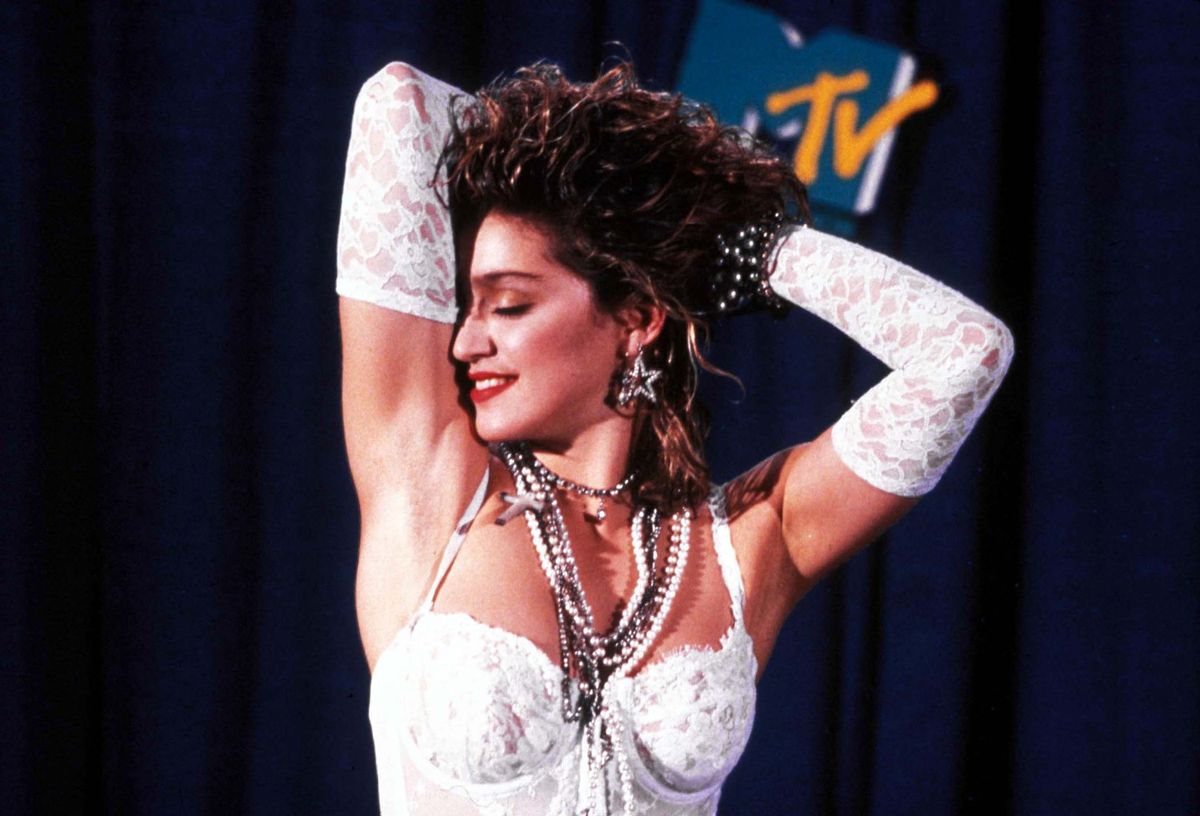
Foto: Profimedia.cz
Madonna performed her hit “Like a Virgin” at the 1984 MTV Video Music Awards, wearing a dress with a provocative “Boy Toy” belt buckle.
The golden age of MTV began to fade with the arrival of the 1990s, when the network launched the acclaimed *Unplugged* acoustic concert series and captured the rise of a new generation of pop stars from Britney Spears to the Backstreet Boys. However, non-music programming began to dominate the schedule: animated series like *Beavis and Butt-Head*, youth-oriented news coverage, and the first major reality shows, from *The Real World* to celebrity-focused *The Osbournes*.
Gradually, MTV expanded into a network of dozens of channels, from Nickelodeon for children to VH1 geared towards older audiences. And it fundamentally changed its business model in response to audience behavior, which was losing interest in linear broadcasting and turning to the internet, mobile phones, social networks, and platforms like Spotify and TikTok, where users could find what they needed on their own terms.
As a result, music videos – even if only in the form of short clips – remain a part of the music industry today. MTV, however, no longer plays a significant role. All those great videos, from Madonna’s “Material Girl” to Prince’s “When Doves Cry” to Peter Gabriel’s “Sledgehammer”, have long since moved to YouTube. The “Thriller” short film surpassed one billion views on YouTube 16 years after Michael Jackson’s death. MTV, even in its heyday, could only have dreamed of such attention.
