
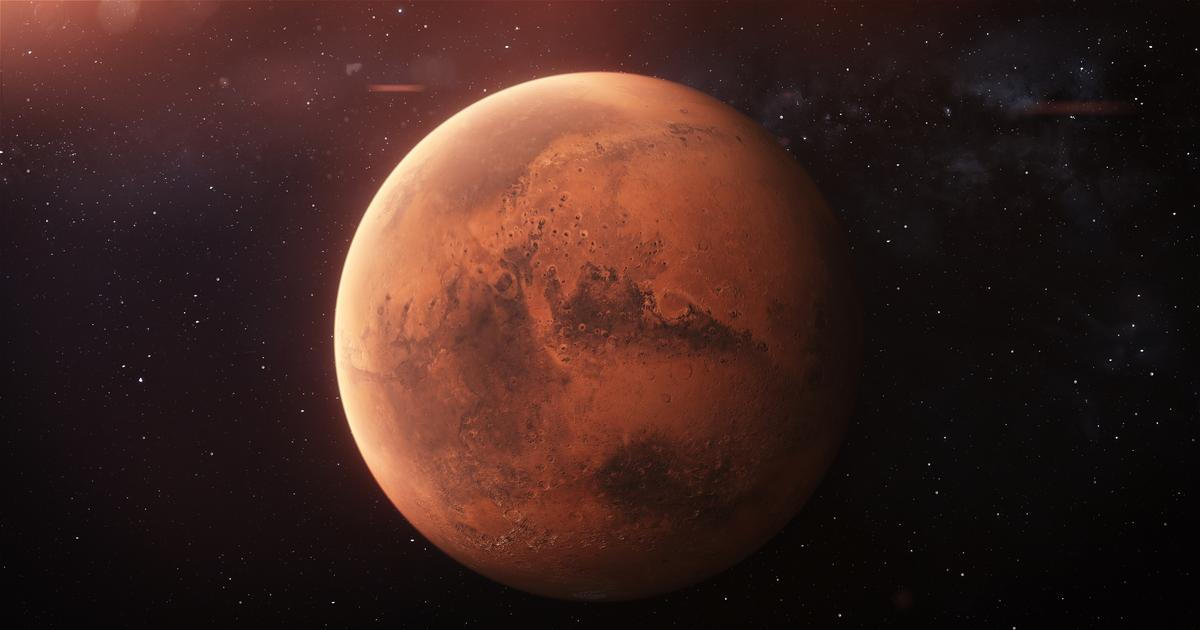
NASA’s Curiosity rover has detected the largest organic molecules ever found on Mars, marking a significant milestone in the search for signs of ancient life on the Red Planet.
The discovery, made using a specialized experiment called TMAH thermochemolysis, revealed a diverse mix of organic compounds in a rock sample nicknamed “Cumberland” collected from an ancient lakebed near Mars’ equator. Among the findings are long-chain molecules including decane, undecane, and dodecane—some of the most complex organics identified on Mars to date.
According to Amy Williams, an astrobiologist and planetary scientist at the University of Florida and a member of the Curiosity science team, the detection does not confirm past life but strengthens evidence that Mars was once a habitable world.
“One can’t yet say that Mars ever hosted life, but our findings further support the idea that during the time life was emerging on Earth, Mars was a livable environment,” Williams said in a study published Tuesday in Nature Communications.
The experiment also suggested the presence of another organic compound with a structure similar to precursors of DNA—the molecules that carry genetic information in living organisms on Earth.
Scientists emphasized that while organic molecules are fundamental building blocks of life on Earth, they can also form through non-biological processes. The presence of these compounds alone does not prove life existed.
Curiosity has been exploring the Glen Torridon region within Gale Crater, an area researchers believe may have once offered conditions favorable for ancient life—if it ever existed there.
NASA released a striking “postcard” image from Mars alongside the announcement, highlighting the rover’s ongoing contributions to planetary science.
The discovery builds on years of analysis and laboratory work, confirming that the Cumberland sample contains the most diverse array of organic molecules ever detected on the Martian surface.
