
NASA is closely monitoring asteroid 2024 YR4, a newly discovered near-Earth object that briefly triggered international planetary defense protocols following initial projections of a potential, though unlikely, impact with Earth in 2032 [[2]]. While subsequent observations have substantially reduced concerns, the event underscores the ongoing, and often unseen, efforts to track and assess potential threats from space [[1]]. This proactive monitoring exemplifies how scientists are refining their understanding of near-Earth objects and preparing for unlikely,yet perhaps meaningful,astronomical events.
NASA is closely monitoring asteroid 2024 YR4, a near-Earth object that triggered international planetary defense protocols after initial calculations indicated a potential impact. While the risk remains low, the event highlights the ongoing efforts to track and assess potential threats from space. This type of monitoring is a crucial part of scientific programs designed to anticipate unlikely, yet potentially significant, astronomical events.
Scientists have refined orbital calculations for the asteroid, reducing initial concerns and allowing for a more focused technical evaluation of the situation. The ongoing analysis underscores the importance of continuous observation and data refinement in assessing the trajectory of near-Earth objects.
What is Asteroid 2024 YR4 and Why is it Being Tracked?
Table of Contents
Asteroid 2024 YR4 is categorized as a near-Earth object (NEO), meaning its orbit brings it into proximity with Earth’s orbital path. NASA tracks these objects to improve its ability to respond to potential, albeit low-probability, impact events, utilizing a network of telescopes around the globe.
Current estimates place the asteroid’s diameter between 40 and 90 meters, a key factor in determining potential effects should it enter Earth’s atmosphere. According to recent reports, NASA continues to refine its understanding of these objects, building on decades of research into the origins of our solar system.
Estimated Date and Probability of Impact with Earth
The latest calculations suggest a reduced probability of impact on December 22, 2032. When first detected, the possibility was higher, but has decreased with the incorporation of new observational data. Scientists emphasize that these ongoing assessments are standard practice in planetary defense.
However, the asteroid exceeded the 1% probability threshold, a technical limit that activates international notification protocols, as established by NASA and other scientific organizations. The agency clarified that these changes in probabilities are part of the normal process of data updates and do not indicate an imminent threat.
What Damage Could Asteroid 2024 YR4 Cause to Earth?
Scientific models indicate that an asteroid of this size would likely explode in the air upon entering Earth’s atmosphere. If the event were to occur over the ocean, specialists consider a tsunami unlikely.
Should an airburst occur over populated areas, an object between 40 and 60 meters could cause broken windows and minor structural damage. A scenario closer to 90 meters, considered less probable, could generate more widespread effects in urban areas and surroundings.
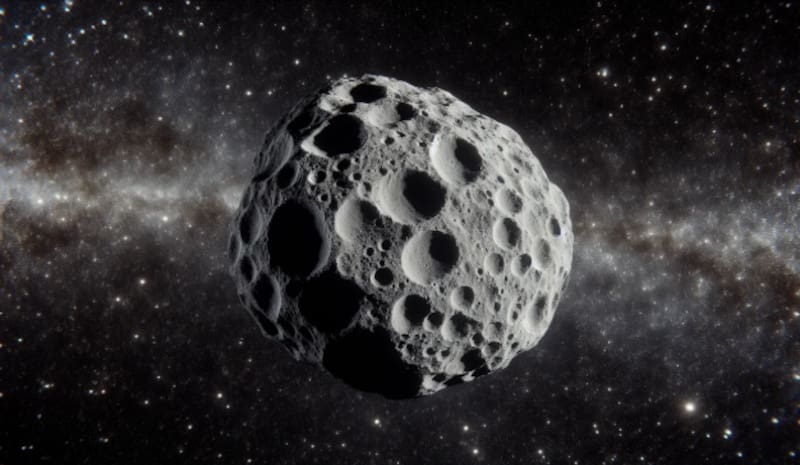
How NASA Calculates the Trajectory of These Objects
Tracking of 2024 YR4 is conducted through the near-Earth object observation program, which utilizes ground-based telescopes and advanced computer modeling. Each new data point allows for adjustments to the projected orbit for the coming years and decades.
Official updates are published on the automated system Sentry, which reflects changes in the probability of impact as information is refined.
