
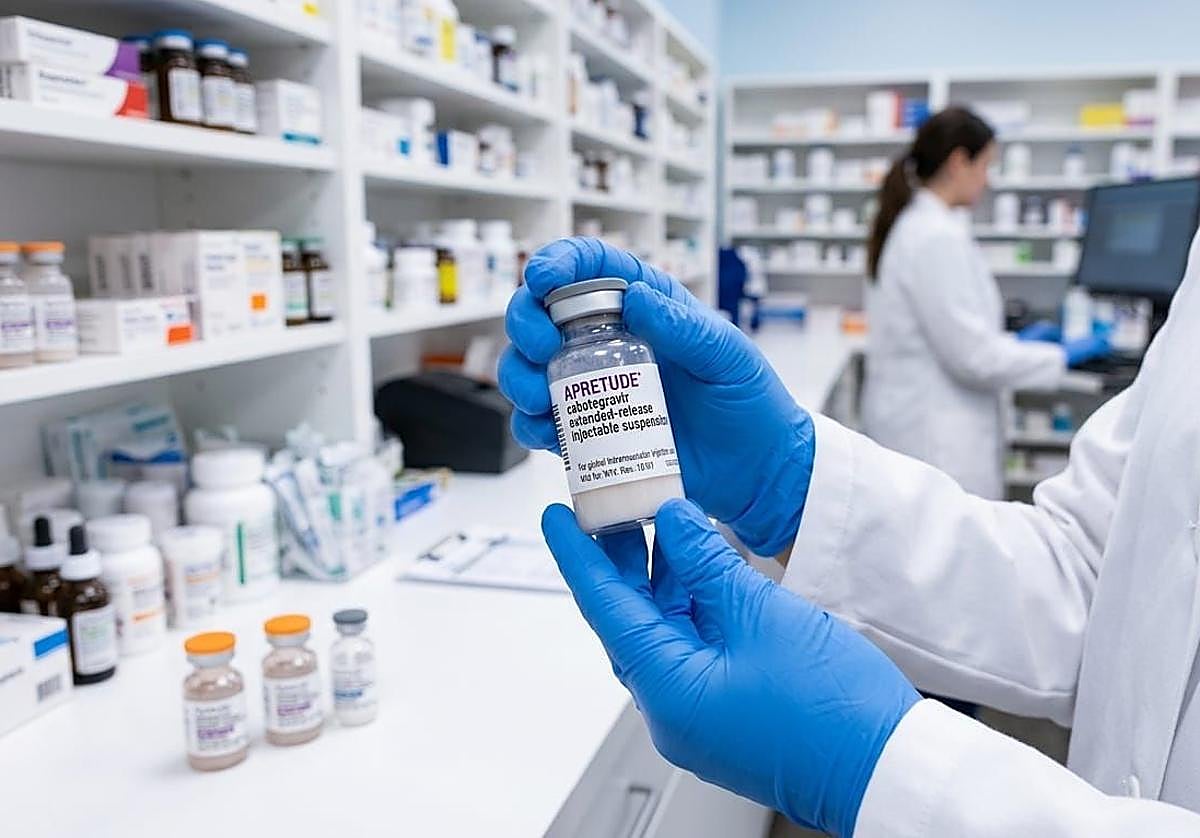
Canary Islands health officials have launched a new strategy to combat HIV, introducing an injectable form of pre-exposure prophylaxis (PrEP) as part of a broader effort to reduce annual diagnoses below 200 cases.
The initiative, announced on April 18, 2026, centers on Apretude, the first injectable PrEP medication funded by Spain’s public health system. Administered every two months, the treatment offers an alternative for individuals who struggle with daily oral adherence due to lifestyle factors, mental health challenges, or substance utilize in high-risk contexts.
Guillermo Pérez, a technician with the Canary Islands General Directorate of Public Health’s Epidemiology Service, described the injectable option as “a significant advancement and a key piece in trying to control the appearance of new HIV cases.” He emphasized that it is not intended as a first-line choice for everyone, but rather for those unable to maintain consistent daily pill regimens.
Although the annual cost of the injectable PrEP is approximately 4,000 euros, officials characterize it as cost-effective by preventing infections that would otherwise require far more expensive long-term treatment.
Recent data from the Canary Islands Health Service shows 6,391 HIV infections reported since 2000, with 3,286 AIDS cases notified since 1984. In 2023, nearly 90% of new diagnoses were among men, and the majority of transmissions were linked to unprotected sex between men who have sex with men. Heterosexual transmission accounted for 38.7% of cases that year.
The region continues to face challenges with late diagnosis, as 47.2% of individuals newly diagnosed in 2023 showed signs of delayed detection, defined by CD4 counts below 350 mm³.
Public health officials note that foreign-born individuals represent 37% of new HIV diagnoses in the Canary Islands, underscoring the need for culturally adapted prevention programs to reach diverse and often vulnerable populations.
Although the islands have seen a stabilization in recent years—with 242 new cases reported in the most recent year, similar to 238 in 2023—the figure remains well below the historical peak of 379 cases recorded in 2014. Nonetheless, authorities maintain that HIV remains a top public health priority, with the Canary Islands ranking among Spain’s regions with the highest infection rates, behind only Madrid, Catalonia, Valencia, and Andalusia.
The rate of new HIV diagnoses stands at 10.81 per 100,000 inhabitants annually, above the national average of approximately 7 per 100,000.
