
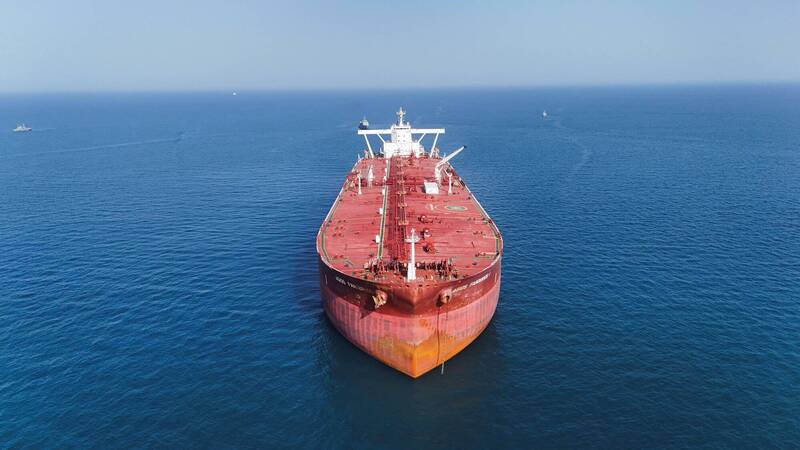
Iran’s parliament speaker issued a sharp warning to the United States on April 18, 2026, accusing President Donald Trump of spreading falsehoods and threatening to close the Strait of Hormuz if regional tensions escalate.
The remarks came amid conflicting signals over the vital waterway, with one report claiming Iranian officials had announced the reopening of the Strait of Hormuz, leading to an immediate drop in global oil prices as market risk premiums evaporated.
Although, analysts cautioned that the situation remains fragile, noting that any disruption to shipping through the strait — which carries about a fifth of the world’s oil consumption — could quickly reignite fears of supply shortages and price volatility.
Adding to the uncertainty, Iranian officials later stated that passage through the Strait of Hormuz would require prior authorization, suggesting that while the route may remain open, access could be subject to Tehran’s approval.
The developments unfolded shortly after the first cruise ship since the onset of U.S.-Iran hostilities attempted to transit the strait, though it carried no passengers, underscoring the continued sensitivity of maritime movement in the region.
Observers say the Strait of Hormuz continues to serve as a flashpoint in U.S.-Iran relations, where military posturing, diplomatic signaling, and economic pressure intersect, with global energy markets reacting swiftly to any shift in the perceived stability of the corridor.
