
Missouri Troopers Enforce Hands-Free Driving Law Amid Rising Distraction-Related Crashes
Missouri State Highway Patrol officers are actively enforcing a hands-free driving law as new data reveals the prevalence of distracted driving is significantly higher than previously reported, contributing to a surge in injuries and fatalities.
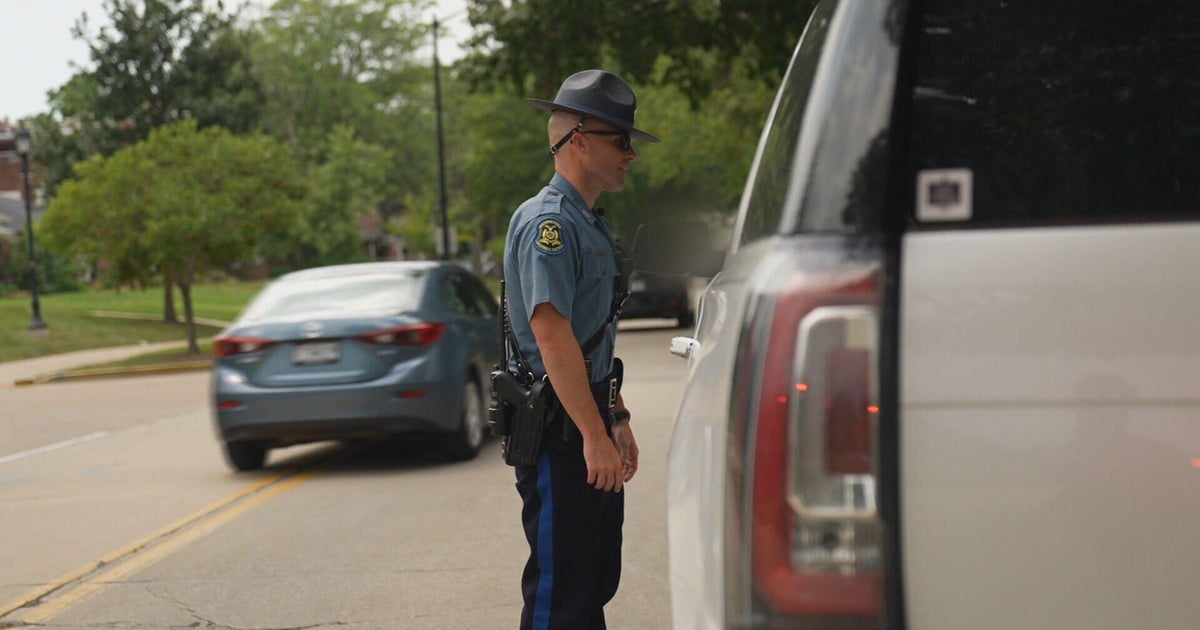
Trooper Brock Teague recently stopped a driver on an interstate outside St. Louis for a broken taillight and cellphone use, issuing a warning where a first offense typically carries a $150 fine. Teague emphasized the danger, stating, “They’re just as dangerous if not more than a drunk driver on the highway. They’re not paying attention to the road, they’re not paying attention to what they’re supposed to be doing.” This increased enforcement follows the tragic 2019 death of Randall Siddens, a father of three, who was struck and killed by a driver video chatting while speeding in Columbia, Missouri.
The Centers for Disease Control and Prevention reports that distracted driving claims approximately nine lives daily in the U.S., with around 325,000 injuries occurring in 2023, according to the National Highway Traffic Safety Administration. Missouri is one of 32 states, plus Washington, D.C., with laws prohibiting handheld cellphones while driving. The state is now utilizing anonymous data from smartphones and vehicles – known as telematics – to pinpoint distracted driving hotspots, a practice that could lead to more targeted safety initiatives. You can learn more about the dangers of distracted driving here.
Preliminary analysis of this telematics data suggests distracted driving is a factor in roughly one in three fatal crashes in Missouri, a stark contrast to the 10-15% previously estimated based on police reports. “We’ve learned that, like, in the southeast part of our state, there’s a higher rate of distracted driving happening there compared to other places of the state,” explained Jon Nelson, Missouri’s highway safety and traffic engineer. Adrienne Siddens, Randall’s widow and advocate for the hands-free law, urged drivers to consider the consequences: “Is it worth it? Would your family’s life be worth that? And I think 100% of people would say no.”
Officials say the Department of Transportation will continue to analyze the telematics data to refine educational programs and increase law enforcement visibility in areas with the highest rates of distracted driving.
