
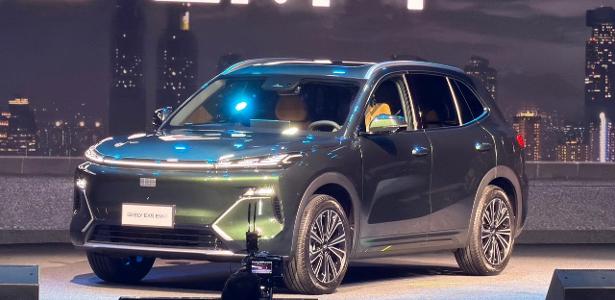
Renault is expanding its footprint in Brazil with the planned introduction of a new mid-size SUV in the frist half of 2026, marking the French automaker’s first foray into hybrid electric vehicles in the country. Developed in collaboration with Chinese partner Geely, the five-passenger SUV will be built on the CMA platform shared with Volvo and aims to compete with popular models like the Jeep Commander. The new vehicle represents a notable investment in Renault’s Brazilian operations and a commitment to meeting growing demand for more lasting automotive options in South America.
Renault is set to introduce a new mid-size SUV to the Brazilian market in the first half of 2026, marking the company’s first hybrid electric vehicle (HEV) offering in the country. The vehicle, larger than Renault’s Boreal model and comparable in size to the Jeep Commander, is the result of a collaboration with Chinese automotive partner Geely, a key stakeholder in Renault’s operations in Brazil.
The new SUV will be built on the CMA platform, which it shares with Volvo. It measures 4.77 meters in length with a wheelbase of 2.84 meters, compared to the Boreal’s 4.56 meters and 2.70 meters respectively. Despite its larger dimensions, the vehicle is designed to accommodate only five passengers.
Powering the SUV will be a plug-in hybrid powertrain, combining a 1.5-liter turbocharged gasoline engine producing 150 horsepower and 23 kgfm of torque with two electric motors, resulting in a total output of 245 horsepower and 32 kgfm of torque. The vehicle features a 1.64 kWh battery pack and all-wheel drive. Renault estimates a range of up to 1,000 kilometers in countries where the Koleos is currently sold, suggesting a significant focus on fuel efficiency.
The vehicle will be available in the Esprit Alpine trim, featuring contrasting stitching, premium upholstery combining fabric and Alcantara, two-tone diamond-cut wheels, and a matte body finish. This trim level suggests Renault is targeting a more style-conscious consumer segment.
Inside, the SUV boasts two 12.3-inch screens – one serving as a digital instrument cluster and the other as a central multimedia display, mirroring the setup found in the Boreal. A third display for the front passenger is also included, though its availability in the Brazilian market remains unconfirmed.
Renault has confirmed plans to launch a new mid-size SUV in Brazil during the first half of 2026, a move that will introduce the automaker’s first hybrid electric vehicle (HEV) to the market. The announcement signals Renault’s commitment to expanding its electrified vehicle offerings in South America, a region increasingly focused on sustainable transportation.
The SUV, positioned as larger than the existing Boreal model and similar in size to the Jeep Commander, is a collaborative effort with Geely, Renault’s Chinese partner and a significant investor in its Brazilian operations. This partnership underscores the growing trend of international collaboration in the automotive industry.
Built on the jointly developed CMA platform – also utilized by Volvo – the vehicle measures 4.77 meters in length and boasts a 2.84-meter wheelbase. Despite its substantial size, the SUV will offer seating for five passengers.
The powertrain will feature a 1.5-liter turbocharged gasoline engine paired with two electric motors, delivering a combined output of 245 horsepower and 32 kgfm of torque. A 1.64 kWh battery pack will support the hybrid system, and the vehicle will come standard with all-wheel drive. Renault projects a potential range of up to 1,000 kilometers based on performance in existing markets.
The SUV will be offered in the Esprit Alpine trim, emphasizing a sporty aesthetic with features like contrasting stitching, premium fabric and Alcantara upholstery, unique two-tone wheels, and a matte exterior finish.
Inside, the vehicle will showcase a modern cabin equipped with two 12.3-inch displays – a digital instrument cluster and a central infotainment screen, mirroring the technology found in the Boreal. A third screen for the front passenger is also planned, though its inclusion in the Brazilian model is still pending confirmation.
