
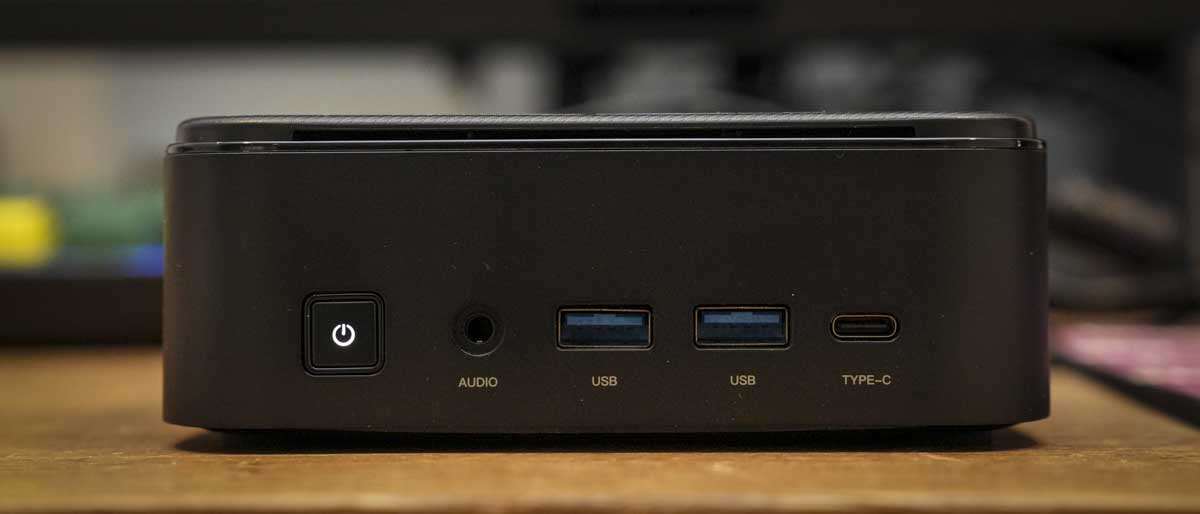
Mini PCs are no longer just a novelty item; they’re rapidly evolving into powerhouses suitable for both home and business. But what does the future hold for these compact computers? This article dives into the key trends shaping the future of mini PCs, revealing how advancements in performance, connectivity, and design will impact the way we work and play.
The Future of Mini PCs: Trends and Predictions
Table of Contents
- The Future of Mini PCs: Trends Shaping the Business Landscape
The NiPoGi E3B 2025 mini PC, with its focus on reliability and compatibility, offers a glimpse into the evolving landscape of compact computing. But what does the future hold for these small but mighty machines? Let’s dive into the trends shaping the mini PC market and what you can expect in the coming years.
The Rise of the Business-Focused Mini PC
The NiPoGi E3B’s emphasis on multiple USB ports and straightforward performance highlights a key trend: the growing demand for mini PCs tailored for business use. Companies are increasingly seeking compact,energy-efficient,and cost-effective solutions for their employees. this trend is driven by several factors:
- Space saving: Mini PCs take up considerably less desk space than customary desktops,freeing up valuable real estate in offices and home workspaces.
- Energy Efficiency: With rising energy costs,the lower power consumption of mini PCs is a significant advantage.
- Cost-Effectiveness: Mini PCs frequently enough have a lower initial purchase price and reduced long-term operating costs compared to larger desktop computers.
- Compatibility: The NiPoGi E3B’s focus on USB-A ports shows the importance of compatibility with existing peripherals, a crucial factor for businesses.
Pro Tip: When choosing a mini PC for business, prioritize connectivity options (USB ports, display outputs) and compatibility with your existing software and hardware.
Performance and Power: The Evolution of Mini PC Specs
While the NiPoGi E3B prioritizes reliability, the mini PC market is also seeing significant advancements in performance. Expect to see these trends:
- More Powerful Processors: Mini PCs are increasingly incorporating high-performance CPUs, including the latest AMD Ryzen and Intel Core processors, enabling them to handle demanding tasks like video editing and graphic-intensive applications.
- enhanced graphics: Integrated graphics solutions are improving, and some mini PCs are even incorporating discrete GPUs for better gaming and content creation capabilities.
- Faster Storage: SSDs with faster read/write speeds, like those utilizing PCIe 4.0 or 5.0, will become standard, leading to quicker boot times and improved submission performance.
- increased RAM: Expect to see mini PCs supporting larger amounts of RAM (32GB, 64GB, or more) to handle multitasking and memory-intensive applications.
Did you know? The latest mini PCs can now rival the performance of mid-range desktop computers, making them suitable for a wider range of users.
Connectivity and Versatility: Adapting to a Connected World
The NiPoGi E3B’s inclusion of Wi-Fi 6 and multiple display outputs points to another key trend: the importance of connectivity and versatility. Future mini PCs will likely feature:
- Faster Wireless connectivity: Wi-Fi 6E and Wi-Fi 7 will become more prevalent, offering faster speeds and improved reliability.
- More USB Ports: Expect to see a continued emphasis on USB-A and USB-C ports, with support for the latest USB standards (USB 4, Thunderbolt) for faster data transfer and versatile connectivity.
- Multiple Display Support: Mini PCs will continue to support multiple displays, with higher resolutions (4K, 8K) and refresh rates.
- Integrated Bluetooth: Bluetooth will remain essential for connecting wireless peripherals like keyboards, mice, and headphones.
- Expansion Options: Some mini PCs may offer expansion slots or external ports for adding additional storage, graphics cards, or other components.
Case Study: Companies are using mini PCs in digital signage, kiosks, and point-of-sale systems, leveraging their compact size and versatile connectivity options.
Design and Form Factor: The Evolution of Aesthetics
While the NiPoGi E3B has a functional design,the mini PC market is also seeing innovation in aesthetics and form factor. Expect to see:
- Sleeker designs: mini PCs will become more stylish,with premium materials and designs that complement modern workspaces.
- Smaller Footprints: Manufacturers will continue to push the boundaries of miniaturization, creating even smaller and more portable mini PCs.
- Modular Designs: Some mini PCs may adopt a modular approach, allowing users to customize and upgrade components easily.
- Integrated Features: Expect to see mini PCs with built-in features like fingerprint readers, webcams, and microphones.
The Future is Compact
The mini PC market is dynamic and evolving. As technology advances, these compact computers will become even more powerful, versatile, and user-kind. Whether for business, home use, or specialized applications, mini PCs are poised to play an increasingly vital role in the future of computing.
Ready to explore the world of mini PCs? Share your thoughts and experiences in the comments below! What features are most important to you in a mini PC? What do you think the future holds for these compact powerhouses?
The Future of Mini PCs: Trends and Predictions
Mini PCs, once a niche market, are rapidly gaining popularity. Their compact size, energy efficiency, and increasing power make them ideal for various applications. Let’s delve into the potential future trends shaping the evolution of these versatile devices.
Enhanced Performance and Processing Power
one of the most significant trends is the continuous improvement in processing power. Mini PCs are no longer limited to basic tasks.They are now equipped with powerful CPUs and GPUs,enabling them to handle demanding applications. We’re seeing a shift towards more powerful processors like the AMD Ryzen 5 7430U, which offers a solid processing base. This trend is expected to continue, with manufacturers focusing on integrating high-performance components into smaller form factors.
Pro Tip: When choosing a mini PC, consider the processor and graphics capabilities based on your intended use. For example, if you plan to use it for video editing or gaming, prioritize a model with a dedicated GPU.
Increased Storage and Memory Capacity
Another key trend is the expansion of storage and memory options. Mini PCs are now offering remarkable storage capacities, with some models supporting up to 4TB of internal storage via multiple M.2 slots. This allows users to store large files, applications, and media content without compromising performance. The ability to upgrade RAM to 64GB is also becoming more common,providing ample memory for multitasking and demanding workloads.
Did you know? The NiPoGi E3B 2025 Edition, for instance, allows for up to 2x 2TB SSDs, showcasing the trend towards increased storage capabilities.
Focus on Connectivity and Versatility
Connectivity is crucial for any modern device,and mini PCs are no exception. We’re seeing an increase in the number of ports and connectivity options, including Wi-Fi 6, Bluetooth 5.2,and multiple USB ports. The inclusion of 10Gbps LAN ports is also becoming more common, providing fast and reliable network connections. This trend is driven by the need for seamless integration with various peripherals and networks.
Real-life example: The NiPoGi E3B mini PC is tuned for business, offering multiple USB Type-A ports and the ability to connect up to three 4K monitors, making it ideal for office environments.
Mini PCs in the Business Habitat
Mini PCs are becoming increasingly popular in business settings. Their compact size, energy efficiency, and quiet operation make them ideal for office environments. They can be easily mounted behind monitors, freeing up desk space and creating a cleaner workspace. The ability to connect multiple monitors and handle demanding applications makes them suitable for various business tasks,from office productivity to content creation.
case study: Many businesses are adopting mini PCs to reduce their carbon footprint and lower energy costs. Their energy-efficient design helps minimize electricity consumption, contributing to sustainability efforts.
The Rise of Mini PCs in gaming
While not the primary focus, the gaming capabilities of mini PCs are also improving. With the integration of more powerful GPUs, some mini PCs can now handle modern games at decent settings. However, they are still not a replacement for high-end gaming PCs. The focus is on providing a balance between performance and portability, making them suitable for casual gaming and less graphically intensive titles.
Reader Question: Can mini PCs replace traditional desktop computers? The answer depends on your needs. For basic tasks and office work, they are a great choice. For demanding applications like video editing or high-end gaming, a more powerful desktop PC might be necessary.
The Future is Compact and Powerful
The future of mini PCs looks bright. With continuous advancements in processing power, storage, connectivity, and energy efficiency, they are poised to become even more versatile and popular. Whether for business, home entertainment, or casual gaming, mini PCs offer a compelling alternative to traditional desktop computers. The trend towards smaller, more powerful, and more versatile devices is set to continue, making mini PCs a key player in the computing landscape.
What are your thoughts on the future of mini PCs? Share your comments and insights below!
The Future of Mini PCs: Trends Shaping the Business Landscape
Mini PCs, once a niche product, are rapidly gaining traction in the business world. Their compact size, energy efficiency, and increasing performance capabilities make them an attractive alternative to traditional desktop computers. This article delves into the evolving trends and future prospects of mini PCs, particularly focusing on their impact on business applications.
The Rise of Mini PCs in the Workplace
The nipogi E3B 2025, as highlighted in the initial review, exemplifies the shift towards business-focused mini PCs. These devices are designed to be reliable,efficient,and easily integrated into existing office setups. The emphasis on multiple USB ports, display outputs, and pre-installed software like Windows 11 Pro underscores their suitability for professional environments.
Mini PCs offer several advantages over traditional desktops. They consume less power, reducing energy costs and contributing to sustainability efforts. Their small footprint frees up valuable desk space, promoting a cleaner and more organized workspace.Moreover, their portability allows for easy relocation and deployment in various settings, from home offices to conference rooms.
Did you know? The global mini PC market is projected to reach significant growth in the coming years, driven by increasing demand for compact and versatile computing solutions. Market research indicates a steady rise in adoption across various sectors.
Key Trends Shaping the Mini PC Market
1. Enhanced Performance and Efficiency
The performance of mini PCs is constantly improving. Modern models are equipped with more powerful processors, increased RAM capacity, and faster storage options like NVMe SSDs. This allows them to handle demanding tasks such as video editing,graphic design,and running multiple applications concurrently.The focus is on delivering robust performance within a compact and energy-efficient package.
Real-life example: Companies are increasingly using mini PCs for digital signage, where they need to display high-resolution content continuously. The improved processing power and graphics capabilities of newer mini PCs make them ideal for this application.
2. Connectivity and Versatility
Mini PCs are designed to offer a wide range of connectivity options. They typically include multiple USB ports (both USB-A and USB-C), HDMI and DisplayPort outputs, and Wi-Fi and Bluetooth capabilities. This versatility allows them to connect to various peripherals, displays, and networks, making them suitable for diverse business needs.
Pro tip: When choosing a mini PC, consider the number and type of ports available. Ensure it meets your specific requirements for connecting monitors, external drives, and other devices.
3. Focus on Business-Specific Features
Manufacturers are increasingly tailoring mini PCs to meet the specific needs of businesses. This includes features like remote management capabilities, enhanced security protocols, and pre-installed business software. The integration of Windows 11 Pro, as seen in the NiPoGi E3B, is a prime example of this trend.
Case study: Many small and medium-sized businesses (SMBs) are adopting mini PCs for their cost-effectiveness and ease of deployment. They can be easily integrated into existing IT infrastructure and managed remotely, reducing the need for on-site IT support.
4. sustainability and Energy efficiency
With growing environmental concerns, energy efficiency is a key consideration.Mini PCs consume significantly less power than traditional desktops, contributing to lower electricity bills and a reduced carbon footprint. This makes them an attractive choice for businesses committed to sustainability.
Future Outlook: What to Expect
The future of mini PCs looks promising. We can anticipate further advancements in several areas:
- Increased adoption in remote work environments: As remote work becomes more prevalent, mini PCs will be a convenient and cost-effective solution for home offices.
- Integration with cloud services: Mini PCs will be optimized for seamless integration with cloud-based applications and services, enhancing productivity and collaboration.
- Advancements in cooling technology: To handle more powerful components, mini PCs will likely feature improved cooling systems to maintain optimal performance.
- Focus on AI and machine learning: Mini PCs will incorporate AI-powered features to enhance user experience and automate tasks.
FAQ: Frequently Asked Questions
Are mini PCs suitable for gaming?
While some mini PCs offer decent gaming performance, they are generally not designed for high-end gaming. However, they can handle casual gaming and older titles.
What are the main advantages of mini PCs?
Mini PCs offer a compact size, energy efficiency, cost-effectiveness, and versatility, making them ideal for various business applications.
How do mini PCs compare to traditional desktops in terms of performance?
Modern mini PCs can offer performance comparable to mid-range desktops, especially for everyday tasks and business applications.
Are mini PCs easy to set up?
yes, mini PCs are generally easy to set up. They typically require connecting a monitor, keyboard, mouse, and power supply.
The mini PC market is poised for continued growth, driven by innovation and the evolving needs of businesses. By embracing these trends, companies can leverage the benefits of mini PCs to enhance productivity, reduce costs, and create more efficient and enduring workplaces.
Want to learn more? Share your thoughts in the comments below, or explore our other articles on technology and business solutions. Subscribe to our newsletter for the latest updates and insights!
The Future of Human-Centric Content in a world of AI
As a seasoned journalist, I’ve witnessed firsthand the evolution of content creation. Today, we stand at a fascinating crossroads, where artificial intelligence (AI) is rapidly changing the landscape. But what does this mean for the human element? Let’s explore the future trends shaping content creation, focusing on how we can maintain authenticity and engagement in an AI-driven world.
The Rise of AI and the need for Human Touch
AI tools are becoming increasingly complex, capable of generating text, images, and even videos. Though, the key to success lies in understanding that AI is a tool, not a replacement for human creativity and insight. The future of content is not about AI versus humans, but about humans *leveraging* AI to enhance their work.
Pro Tip: Use AI to handle repetitive tasks like research or initial drafts, but always infuse your content with your unique perspective and voice.
key Trends shaping Content Creation
- Personalization: Consumers crave content tailored to their individual needs and preferences. AI can definitely help analyze data to understand audience segments, but human writers must craft the narratives that resonate with those segments.
- Authenticity: In a world of AI-generated content, authenticity is a premium. Readers are drawn to genuine stories, personal experiences, and content that reflects human emotion.
- Interactive Content: Engagement is key. Interactive elements like quizzes, polls, and surveys keep readers involved. Human writers can design these elements to create a more immersive experience.
- Multimodal Content: The most effective content combines text,images,video,and audio. Human creators are essential for weaving these elements together into a cohesive and compelling narrative.
Real-life Examples and Case Studies
Consider the success of personal blogs and newsletters. These platforms thrive because they offer a human connection that AI cannot replicate. Similarly, brands that prioritize storytelling and human-centric content often see higher engagement rates and brand loyalty.
Did you know? According to a recent study, content with a strong emotional appeal is shared 20% more often than content that lacks emotional resonance.
The Role of the Human Editor
The human editor’s role is more critical than ever. Editors ensure accuracy, clarity, and the overall quality of content. They also provide the human touch that AI-generated content often lacks. They are the gatekeepers of authenticity and the voice of the brand.
FAQ: Your Questions Answered
Q: Will AI replace human writers?
A: No, AI will augment human writers, not replace them. The best content will be a blend of human creativity and AI efficiency.
Q: How can I make my content stand out?
A: Focus on storytelling,personal experiences,and providing unique insights that AI cannot replicate.
Q: What are the most important skills for content creators in the future?
A: Critical thinking, creativity, emotional intelligence, and the ability to adapt to new technologies.
Embrace the Future of Content
the future of content creation is bright, but it requires a shift in mindset. By embracing AI as a tool and focusing on the human element, we can create content that is both engaging and effective. The key is to blend technology with the timeless art of storytelling.
What are your thoughts on the future of content? Share your insights in the comments below! Let’s discuss how we can shape the future of content together.
