
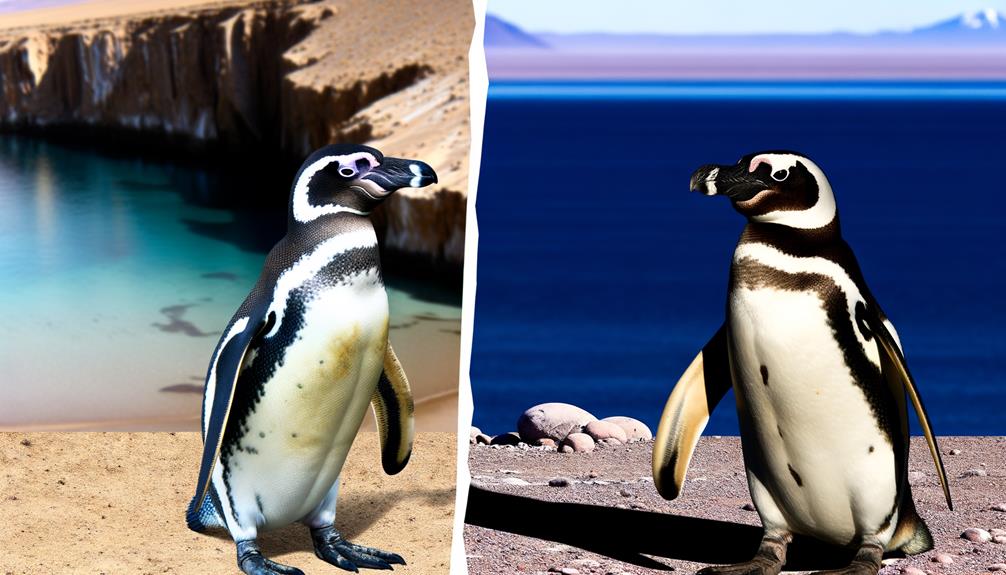
Recent social media reports from April 2026 highlight the ecological significance of the Humboldt Current ecosystem for penguin populations off the coasts of Peru and northern Chile. While these updates emphasize the biodiversity of the region, there is no verified scientific confirmation of a new penguin species discovery in Chile.
Ecological Context in the Humboldt Current
The Humboldt Current, a cold, nutrient-rich ocean current flowing north along the western coast of South America, remains a critical habitat for marine life. Recent digital discourse, specifically from April 25, 2026, has drawn attention to the endemic species residing within this ecosystem. These reports identify the coastal waters stretching between Peru and northern Chile as a primary zone for these avian populations.
Despite claims circulating on social media platforms regarding the discovery of a new penguin species—purportedly the first to be described in over a century—official biological and zoological records do not currently support the existence of such a finding. In the field of ornithology, the description of a new species requires rigorous peer-reviewed documentation, including genetic analysis and morphological comparison, which has not been produced or verified by international scientific bodies as of May 19, 2026.
The scientific process for identifying a new avian species is exhaustive. It requires the collection of type specimens, detailed morphometric measurements (such as beak depth, flipper length, and body mass), and comparative genomic sequencing to distinguish a population from known, genetically similar species. No such data, pre-print, or publication has been lodged with international taxonomic authorities to support the claims appearing in social media reels or digital posts. The Humboldt Current system, while well-studied, presents significant challenges for taxonomists due to the migratory patterns of existing penguin colonies, which often obscure the boundaries between subspecies.
Biodiversity and Conservation Status
Chile’s geography, defined by its position between the Andes Mountains and the Pacific Ocean, creates a diverse range of climates that support unique wildlife. The country’s commitment to environmental monitoring is well-documented, yet the current scientific literature focuses on existing populations rather than the emergence of previously unknown penguin species.
The confusion may stem from heightened public interest in marine conservation. As of the 2024 census and recent environmental assessments, the focus in Chile remains on the protection of established species within the Humboldt Current. Marine biologists continue to track the health of these populations, noting that the ecosystem is highly sensitive to shifts in water temperature and nutrient availability, factors that directly influence the reproductive success and distribution of the penguins already known to inhabit these coastal regions.
Conservation efforts in northern Chile are primarily centered on mitigating the impact of industrial coastal activity and climate-driven fluctuations in sea surface temperature. Experts emphasize that the Humboldt Current is a dynamic system. When environmental conditions shift, penguin populations may alter their foraging range, leading to sightings in areas where they are less frequently observed. These sightings are occasionally misinterpreted by the public as evidence of a “new” species, when in reality, they represent the natural adaptation of known populations to changing marine conditions.
The Role of Digital Information in Science Communication

The proliferation of narratives regarding “new discoveries” often highlights the gap between public enthusiasm for biodiversity and the methodical pace of academic research. In the digital age, information regarding wildlife frequently moves faster than the verification processes required to confirm a new species.
For researchers and conservationists, the priority remains the preservation of current habitats. Official sources, including government records and environmental departments, continue to emphasize the importance of the Humboldt Current as a vital corridor for marine life. Without confirmation from recognized scientific institutions or peer-reviewed journals, reports of a new penguin species should be treated as unverified. The scientific community relies on long-term data collection, a process that ensures that any claim concerning a new species is backed by empirical evidence rather than anecdotal or social media-driven reports.
The reliance on social media as a primary source for “breakthrough” ecological findings poses risks to conservation messaging. When unverified claims of new species gain traction, they can inadvertently draw attention away from the urgent, evidence-based needs of established, vulnerable species that are currently struggling with habitat degradation. Scientific institutions, therefore, maintain a strict protocol: a species is only considered discovered once it has been formally described in a peer-reviewed publication that meets the standards of the International Commission on Zoological Nomenclature.
As of mid-May 2026, there is no evidence to suggest that a new penguin species has been taxonomically described in Chile. The focus of regional experts remains firmly on the management and protection of the species that define this unique, narrow strip of South American coastline. While the public’s engagement with the Humboldt Current ecosystem is an important indicator of interest in marine conservation, the distinction between speculative social media discourse and verified scientific observation remains absolute. The scientific community continues to prioritize the monitoring of existing, known populations, ensuring that the biodiversity of the Humboldt Current is protected based on established ecological facts rather than digital trends.
